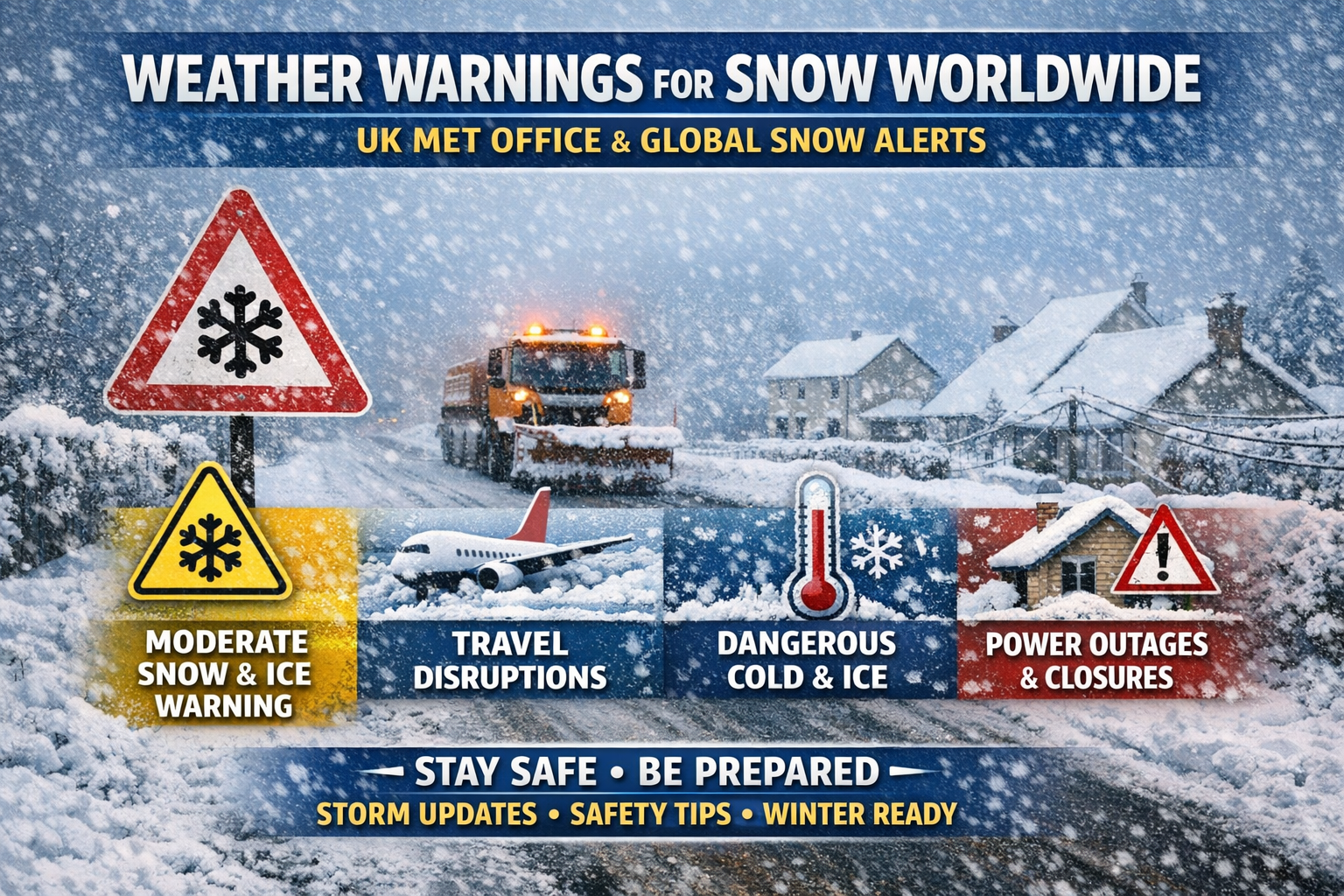
Understanding Global Snow Alerts and Safety Measures
Snowfall is one of the most beautiful natural events, but it can also be one of the most disruptive and dangerous weather conditions. Around the world, governments and meteorological organizations issue Snow weather warningsto protect lives, infrastructure, and economies. From UK snow Met Office weather warnings to blizzard alerts in North America and extreme cold warnings in Asia, snow-related hazards are taken seriously worldwide.
This article provides a detailed overview of snow weather warnings, explains how different countries issue them, and highlights the importance of moderate snow and ice warnings in reducing risks for the public.
What Are Weather Warnings for Snow?
Weather warnings for snow are official alerts issued by meteorological authorities when snowfall, ice, or freezing temperatures are expected to cause disruption or danger. These warnings help people prepare in advance and take preventive measures.
Snow warnings usually consider:
- Amount of snowfall
- Ice formation
- Wind speed (blizzards)
- Temperature drops
- Impact on transport and utilities
The main purpose of these warnings is public safety, not just weather forecasting.
Why Snow Weather Warnings Are Important
Snow and ice can cause:
- Road accidents due to slippery surfaces
- Flight delays and cancellations
- Power outages
- School and workplace closures
- Health risks such as hypothermia
By issuing timely Met Office weather warnings for snow or similar alerts worldwide, authorities help communities minimize damage and loss.
UK Snow Met Office Snow Weather Warnings Explained
In the United Kingdom, the Met Office is responsible for issuing official weather warnings. The UK snow Met Office weather warnings use a color-coded system to communicate risk clearly.
Met Office Warning Colors
- Yellow Warning – Be aware
- Amber Warning – Be prepared
- Red Warning – Take action
A yellow snow and ice warning often indicates travel delays and slippery roads, while an amber or red warning means significant disruption and danger to life.
Moderate Snow and Ice Warning: What Does It Mean?
A moderate snow and ice warning usually falls under a yellow or amber alert, depending on expected impact. It means:
- Snowfall may accumulate moderately
- Roads and pavements may become icy
- Travel disruptions are likely
- Increased risk of accidents
Although “moderate” may sound less serious, many winter accidents occur during moderate snowfall because people underestimate the danger.
Met Office Snow Weather Warnings: How They Are Issued
The Met Office uses:
- Satellite imagery
- Weather radar
- Computer forecasting models
- Ground observations
Warnings are constantly updated as weather conditions change. This ensures accuracy and allows people to plan ahead.
Snow Weather Warnings Around the World
Snow warnings are not limited to the UK. Countries across the globe issue similar alerts based on their climate and geography.
United States: Winter Storm and Blizzard Warnings
In the US, the National Weather Service (NWS) issues:
- Winter Weather Advisories
- Winter Storm Warnings
- Blizzard Warnings
These alerts focus on snowfall intensity, wind chills, and visibility. A blizzard warning means near-zero visibility and extreme danger.
Canada: Extreme Cold and Snowfall Alerts
Canada experiences some of the harshest winter conditions. Environment and Climate Change Canada issues:
- Snowfall warnings
- Blizzard warnings
- Extreme cold warnings
These warnings are crucial in protecting communities, especially in remote areas.
Europe: Snow and Ice Alerts
Across Europe, national meteorological agencies issue snow warnings:
- Germany uses severe weather alerts for snow and black ice
- France issues “Vigilance Neige” (snow vigilance)
- Nordic countries focus on ice and wind-chill warnings
European warnings often emphasize road safety and public transport disruptions.
Asia: Snow Warnings in Cold Regions
Countries like:
- Japan
- China
- South Korea
issue snowstorm and heavy snowfall warnings, particularly in mountainous regions. These alerts are vital for avalanche prevention and rural safety.
Middle East and Rare Snow Events
Snow is rare in many Middle Eastern countries, but when it occurs, warnings become even more critical. Infrastructure in these regions is often not designed for snow, increasing risk during rare winter storms.
Impacts of Snow Weather Warnings on Daily Life
Transportation
- Road closures
- Delayed trains
- Flight cancellations
Education
- School closures
- Remote learning
Health
- Increased emergency room visits
- Cold-related illnesses
Economy
- Business shutdowns
- Supply chain delays
Effective weather warnings for snow help reduce these impacts by allowing early preparation.
How to Prepare During a Snow Weather Warning
When a Met Office weather warning snow alert is issued, it is important to take action.
Safety Tips
- Avoid unnecessary travel
- Wear warm, layered clothing
- Keep emergency supplies at home
- Check on elderly or vulnerable neighbors
- Follow official advice from authorities
Preparation can save lives, especially during moderate to severe snowfall.
Climate Change and Snow Weather Warnings
Climate change is making weather patterns more unpredictable. Some regions experience:
- Heavier snowfall
- Sudden snowstorms
- Rapid temperature drops
This has increased the importance of accurate and timely snow weather warnings globally.
Digital Technology and Weather Alerts
Modern technology has improved snow warning systems through:
- Mobile weather apps
- SMS alerts
- Social media updates
- Real-time radar tracking
These tools help people receive UK snow Met Office weather warnings and global alerts instantly.
Common Misconceptions About Snow Warnings
“It’s only moderate snow, so it’s safe”
False. Most winter accidents occur during moderate snowfall.
“Warnings are exaggerated”
Warnings are impact-based and designed to prevent harm, not to cause panic.
“Snow warnings don’t apply to cities”
Urban areas are often more affected due to traffic and population density.
Role of Media and Public Awareness
News outlets and websites play a key role in spreading awareness about Met Office weather warnings snow. Accurate reporting ensures:
- Reduced misinformation
- Better public response
- Increased safety
WordPress websites and blogs are especially effective in educating readers about weather safety.
Conclusion
Snow may look peaceful, but it carries serious risks if not taken seriously. Weather warnings for snow, whether issued by the UK Met Office, the US National Weather Service, or other global authorities, are essential tools for public safety.
Understanding moderate snow and ice warnings, following official advice, and staying informed can significantly reduce accidents and disruptions. As climate patterns continue to change, snow weather warnings will become even more important worldwide.
By respecting these warnings and preparing in advance, communities can stay safe, resilient, and ready for winter challenges—no matter where they are in the world.