82nd Airborne Division: America’s Rapid Response Force Ready
When crisis strikes anywhere on Earth, one unit stands ready to respond before dawn breaks the next day. The 82nd Airborne Division, the “All American” division based at Fort Bragg, North Carolina, maintains the capability to deploy anywhere in the world within 18 hours of notification . This isn’t just military capability—it’s strategic insurance that protects American interests and global stability through immediate, decisive force.
The upside of this readiness is unmatched strategic flexibility. While other units require weeks or months to mobilize, the 82nd Airborne’s Immediate Response Force of 3,000 soldiers stands constantly prepared to seize contested terrain, secure key objectives, and create conditions for follow-on operations . This capability transforms potential catastrophe into manageable crisis, providing decision-makers with options that less ready forces cannot offer.
The All American Legacy
The 82nd Airborne Division’s nickname “All American” dates to its founding in 1917, when its initial members came from all 48 states . This geographic diversity, represented by the iconic “AA” shoulder patch, established a tradition of national representation that continues today. The division isn’t merely a military unit—it’s a microcosm of America, drawing strength from the nation’s full diversity.
This legacy creates the upside of unified purpose. Paratroopers from every state, territory, and background train together at Fort Bragg, forging bonds that transcend regional differences. The division’s subordinate units carry distinctive nicknames reflecting this heritage: 1st Brigade “Devils In Baggy Pants,” 2nd Brigade “Falcons,” 3rd Brigade “Panthers,” Division Artillery “Cannonball,” Sustainment Brigade “Providers,” and Combat Aviation Brigade “Pegasus” . Each name represents specialized capability unified under the All American banner.
The division’s history validates its readiness model. From the Battle of the Bulge in World War II—where paratroopers halted the German offensive with the declaration “I am the 82d Airborne and this is as far as the bastards are going” —to modern deployments, the 82nd has consistently demonstrated that rapid response can change strategic outcomes. This track record creates confidence among allies and deterrence among adversaries.
The 18-Hour Miracle
The 82nd Airborne Division’s 18-hour deployment standard represents military capability at its most responsive. One brigade—approximately 3,000 soldiers—maintains constant standby as the Immediate Response Force, prepared to execute forcible entry parachute assaults anywhere on Earth . This capability requires meticulous preparation: equipment pre-positioned, personnel medically ready, aircraft allocated, and plans continuously updated.
The upside of this readiness is crisis prevention. Potential adversaries understand that aggression against American interests will meet immediate, professional, overwhelming response. The 18-hour standard means that no location is beyond reach, no crisis too distant for American power projection. This capability shapes strategic calculations without firing a shot, deterring threats through demonstrated competence.
Recent exercises validate this readiness. In June 2025, paratroopers conducted airborne operations at Sainte-Mère-Église, France, commemorating D-Day while practicing the same techniques that liberated Europe 81 years earlier . These operations maintain skills that have been refined across decades, ensuring that the 82nd’s response capability remains more than theoretical.
Current Global Relevance
As of March 2026, the 82nd Airborne Division’s Immediate Response Force is being considered for deployment to the Middle East amid ongoing operations . Elements including headquarters staff under Maj. Gen. Brandon Tegtmeier have received deployment orders, demonstrating the division’s role in current strategic planning . This potential employment showcases the upside of maintained readiness—when presidential decisions require ground force options, the 82nd provides them within hours rather than weeks.
The division’s capability for joint forcible entry—parachute assaults to seize and hold contested terrain—remains unique among American military units . While Marine Expeditionary Units provide sea-based response and Special Operations Forces conduct targeted missions, the 82nd offers scalable, conventional combat power that can secure strategic objectives and hold territory against determined opposition.
This capability is particularly relevant for scenarios involving Iran’s Kharg Island, which handles 90% of Iran’s oil exports . The island’s strategic significance and defensive challenges would require precisely the capabilities the 82nd provides: rapid seizure of contested terrain, establishment of secure perimeters, and creation of conditions for follow-on operations. The division’s training for exactly these missions makes it an indispensable tool for strategic planners.
The Human Dimension of Readiness
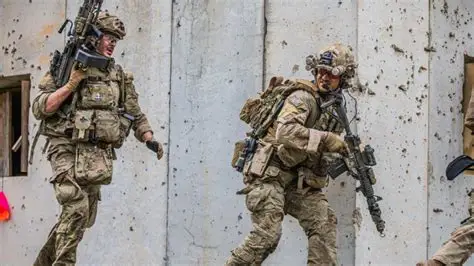
The 82nd Airborne Division’s capability rests upon individual paratroopers who volunteer for airborne duty, complete rigorous training, and maintain constant readiness. These soldiers endure physical demands that few can match: parachute jumps, heavy equipment loads, and rapid deployment cycles that separate them from families and civilian life.
The upside of this commitment is elite cohesion. Paratroopers share experiences that create bonds stronger than typical military service. The division’s All American Week, held annually in May, brings together current soldiers, veterans, and families to celebrate this shared heritage . These connections sustain readiness across generations, as experienced paratroopers mentor newcomers and institutional knowledge transfers continuously.
Recent recognition highlights this human excellence. In 2025, division medics received the Soldier’s Medal for lifesaving actions, and the 82nd Combat Aviation Brigade earned Army aviation association active unit of the year honors . These awards demonstrate that the division’s readiness extends beyond combat to encompass the full spectrum of military operations, including humanitarian assistance and disaster response.
The Strategic Upside of Rapid Response
The 82nd Airborne Division’s existence transforms American strategic options. Without rapid response capability, crises would escalate while forces mobilized. With the 82nd, decision-makers can respond to emerging threats before they metastasize, protecting interests with minimal initial commitment while creating options for expanded operations if necessary.
This capability has proven value across decades. From Grenada in 1983 to Panama in 1989 to the initial phases of operations in Afghanistan and Iraq, the 82nd has provided the immediate presence that stabilizes situations and demonstrates resolve. The division’s ability to “forcibly enter” contested areas—securing airfields, seizing key terrain, and holding territory against opposition—creates strategic advantages that persist long after the initial parachute assault.
The upside is flexibility. The 82nd can deploy as a show of force, securing American interests without combat. It can seize critical infrastructure, preventing adversary use. It can rescue endangered citizens, providing evacuation security. It can establish presence that enables diplomacy, giving negotiators leverage through demonstrated commitment. These options, available within 18 hours, expand strategic possibilities exponentially.
The Innovation Imperative
The 82nd Airborne Division maintains readiness through continuous innovation. The Airborne Innovation Lab at Fort Bragg develops new technologies and tactics that enhance rapid deployment capability . From improved parachute systems to advanced communications to better load-bearing equipment, the division constantly refines its methods.
This innovation extends to medical capabilities. In June 2025, Fort Bragg’s All American DUSTOFF (air ambulance) unit performed the first in-flight prehospital blood transfusion, demonstrating that the division’s medical support matches its combat capability . This innovation ensures that paratroopers injured in combat receive life-saving care within minutes rather than hours, preserving the lives that readiness demands.
The division’s training incorporates lessons from recent operations, ensuring that readiness reflects current battlefield realities. Urban combat, counter-insurgency, conventional warfare—paratroopers train across the full spectrum, maintaining versatility that specialized units cannot match. This adaptability ensures that the 18-hour response capability applies to whatever crisis emerges, not just scenarios planners anticipated.
Conclusion: The Upside of Constant Readiness
The 82nd Airborne Division represents military capability at its most responsive and most valuable. The 18-hour deployment standard, maintained through decades of commitment and innovation, provides strategic options that no other force can offer. The “All American” heritage, drawing strength from the nation’s full diversity, creates cohesion that transcends individual differences. The historical record, from World War II to current operations, validates the model that rapid response can change strategic outcomes.
The upside of this capability is security—both for the nation and for the global order that American power sustains. When crisis strikes, the 82nd Airborne Division provides options. When deterrence fails, it provides response. When American interests require protection, it provides immediate, professional, overwhelming force.