Florida Earthquake Sparks Awareness, Resilience & Preparedness
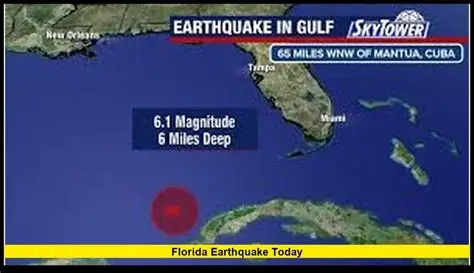
When people think about earthquakes in the United States, states such as California and Alaska often come to mind first. Florida is rarely associated with significant seismic activity, which is why reports of an earthquake affecting or being felt in Florida immediately attract public attention.
The recent earthquake experience in Florida surprised many residents and generated conversations about geology, emergency preparedness, and community resilience. While earthquakes remain relatively uncommon in the Sunshine State, events like these serve as important reminders that natural phenomena can occur in unexpected places.
More importantly, they provide an opportunity for education, awareness, and improved readiness for future events.
As communities reflect on the earthquake, the focus is shifting from surprise to preparation and understanding.
Why an Earthquake in Florida Draws Attention
Florida is generally considered one of the least earthquake-prone states in America.
Unlike regions located near major tectonic plate boundaries, Florida sits on a relatively stable geological foundation.
As a result, many residents spend their entire lives without experiencing noticeable seismic activity.
When earthquake reports emerge, they often generate widespread interest because they challenge common assumptions about the state’s geological environment.
Residents naturally want to know:
- What caused the earthquake?
- Was it dangerous?
- Could it happen again?
- How should communities prepare?
These questions highlight the importance of public education regarding natural events.
Understanding Earthquakes
Earthquakes occur when energy stored within the Earth’s crust is suddenly released.
This release creates seismic waves that travel through the ground.
Earthquakes can vary greatly in:
- Magnitude
- Duration
- Intensity
- Geographic impact
Some are barely noticeable, while others cause significant damage.
The strength of an earthquake is often measured using magnitude scales that estimate the amount of energy released during the event.
Even relatively small earthquakes can be felt across large areas depending on geological conditions.
Florida’s Unique Geological Position
Florida occupies a unique location in North America.
The state rests on a large carbonate platform composed primarily of limestone and other sedimentary rock formations.
This geological structure differs significantly from regions that regularly experience major earthquakes.
Because Florida is located far from major tectonic plate boundaries, significant earthquakes remain relatively rare.
However, seismic waves generated elsewhere can sometimes travel long distances and be felt within the state.
This phenomenon helps explain why residents occasionally report shaking even when earthquake epicenters are located hundreds of miles away.
Public Reaction to the Earthquake
Whenever unexpected natural events occur, public reaction follows a predictable pattern.
Initial responses often include:
- Surprise
- Concern
- Curiosity
- Information-seeking behavior
Many Florida residents turned to news outlets and social media platforms to learn more about the event.
Communities quickly began sharing experiences and observations.
While uncertainty can initially create anxiety, accurate information helps people understand what occurred and respond appropriately.
Effective communication plays a critical role during any natural event.
The Importance of Reliable Information
In today’s digital environment, information spreads rapidly.
While this offers advantages, it also creates opportunities for misinformation.
Following an earthquake, residents benefit from relying on trusted sources such as:
- Emergency management agencies
- Geological organizations
- Scientific institutions
- Local government officials
Accurate information allows communities to:
- Understand risks
- Make informed decisions
- Avoid unnecessary panic
- Improve preparedness
Knowledge remains one of the most effective tools during any emergency situation.
How Communities Demonstrate Resilience
One encouraging aspect of natural events is the way communities come together.
Resilience often becomes visible through:
- Neighborly support
- Information sharing
- Volunteer efforts
- Emergency response coordination
Florida communities have repeatedly demonstrated resilience during hurricanes, floods, and other weather-related events.
The same community spirit appears whenever unexpected challenges arise.
Strong social connections contribute significantly to recovery and preparedness efforts.
Emergency Preparedness Matters
Although major earthquakes remain uncommon in Florida, preparedness remains valuable.
Emergency planning helps individuals and families respond more effectively to unexpected situations.
Preparedness strategies include:
Creating Emergency Kits
A basic emergency kit may include:
- Water
- Non-perishable food
- Flashlights
- Batteries
- First-aid supplies
- Important documents
Developing Communication Plans
Families should discuss:
- Meeting locations
- Emergency contacts
- Communication methods
Staying Informed
Residents benefit from monitoring:
- Local news
- Emergency alerts
- Official advisories
Preparation reduces uncertainty and increases confidence during emergencies.
Lessons From Unexpected Events
Unexpected events often create valuable learning opportunities.
The Florida earthquake reminded many residents that natural phenomena can occur even in areas considered relatively low-risk.
Important lessons include:
- Awareness matters
- Preparation is valuable
- Education improves resilience
- Community support strengthens recovery
These lessons apply not only to earthquakes but also to many other emergency situations.
Prepared communities are better positioned to respond effectively when challenges arise.
Scientific Interest in Florida Earthquakes
Earthquakes in Florida attract scientific interest because they occur less frequently than in many other regions.
Researchers study these events to better understand:
- Geological structures
- Seismic wave behavior
- Regional fault systems
- Long-term seismic trends
Each event provides data that contributes to scientific knowledge.
Advances in monitoring technology continue helping researchers improve understanding of Earth’s complex geological processes.
This research ultimately benefits public safety and preparedness efforts.
The Role of Modern Technology
Technology has transformed how earthquakes are detected, analyzed, and communicated.
Modern systems provide:
- Faster detection
- Improved monitoring
- Enhanced data collection
- Better public communication
Scientists can often identify earthquake locations and magnitudes within minutes.
These advancements allow authorities to provide timely updates and accurate information to affected communities.
Technology continues improving emergency management capabilities across the country.
Building a Culture of Preparedness
Preparedness should not be driven solely by fear.
Instead, it should be viewed as a practical investment in safety and resilience.
Communities that prioritize preparedness often experience:
- Faster recovery
- Better coordination
- Increased confidence
- Reduced uncertainty
Schools, businesses, and households all play important roles in building a culture of readiness.
Small preparation efforts today can create meaningful benefits tomorrow.
Why Awareness Creates Opportunity
Every natural event creates opportunities for learning and improvement.
The Florida earthquake encouraged conversations about:
- Geological science
- Emergency planning
- Community resilience
- Public safety
These discussions help strengthen communities.
Awareness leads to education, and education supports preparedness.
As knowledge grows, individuals become better equipped to respond calmly and effectively to future challenges.
Looking Ahead
While Florida remains one of the least seismically active states in the nation, the recent earthquake serves as a reminder that natural events can occur unexpectedly.
Moving forward, communities can focus on:
- Education
- Preparedness
- Scientific understanding
- Public awareness
These efforts contribute to stronger and more resilient communities.
Rather than viewing unexpected events solely as disruptions, many experts see them as opportunities to improve readiness and strengthen public safety systems.
Conclusion
The Florida earthquake captured attention because it occurred in a state not commonly associated with seismic activity. While the event surprised many residents, it also highlighted the importance of preparedness, education, and community resilience.
Natural events provide opportunities to learn more about the world around us and improve our ability to respond effectively when challenges arise.
As Florida communities continue growing and evolving, awareness and preparedness will remain valuable tools for protecting lives, supporting public safety, and building confidence for the future.