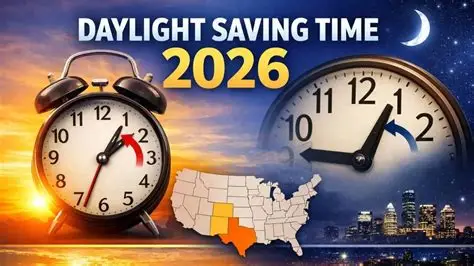
The autumn clock change 2026 is one of those small calendar moments that quietly changes the rhythm of everyday life.
As summer gradually fades and autumn settles in, millions of people around the world will adjust their clocks as daylight saving time comes to an end. For many people in the United Kingdom and most of Europe, the important date is Sunday, October 25, 2026. In most of the United States and Canada, the autumn change comes one week later, on Sunday, November 1, 2026.
The autumn change is commonly remembered as “fall back” because clocks move backward by one hour.
This creates an extra hour during the overnight transition and brings standard time back into effect in places that observe seasonal clock changes.
Although the change may seem simple, it influences mornings, evenings, travel schedules, international communication, work routines and daily habits.
Autumn Clock Change 2026 Schedule at a Glance
The key dates for 2026 are straightforward:
- UK: Sunday, October 25, 2026
- Most of Europe: Sunday, October 25, 2026
- Most of the United States: Sunday, November 1, 2026
- Most of Canada: Sunday, November 1, 2026
In the UK, clocks go back at 2:00 a.m., returning to 1:00 a.m. The UK then moves from British Summer Time to Greenwich Mean Time.
Across most of Europe, the clock change takes place at 01:00 UTC, although the corresponding local clock time differs according to the country’s time zone.
In most of the United States, daylight saving time ends at 2:00 a.m. local time, when the clock moves back to 1:00 a.m.
When Do Clocks Go Back in the UK?
The UK will turn its clocks back on Sunday, October 25, 2026.
At 2:00 a.m., the clock returns to 1:00 a.m. This marks the end of British Summer Time and the return to Greenwich Mean Time.
This means the night of the clock change contains an additional hour.
Phones, computers and many modern electronic devices normally update automatically when their time-zone settings are configured correctly. Traditional wall clocks, watches and some appliances may need to be changed manually.
The change also means that sunrise and sunset occur approximately one hour earlier according to the clock.
That creates noticeably darker evenings, while mornings receive more daylight than they did under summer time.
When Do Clocks Go Back in Europe?
Most European countries will change their clocks on October 25, 2026.
The European clock change is coordinated around the final Sunday of October. Most countries will move from summer time back to standard time on that date.
For countries using Central European Summer Time, including France, Germany, Italy and Spain, clocks move from 3:00 a.m. CEST back to 2:00 a.m. CET.
The exact local time differs between European time zones, but the date remains October 25 for the countries following the standard European schedule.
The transition marks the return of winter or standard time and begins another season of shorter daylight hours.
When Does the US Clock Change in 2026?
Most of the United States will change its clocks on Sunday, November 1, 2026.
According to the current U.S. rules, daylight saving time ends at 2:00 a.m. local daylight time, when clocks return to 1:00 a.m. standard time.
This gives people an additional hour during the overnight transition.
However, the entire United States does not follow daylight saving time.
Hawaii does not observe daylight saving time, and most of Arizona does not observe it either. The Navajo Nation is an important exception within Arizona. Several U.S. territories also do not participate in the seasonal clock change.
These differences make location important when planning travel, meetings and international communication.
Why Do the Clocks Go Back?
The seasonal clock system was designed around the changing amount of daylight throughout the year.
During summer, moving clocks forward provides more daylight during the evening according to the clock. When autumn arrives and daylight becomes shorter, clocks return to standard time.
The history of daylight saving time goes back more than a century. Germany introduced daylight saving time in 1916 during World War I, with other countries adopting similar systems around the same period. The United Kingdom introduced its own clock-changing system in 1916.
The original reasoning included making better use of daylight and conserving fuel.
Over time, the practice became established in many countries, although its benefits and drawbacks continue to be discussed.
The Extra Hour Can Feel Like a Small Gift
One of the most positive aspects of the autumn clock change is the extra hour created during the transition.
Unlike the spring change, when clocks move forward and an hour disappears, autumn provides an additional hour overnight.
For many people, this can create an opportunity for extra rest.
It can also provide a natural moment to slow down and reset.
Autumn itself often encourages a more relaxed rhythm. Cooler temperatures, earlier sunsets, warm drinks and quieter evenings create a different atmosphere from the energetic pace of summer.
The clock change becomes part of that seasonal transition.
A Fresh Opportunity to Reset Your Routine
The autumn clock change can also be used as a practical reminder to refresh daily habits.
Sleep schedules can gradually be adjusted around the new timing. Morning routines can become more organized, while evening routines can be made calmer and more comfortable.
Simple habits can make the transition easier:
- Keep a consistent bedtime.
- Get natural daylight during the morning.
- Prepare clocks and devices before the change.
- Avoid unnecessary late-night screen use.
- Organize important appointments around the new time.
- Give your body a few days to adapt naturally.
The clock itself changes in one night, but the body may take a little longer to settle into the new rhythm.
A calm approach can make the adjustment smoother.
Autumn Brings Earlier Evenings
One of the most noticeable effects of the clock change is the earlier sunset.
The same moment of daylight that previously appeared later on the clock will now arrive earlier.
This can change the feeling of an ordinary day.
Evening walks may need to happen earlier. Outdoor activities may move toward the afternoon. Families may spend more time indoors after sunset.
Rather than viewing the darker evenings only as a limitation, autumn can create opportunities for different forms of connection.
Reading, family meals, creative hobbies, indoor exercise, learning and quiet personal time can become more appealing.
The season changes the pace, and that change can bring its own kind of comfort.
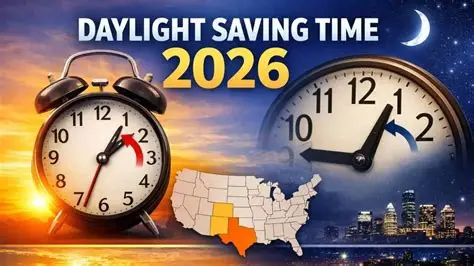
Morning Light Becomes More Valuable
When clocks return to standard time, mornings generally become lighter according to the clock.
That can be particularly helpful for people who travel to school or work early.
Morning daylight can also help people feel more connected to the natural rhythm of the day.
Opening curtains soon after waking, spending some time outside and allowing natural light into the home can make mornings feel brighter and more welcoming.
The autumn clock change therefore does not simply remove daylight from the evening.
It redistributes daylight across the clock.
Travel and International Scheduling Need Extra Attention
The autumn clock change is particularly important for people who travel internationally.
The UK and most of Europe change their clocks on October 25, while most of the United States and Canada change theirs on November 1.
That creates a temporary difference in the usual time gap between some countries during the period between those dates.
People working with international teams should therefore check time zones carefully during late October and early November.
This is especially important for:
- Online meetings
- International flights
- University classes
- Remote work
- Business calls
- Live broadcasts
- Sports events
- Online appointments
Calendar applications usually handle time-zone changes automatically, but manually checking important appointments can provide extra peace of mind.
Technology Makes the Change Easier
Modern technology has reduced much of the inconvenience associated with clock changes.
Smartphones, computers, smartwatches and many connected devices can automatically adjust their time when automatic date, time and time-zone settings are enabled.
Still, not every clock is automatic.
Traditional clocks, kitchen appliances, car systems and some older electronic devices may require manual adjustment.
A quick check before going to bed can prevent confusion the next morning.
The easiest approach is to identify manual clocks around the home and adjust them before sleeping on the night of the change.
The Clock Change and Sleep
The autumn change provides an extra hour overnight, but a changed schedule can still temporarily affect sleep patterns.
The body’s internal clock does not necessarily adjust at exactly the same speed as a clock on the wall.
Maintaining consistent sleep and wake times can help make the transition more comfortable.
Morning daylight can also support a stable daily rhythm.
Instead of making dramatic changes, a gradual and relaxed approach can allow the body to adapt naturally.
For people with persistent or significant sleep problems, professional medical advice remains appropriate.
A Seasonal Reminder to Slow Down
Modern life often moves quickly.
Work, study, social media, family responsibilities and constant digital communication can make every day feel busy.
The autumn clock change offers a natural reminder that seasons change and routines can change with them.
The earlier darkness can encourage people to spend more intentional time at home.
It can become a season for reflection, planning and preparation.
Autumn can be a beautiful bridge between the brightness of summer and the quietness of winter.
The clock change is one small symbol of that transition.
Daylight Saving Time Remains a Global Tradition
Seasonal clock changes are not universal.
Some countries observe daylight saving time, while others keep the same clock throughout the year.
Even within countries that use daylight saving time, there can be regional exceptions.
This means that checking local rules remains important when traveling or communicating across borders.
In Europe, the seasonal system remains in place for 2026 despite earlier efforts to reconsider the twice-yearly clock changes. The European Parliament supported ending mandatory seasonal clock changes in 2019, but the change has not taken effect.
For now, the autumn clock change remains part of the calendar for most European countries.
Autumn Clock Change 2026 and Everyday Life
The impact of the autumn clock change reaches far beyond clocks.
It influences the feeling of mornings, the timing of evenings, travel schedules and the way people organize their days.
For businesses, it can affect international coordination.
For families, it can alter routines.
For travelers, it can change the relationship between departure and arrival times.
For students and workers, it can make early mornings brighter while bringing darkness sooner in the afternoon.
These changes may be small individually, but together they create a noticeable seasonal shift.
How to Prepare for the Autumn Clock Change
A simple preparation checklist can make the transition almost effortless.
Check Manual Clocks
Walk through the home and identify traditional clocks, watches and appliances that do not automatically update.
Review Important Appointments
Check meetings, appointments, flights and online events around the transition date.
Check International Time Zones
If you communicate with people overseas, confirm the time difference after the clock change.
Protect Your Sleep Routine
Keep bedtime and wake-up times reasonably consistent and use morning daylight to support your routine.
Enjoy the Season
Use the earlier evenings as an opportunity for reading, family time, hobbies, indoor activities and rest.
Looking Ahead to 2027
The seasonal cycle will continue into 2027 in countries that maintain daylight saving time.
In the UK, clocks are scheduled to go forward again on March 28, 2027, beginning another period of British Summer Time.
In most of Europe, daylight saving time is also scheduled to return on the final Sunday of March 2027.
The familiar cycle therefore continues: spring brings the move forward, while autumn brings the return to standard time.
Final Thoughts
The autumn clock change 2026 marks more than a simple adjustment of numbers on a clock.
For the UK and most of Europe, October 25, 2026, will bring the return to standard time. For most of the United States and Canada, the change will arrive on November 1, 2026.
The change brings an extra hour overnight, brighter clock-time mornings and earlier evenings.
It is also an opportunity to embrace the changing season.
Rather than seeing the autumn clock change only as an inconvenience, it can be viewed as a small opportunity to reset, rest and prepare for the months ahead.
Time keeps moving, seasons keep changing, and every new season offers a fresh opportunity to make the most of the hours we have.
Reference
Daily Talks Web: Daily Talks Web