James Tolkan: Character Actor Legend Who Defined Authority
The word “slacker” will never sound the same. James Tolkan, the fiery character actor who transformed a single line of dialogue into cultural touchstone, passed away peacefully on March 26, 2026, at age 94 in Saranac Lake, New York . For 55 years, he brought authority figures to life with intensity that made audiences believe, laugh, and remember. His death closes a chapter of American cinema, but his performances—indelible, iconic, immortal—continue defining what character acting can achieve.
The upside of Tolkan’s legacy is permanence. In an industry obsessed with leading men and glamorous stars, he proved that supporting roles could steal scenes, define films, and outlast trends. His Mr. Strickland from Back to the Future and Commander Stinger from Top Gun became templates for authority figures with personality, humor, and unforgettable presence. At 94, he left behind not just memories, but a masterclass in making the most of every moment on screen.
The Journey from $75 to Stardom
James Stewart Tolkan’s origin story reads like classic American drama. Born June 20, 1931, in Calumet, Michigan, he arrived in New York City in 1956 with exactly $75 in his pocket and a dream of acting . He knew no one. He had no connections. He was “scared to death” and his money ran out quickly . He worked as a busboy on Central Park South to survive .
The upside of these struggles was foundation. Tolkan’s early hardship forged the work ethic and intensity that would define his performances. He studied with Stella Adler and Lee Strasberg at The Actors Studio, where Warren Beatty was a classmate . He made his screen debut in 1960 on ABC’s Naked City and never stopped working . By the time he understudied Robert Duvall in the original Broadway production of Wait Until Dark in 1966, he had already built a career through sheer determination .
His Broadway credentials were substantial. Nine Broadway shows, most notably playing salesman Dave Moss in the original 1984-85 production of David Mamet’s Glengarry Glen Ross . This stage work honed the timing, presence, and intensity that would translate so effectively to film. When Ed Harris played the same role in the 1992 film adaptation, he followed Tolkan’s Broadway footsteps .
The Iconic Roles That Defined a Career
Tolkan’s filmography reads like a history of 1970s and 1980s American cinema. He worked with Sidney Lumet three times: as a cop in Serpico (1973), as a determined district attorney in Prince of the City (1981), and as a judge in Family Business (1989) . He played Napoleon and his look-alike in Woody Allen’s Love and Death (1975) . He was the coroner in The Amityville Horror (1979) and an FBI agent in WarGames (1983) .
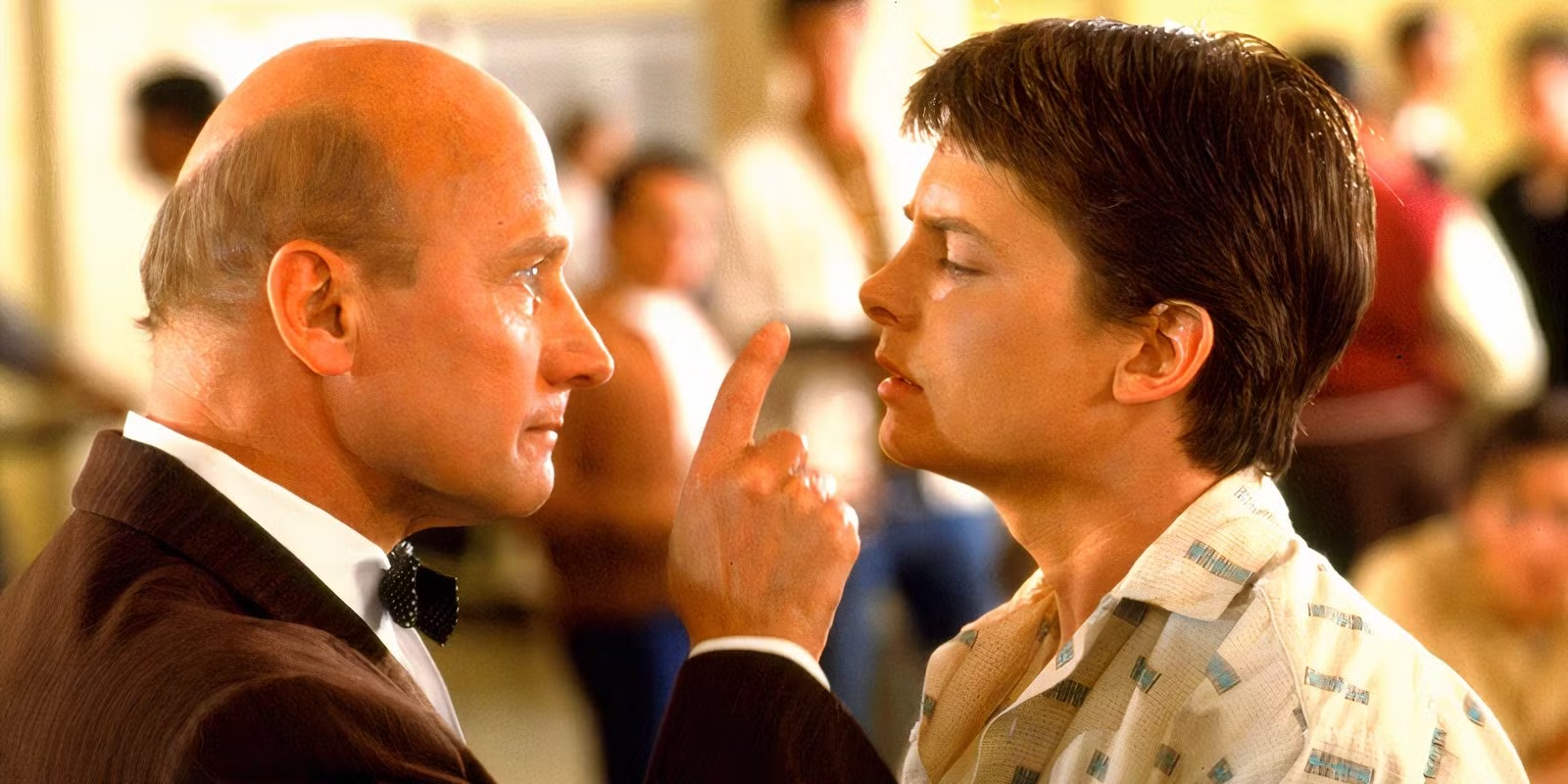
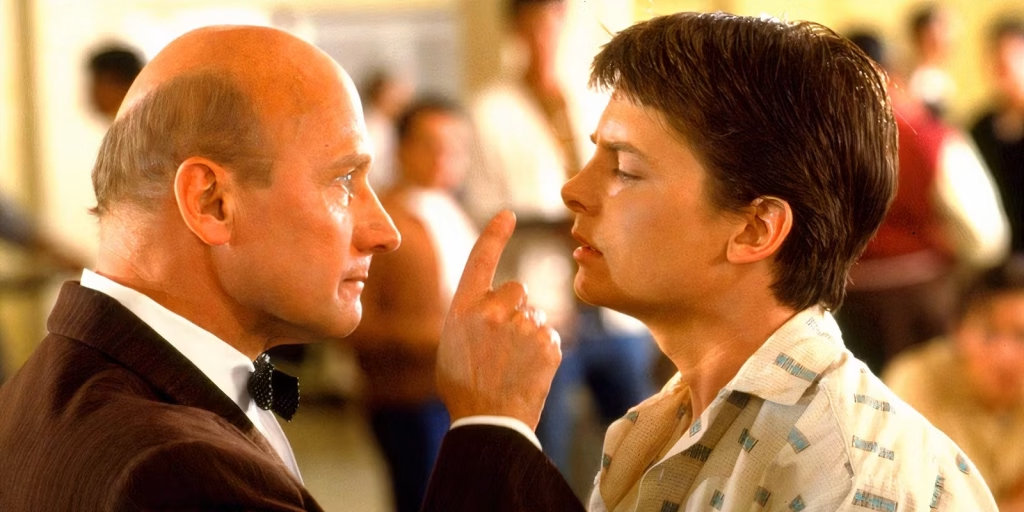
But two roles elevated him from working actor to cultural icon. In 1985’s Back to the Future, he created Mr. Strickland, the Hill Valley High School vice principal whose disdain for “slackers” became the film’s most quoted line . He reprised the role in the 1989 sequel and played Strickland’s grandfather, Marshal James Strickland, in the 1990 Western-themed third installment . Fans would ask him to berate them as “slackers” for fun, a testament to the character’s enduring appeal .
Then came 1986’s Top Gun, where Tolkan played Commander Tom “Stinger” Jardian, the no-nonsense commanding officer who barks at Maverick (Tom Cruise) and Goose (Anthony Edwards) for reckless behavior . His delivery of “God help us” when Maverick requests Top Gun instructor duty became instantly memorable . These two roles—Strickland and Stinger—made him the definitive cinematic authority figure for a generation.
The Craft of Character Acting
Tolkan’s physical presence was unmistakable. Short, bald, with beady intense eyes and a wiry, muscular build, he looked like someone who commanded respect . His voice—gruff, jarring, high-decibel—could silence a room. His demeanor—aggressive, confrontational, blunt—made him perfect for cops, military officers, principals, and villains .
The upside of this typecasting was mastery. Rather than fighting against his appearance, Tolkan embraced it. He became the go-to actor for roles requiring authority with edge, discipline with personality. He could be funny without being comic, scary without being monstrous, memorable without being showy. This precision made him invaluable to directors who needed reliability and impact.
His television work demonstrated range within his specialty. He played 14 different roles across 21 episodes of A&E’s A Nero Wolfe Mystery (2001-02), even directing two episodes . He appeared on Miami Vice, The Fresh Prince of Bel-Air, The Wonder Years, Remington Steele, and The Equalizer . Each appearance brought the same commitment, the same intensity, the same professionalism that made him a director’s favorite.
The Love Story That Lasted
Behind the fierce on-screen persona was a man who found lasting love. Tolkan met his wife, Parmelee, on the 1971 off-Broadway set of Pinkville, where he was acting and she worked as a prop girl . They married that same year in Lake Placid and remained together for 54 years until his death .
Parmelee worked at the American Place Theater as a costumes and scenery painter, sharing Tolkan’s artistic world . Their partnership survived the unpredictability of acting careers, the demands of film production, and the decades of Hollywood changes. In an industry where marriages often crumble under pressure, theirs endured—a quiet testament to the man behind the intimidating characters.
Tolkan’s final screen appearance came in 2024, in the documentary Tom Wilson: Humbly Super Famous . Even at 93, he was working, contributing, sharing his legacy with new generations. His last public appearance was at DragonCon 2025, where fans could still meet the man who had defined authority for their childhoods .
The Philosophy of a Working Actor
In a 2021 interview, Tolkan reflected on his journey with characteristic honesty. “In some way or another, I’m a success,” he said, acknowledging both the struggles and achievements . He recalled being “scared to death” when he arrived in New York with nothing, having to “find some place to live” as his money ran out .
But he also described those early days as “the greatest time of my life” because “it was full of promise and possibilities” . This perspective—finding joy in struggle, possibility in uncertainty—defined his approach to acting and life. He felt strong because he “made it through it all” .
The upside of this philosophy is inspiration. Tolkan’s story proves that success doesn’t require immediate breakthrough, that careers can be built through persistence, that character actors can achieve immortality through memorable moments. His $75 arrival in New York transformed into a 55-year career spanning Broadway, television, and film. The scared young man became the confident veteran who could make “slacker” sound like the worst insult imaginable.
The Legacy of “Slackers”
Mr. Strickland’s disdain for slackers transcended the Back to the Future franchise. It became a cultural shorthand for demanding excellence, for refusing to accept mediocrity, for believing that young people could do better. Tolkan delivered the line with such conviction that audiences believed he really hated laziness, really cared about discipline, really wanted students to succeed.
The upside of this legacy is motivation. Generations of viewers who grew up with Back to the Future internalized Strickland’s message, even as they laughed at his intensity. The character became a meme before memes existed, a reference point for demanding standards. Tolkan’s performance made authority figure archetype simultaneously funny and formidable—a balance that few actors could achieve.
His Top Gun performance offered similar complexity. Stinger wasn’t just a hard-nosed commander; he was a professional who recognized talent even in reckless pilots. His final scene, feigning horror at Maverick’s career choice while clearly respecting his skill, showed Tolkan’s ability to convey multiple emotions simultaneously. This nuance made his authority figures feel real rather than cartoonish.
The Final Chapter
Tolkan’s death at 94 marks the end of an era in American acting. He represented a generation of character actors who built careers through craft rather than celebrity, through reliability rather than scandal, through consistent excellence rather than fleeting fame. His 55 years in the industry spanned the transition from studio system to independent film, from network television to streaming, from practical effects to CGI.
Yet his performances remain timeless. Mr. Strickland will always demand that students not be slackers. Stinger will always shake his head at Maverick’s audacity. These moments, captured on film, will continue entertaining and inspiring audiences long after the actors who created them have passed.
The upside of James Tolkan’s life is proof that character matters—in performance and in person. He built a career on being memorable in small moments, reliable in supporting roles, and professional in every circumstance. He found love that lasted 54 years. He survived the struggles of New York City with $75 and turned them into the foundation of a remarkable life.