Keith Thurman: Resilient Warrior Facing Career Crossroads
The punch that ended the fight landed with cruel precision. On March 28, 2026, Keith “One Time” Thurman absorbed a devastating right hand from Brock Jarvis in the seventh round, crumpling to the canvas as referee Mark Nelson halted the contest at 1:34 of the round . For a former unified welterweight champion who once stood atop boxing’s most competitive division, this TKO loss to a younger, less experienced opponent marked a painful moment of reckoning.
Yet the upside of Thurman’s story is not found in victory but in vulnerability. At 36, with a record now standing at 31 wins, 2 losses, and 1 no-contest, he faces the same crossroads that every great fighter eventually encounters: the moment when physical decline meets competitive ambition, when pride confronts reality, when legacy hangs in the balance . How Thurman responds to this defeat will define his final chapter more than any victory could.
The Fight That Changed Everything
The bout at The Venue at Thunder Valley Casino Resort in Lincoln, California, began competitively. Thurman landed 80 of 266 total punches (30.1%) compared to Jarvis’s 99 of 404 (24.5%) . The numbers suggest Thurman was more accurate but less active, a pattern that has characterized his recent performances. In power punches, Jarvis held a significant advantage: 89 of 254 (35%) to Thurman’s 53 of 134 (39.6%) .
The decisive moment came in the seventh. Jarvis, 28 years old and fighting with the confidence of youth, unleashed a right hand that Thurman couldn’t evade. The former champion went down, and though he rose, the referee determined he could not continue safely . The crowd, which had begun chanting “Let’s go, Keith!” in the third round, witnessed the end of an era .
The upside of this moment is clarity. For years, Thurman has battled injuries, inactivity, and the weight of expectations. This loss removes ambiguity. There is no controversial decision to dispute, no judging conspiracy to blame. The knockout provides definitive evidence that Thurman must adapt or retire. Such clarity, however painful, is a gift that many fighters never receive.
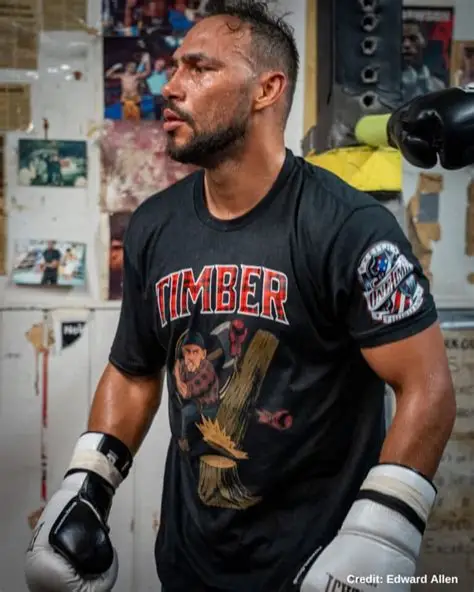
The Champion Who Once Was
Keith Thurman’s peak was formidable. From 2013 to 2017, he was one of boxing’s most feared punchers, earning the nickname “One Time” for his capacity to end fights with single blows . He captured the WBA welterweight title in 2013, added the WBC belt in 2017 by defeating Danny Garcia, and seemed poised for long reign .
The upside of this history is foundation. Thurman has been elite. He has headlined pay-per-views. He has defeated champions. He has experienced the highest levels of boxing success. This experience cannot be taken by any knockout. It resides in his muscle memory, his strategic understanding, his knowledge of what it takes to prepare and perform at the sport’s highest level.
His 2017 victory over Danny Garcia, a 12-round split decision unifying the WBA and WBC titles, represented his career apex . The fight drew a crowd of 12,718 and generated significant pay-per-view revenue. Thurman was 28, undefeated, and seemingly entering his prime. The injuries that would derail his career—starting with elbow surgery that kept him out for nearly two years—were not yet apparent .
The Injuries That Shaped a Career
Thurman’s narrative cannot be separated from physical setbacks. After the Garcia victory, he underwent surgery to remove bone spurs from his right elbow, with complications extending his absence . He returned in 2019 to defeat Josesito Lopez, but the performance showed rust. Then came the 2021 loss to Manny Pacquiao, where Thurman was dropped in the first round and lost a split decision .
The upside of these struggles is resilience demonstrated. Thurman could have retired after the Pacquiao defeat. He could have accepted that injuries had stolen his prime. Instead, he returned in 2022 to defeat Mario Barrios for the WBC interim welterweight title, showing flashes of his former power . This comeback, though ultimately insufficient to restore his elite status, proved his character.
The 2024 loss to Tim Tszyu—another TKO, this time in the third round—should have provided warning . But Thurman’s response was typical: he sought another opportunity, another chance to prove he could still compete. This determination, while admirable, now confronts the reality that two consecutive knockout losses to younger opponents suggest fundamental decline rather than temporary setback.
The Brock Jarvis Challenge
Brock Jarvis represented exactly the kind of opponent Thurman should have defeated if he remained elite. At 28, with a record of 22-1 but lacking Thurman’s resume, Jarvis was the betting underdog . The odds suggested Thurman’s experience would overcome Jarvis’s youth. The result demonstrated the opposite.
The upside for Jarvis is career transformation. Defeating a former unified champion, even a diminished one, elevates his status dramatically. He becomes a player in the welterweight division, his name now attached to a significant victory. For Thurman, the loss is devastating but not without precedent—great fighters often end their careers as learning experiences for rising stars.
Jarvis’s post-fight comments revealed respect: “I have a lot of respect for Keith Thurman… he’s a legend of the sport. I knew he was going to come in there and give me everything he had” . This recognition, from the victor to the vanquished, acknowledges what Thurman has accomplished even as it confirms what he can no longer do.
The Options That Remain
Thurman faces three paths. Retirement, preserving his health and legacy as a former champion who competed at the highest level. Continued competition against carefully selected opponents, seeking victories that restore confidence but avoiding elite young fighters who pose existential risk. Or a final significant bout—perhaps against a fellow veteran like Danny Garcia in a rematch—that provides closure and financial reward.
The upside of these options is choice. Unlike fighters forced into retirement by catastrophic injury or financial desperation, Thurman has resources and reputation. He can decide his own ending. This autonomy, rare in a sport that often discards its athletes, represents a victory of sorts.
His statement after the Jarvis loss suggested perspective: “I felt like I was winning the fight. I was boxing well. I was landing the cleaner shots… But I got caught with a shot and that’s just the sport of boxing” . This acceptance—recognizing that even winning performances can end suddenly—demonstrates the maturity that comes with experience.
The Legacy Beyond Wins and Losses
Keith Thurman’s final record will not match his ambitions. The undefeated champion who once seemed destined for the Hall of Fame will likely finish with multiple losses, the last two by knockout to younger opponents. This is the fate that awaits most fighters who extend their careers beyond their physical prime.
The upside is contribution. Thurman’s career has provided entertainment, inspiration, and employment for dozens of people. His training camps, his fights, his media appearances—all have generated economic activity and cultural engagement. His willingness to face Jarvis, to risk his reputation against a hungry younger fighter, serves the sport by providing opportunity.
Moreover, Thurman’s story offers lessons for future fighters. The importance of activity—Thurman’s career was repeatedly derailed by long layoffs. The danger of facing younger opponents after physical decline. The value of maximizing prime years before injuries accumulate. These lessons, learned through Thurman’s experience, can guide future champions.
The Resilience That Defines Character
Thurman’s response to defeat will define his legacy more than the defeat itself. Many fighters become bitter, blaming others for their decline. Some become reclusive, disappearing from the sport that defined them. Others find new roles—training, commentary, mentorship—that keep them engaged and contributing.
The upside is opportunity. Thurman has charisma, intelligence, and experience that transcend his physical capabilities. He could transition to broadcasting, where his insights and personality would be assets. He could train young fighters, passing knowledge that only champions possess. He could advocate for boxer health and safety, using his platform to improve conditions for those who follow.
His post-fight interview suggested this awareness. “I’m a realist,” he stated. “I always want to give the fans the best fights and the best Keith Thurman that I can be” . This realism—recognizing limitations while maintaining standards—is the foundation for whatever comes next.
Conclusion: The Upside of Facing Truth
Keith Thurman’s knockout loss to Brock Jarvis is not the ending he envisioned. It is not the culmination of a championship career or the triumphant return that narratives prefer. It is a hard truth delivered through gloved fists: time is undefeated, and every fighter eventually faces opponents they cannot beat.
The upside is wisdom gained. Thurman has been elite. He has been injured. He has been defeated. He has been knocked out. Through all of it, he has remained “One Time”—the fighter who could change fights with single punches, even if those punches no longer land with the same frequency or effect.
His career demonstrates that success in boxing, as in life, is not permanent. That physical gifts are temporary. That resilience matters more than any single victory or defeat. That how one responds to setbacks defines character more than how one handles success.