Yutz France: Celtic Heritage and Industrial Renaissance
History whispers through modern streets. In Yutz, a commune of 17,000 souls nestled where France meets Luxembourg and Germany, the ancient and industrial coexist in productive tension. This northeastern French town, perched on the right bank of the Moselle River in the Moselle department, carries Celtic artifacts in its soil and steel in its economic backbone. It is a place where 2,500-year-old craftsmanship meets 21st-century industry, where borderland location creates opportunity rather than vulnerability.
The upside of Yutz’s position is strategic advantage. Located 15 kilometers from Luxembourg and 20 kilometers from Germany, the town sits at the crossroads of European integration . The Franco-German border, once a fault line of conflict, now serves as a bridge for commerce, culture, and cooperation. Yutz embodies this transformation—ancient enough to remember war, modern enough to profit from peace.
The Celtic Legacy That Defines Identity
Yutz’s most celebrated historical treasures predate the town itself. The Basse Yutz Flagons, discovered in 1927 in a local woman’s garden, rank among the most important Celtic artifacts ever found . These 2,500-year-old bronze and enamel drinking vessels, crafted around 450 BC, demonstrate technical sophistication that challenges assumptions about Iron Age capability. The enamel inlay work, the intricate designs, the sheer artistic ambition—these flagons suggest a Celtic culture far more refined than Roman stereotypes allowed.
The upside of this heritage is cultural depth. Yutz doesn’t merely exist; it inherits. The flagons, now housed in the British Museum, draw scholars and enthusiasts to the region, creating tourism opportunity from ancient craftsmanship . The town’s Celtic identity, marked by its name’s origins—variously attributed to “Juice,” “Joudes,” “Judes,” “Just,” or “Jutz” from 954 AD—connects modern residents to deep European history .
Archaeological evidence suggests continuous settlement since Celtic times. The Basse Yutz finds indicate a prosperous, artistically sophisticated community that engaged in long-distance trade and luxury craft production. This legacy of craftsmanship and commerce persists in Yutz’s modern industrial character.
The Industrial Engine That Built Prosperity
The 20th century transformed Yutz from agricultural village to industrial hub. The Société des Hauts-Fourneaux et Aciéries de Thionville-Yutz established steel production that employed generations . The Forges and Foundries of Yutz operated from 1873 until 1983, shaping metal and livelihoods for over a century . The Malmerspach steelworks, opened in 1905, continues operating today as part of the ArcelorMittal group, producing 2 million tons of steel annually and employing 700 people .
The upside of this industrial heritage is economic resilience. While many European towns lost their manufacturing base to globalization, Yutz adapted. The Malmerspach facility’s continued operation demonstrates that French industry can compete when location, infrastructure, and workforce align. The plant’s integration into ArcelorMittal’s global network provides stability that independent operations cannot match.
Industrial activity extends beyond steel. The Grumelange wood processing plant, employing 100 people, adds diversity to the economic base . The industrial zone of the Canner, straddling Yutz and its neighboring commune of Terville, hosts 60 businesses and 1,000 employees, creating a critical mass of economic activity that supports local services and tax revenue .
The Borderland Advantage
Yutz’s location at the convergence of three nations—France, Luxembourg, Germany—once made it vulnerable. The town changed hands repeatedly: French in 1661, German after the Franco-Prussian War of 1870, French again after World War I, German during World War II, and finally French for good in 1945 . Each transfer brought disruption, linguistic change, and identity confusion.
The upside of this history is cosmopolitan capability. Yutz’s residents developed the adaptability that borderland life demands. They speak French, understand German, and work alongside Luxembourgish colleagues. The European integration that transformed the border from barrier to bridge found ready participants in a population accustomed to crossing boundaries.
The Moselle River, which Yutz overlooks from its right bank, historically served as both defense and highway. Today it provides scenic beauty and recreational opportunity. The nearby Canal des Mines de Fer de la Moselle, opened in 1964, transformed the waterway from obstacle to asset, enabling barge transport that supports local industry .
The Viticultural Tradition
The Moselle valley’s slopes, carved by the river over millennia, provide ideal conditions for viticulture. Yutz participates in this tradition, with vineyards producing wines that benefit from the region’s unique terroir—the combination of soil, climate, and human expertise that creates distinctive flavor.
The upside of this agricultural heritage is quality of life. Wine production creates landscape beauty, tourism opportunity, and culinary culture. The region’s restaurants feature local vintages alongside dishes that reflect Franco-German culinary fusion. Residents enjoy access to fresh, local products that urban environments cannot replicate.
The viticultural tradition also connects Yutz to its Celtic past. The Basse Yutz Flagons were drinking vessels, suggesting that this region’s relationship with fermented beverages extends across millennia. Modern wine production continues ancient practices, linking contemporary residents to their deepest heritage.
The Community That Persists
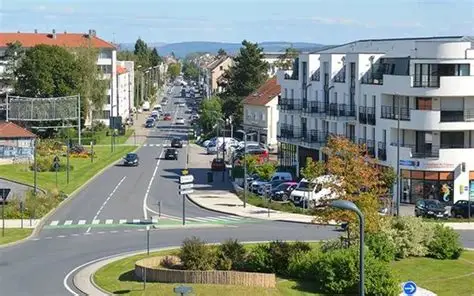
Despite industrialization and borderland flux, Yutz maintains community cohesion. The town’s population—16,901 as of 2021—represents stability rather than decline . The demographic balance, with 49.3% male and 50.7% female, suggests healthy social structure . The population density of 1,200 inhabitants per square kilometer indicates urbanization without overcrowding .
The upside of this community is belonging. In an era of geographic mobility and social fragmentation, Yutz offers rootedness. Families remain across generations, creating social capital that transient populations cannot replicate. The town’s schools, churches, and civic organizations provide infrastructure for connection that supports individual wellbeing.
The recent mayoral election, which saw Bruno Kuffer defeat incumbent Patrick Dutter by 86 votes in 2020, demonstrates democratic engagement . The narrow margin—2,167 to 2,081—suggests an informed, divided electorate rather than apathy. This political vitality indicates community investment in collective decision-making.
The Educational and Cultural Infrastructure
Yutz supports its population with substantial public infrastructure. The Louis Aragon College serves 1,100 students, providing secondary education that prepares young people for university or vocational careers . The Marcel Pagnol and Marie Curie elementary schools, the Les Boutons d’Or kindergarten, and the René Cassin middle school create a complete educational pipeline .
The upside of this investment is human capital development. Yutz’s young people need not leave for quality education. They can progress from kindergarten through college within their community, building relationships and local identity that persist into adulthood. This educational stability supports the town’s future workforce and civic leadership.
Cultural amenities complement educational infrastructure. The municipal media library, the “Avenir” hall for performances, and sports facilities including the Pierre de Coubertin stadium and André Malraux gymnasium provide enrichment opportunities . The Henri Carel swimming pool, renovated in 2014, offers aquatic recreation that supports public health .
The Environmental Context
Yutz’s location provides natural amenities that enhance quality of life. The town sits at 150-223 meters elevation, offering varied terrain for recreation . The Moselle River and its associated waterways create riparian ecosystems that support biodiversity and provide scenic beauty. The nearby forests of northern Lorraine offer hiking, hunting, and nature appreciation.
The upside of this environment is wellbeing. Research consistently demonstrates that access to nature improves mental health, physical fitness, and social connection. Yutz’s residents enjoy these benefits without sacrificing urban amenities. The town provides the “middle landscape”—neither crowded city nor isolated rural area—that many find ideal for raising families and aging gracefully.
The climate, typical of northeastern France, features four distinct seasons. Winters are cold enough for occasional snow, creating seasonal variety. Summers are warm but rarely oppressive. This climatic moderation supports both the viticulture that defines the region and the outdoor recreation that enhances quality of life.
The Economic Future
Yutz faces challenges common to industrial towns: globalization pressure, environmental regulation, and demographic shifts. Yet its strategic location, diversified economy, and established infrastructure position it for continued prosperity.
The upside of these challenges is innovation pressure. The steel industry that sustained Yutz for a century must now decarbonize, creating opportunity for green technology development. The border location that once invited invasion now enables access to three national markets, creating competitive advantage for businesses that can navigate multiple regulatory environments.
The town’s inclusion in the Thionville urban area, which totals 135,000 inhabitants, provides regional support without sacrificing local identity . Yutz can access larger labor markets and service infrastructures while maintaining its distinct character and governance.
Conclusion: The Upside of Rootedness
Yutz, France, offers a model for sustainable community that many places have lost. It combines deep history with modern industry. It maintains borderland flexibility with local identity. It supports population stability with economic opportunity. It preserves natural environment with developed infrastructure.
The upside of Yutz is possibility within continuity. Residents can build lives across generations, knowing that the town’s fundamentals—location, industry, community—will persist. They can access European opportunity while maintaining local roots. They can enjoy ancient heritage while participating in modern progress.