The rise of Trump AI-generated images on social media has become one of the most visible examples of how artificial intelligence is transforming political communication.
In 2026, AI tools can create highly realistic images and videos in seconds, allowing public figures, governments, campaigns, creators, and ordinary users to produce content that would once have required professional photography, visual-effects teams, or expensive production.
Donald Trump’s social media activity has placed this trend directly in the spotlight. His posts have included highly stylized and fictional AI-generated scenes, historical imagery, political satire, and videos portraying imagined events. Recent posts have included an AI-generated video presenting Trump as the comic-book superhero Green Lantern, while other images have placed him alongside historical figures or in fictional military scenarios.
The phenomenon is controversial, but it also reveals something important about the future of digital communication: visual storytelling is becoming faster, more accessible, and more powerful than ever.
The Growth of AI in Political Communication
Political communication has always depended heavily on imagery.
Campaign posters, television advertisements, photographs, speeches, television appearances, and online videos have all shaped how politicians connect with the public.
Generative AI adds an entirely new layer.
Instead of waiting for a photographer, filmmaker, or graphic designer, a social media team can create an image almost instantly.
Trump has become one of the most prominent political figures associated with this emerging style of communication. Earlier in 2026, reports documented numerous AI-generated images shared through his social media activity, including fictional portrayals involving historical figures and political opponents.
This represents a major shift from traditional political media.
The internet is moving toward an environment where imagination itself can become content.
Truth Social and the New Visual Political Style
Much of Trump’s AI-heavy social media activity has appeared on Truth Social, the social platform associated with his political communication.
The platform has become an important channel for Trump’s direct communication with supporters and critics.
Instead of relying entirely on traditional news organizations to distribute his message, Trump can publish directly to an online audience.
AI makes that communication even more visually powerful.
A written statement can communicate an idea, but an AI-generated image can transform the same idea into a dramatic scene.
A fictional image of a politician standing beside a historical figure, commanding a futuristic army, appearing as a superhero, or participating in an imagined event can attract immediate attention.
That visual impact helps explain why AI-generated imagery has become such a prominent part of online political culture.
The Green Lantern AI Video
One of the most recent examples came on September 7, 2026, when the White House shared an AI-generated video depicting Trump as Green Lantern, the fictional superhero from DC Comics.
The video showed Trump using the character’s famous powers while connecting the superhero imagery with political themes. The post generated widespread online discussion and criticism.
Regardless of political opinion, the episode demonstrates the extraordinary speed at which entertainment culture, artificial intelligence, and political communication can now merge.
A political message can be transformed into something resembling a movie trailer, meme, fantasy scene, or video-game sequence.
That represents a major development in digital storytelling.
It also shows why audiences increasingly need to understand the difference between fictional visual content and factual documentation.
AI Images Can Create Powerful Visual Stories
One positive aspect of generative AI is its ability to make visual communication accessible.
In the past, creating a complex visual scene could require:
- Professional photographers
- Actors
- Locations
- Costumes
- Lighting equipment
- Video editors
- Graphic designers
- Expensive production teams
AI can dramatically reduce those barriers.
A creator with a basic computer or smartphone can now experiment with concepts that previously required significant resources.
This opens opportunities for students, artists, marketers, journalists, filmmakers, educators, and small businesses.
The same technology attracting attention through political content can also be used for education, storytelling, advertising, entertainment, and creative experimentation.
Trump AI Images Show the Power of Attention
Social media rewards content that attracts attention.
Images that are unusual, emotional, humorous, dramatic, or surprising are more likely to be shared and discussed.
AI-generated images are particularly effective in this environment because they can produce scenes that would be impossible or highly expensive to photograph in real life.
Trump’s social media activity illustrates this attention economy.
A single AI image can become a major talking point across social platforms and traditional media.
For political communicators, this creates an extremely powerful tool.
For audiences, it creates an equally important responsibility to slow down and identify what they are actually seeing.
The Difference Between AI Fiction and Reality
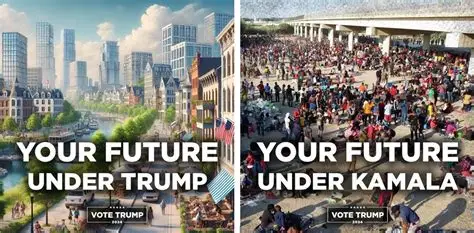
The biggest lesson from the rise of AI-generated political images is the importance of digital literacy.
An image can look realistic without documenting a real event.
An AI-generated video can appear convincing without showing something that actually happened.
This distinction became particularly important after Trump shared an AI-generated video on August 31 that appeared to show an attack on Iran’s Kharg Island. Reuters reported that Vice President JD Vance later described the post as a message to Iran, while a U.S. official clarified that no military strike had targeted Kharg Island.
The episode provides a powerful reminder that visual realism is not the same as factual accuracy.
Modern audiences need to evaluate the source, context, date, caption, and independent reporting before treating dramatic online imagery as evidence.
AI Can Strengthen Creativity
Beyond politics, the broader AI trend offers enormous creative potential.
Artists can use AI to explore visual concepts.
Writers can create illustrations for stories.
Students can develop educational presentations.
Small businesses can experiment with promotional concepts.
Filmmakers can visualize scenes before production.
Social media creators can develop distinctive visual identities.
These opportunities can make creative industries more accessible.
Someone with a strong idea but limited financial resources can experiment with visual storytelling at a scale that was previously difficult to achieve.
That is one of the most important positive possibilities surrounding generative AI.
AI Is Creating a New Language of Memes
Memes have become one of the most powerful forms of internet communication.
AI is now making memes more sophisticated.
Instead of combining existing photographs and text, creators can generate entirely new scenes.
Political figures can be placed into historical settings, fictional universes, sports stadiums, movies, fantasy worlds, or humorous situations.
This creates a new visual language.
Trump’s AI images are part of this broader transformation.
The content may be provocative, humorous, political, or controversial, but the underlying technology demonstrates how quickly internet culture is evolving.
The meme is no longer limited to what a camera captured.
It can now be created from imagination.
The Importance of Transparency
The growing use of AI-generated images also increases the importance of transparency.
Audiences benefit when creators clearly identify synthetic or manipulated content.
Labels can help viewers understand whether they are looking at a photograph, digitally edited image, or entirely AI-generated creation.
This is becoming increasingly important because AI detection itself is imperfect.
Recent reporting has highlighted problems with automated AI labels on social platforms, including cases where genuine images were incorrectly labeled while some AI-generated content escaped detection.
This means technology alone cannot solve the problem.
Human judgment remains essential.
Political Communication Is Entering a Visual Age
Traditional political communication often depended on speeches and press conferences.
The digital era expanded that model through websites, livestreams, social media posts, short videos, and podcasts.
AI is taking the next step by allowing political messages to be presented through synthetic visual worlds.
That could make political communication more creative and accessible.
It could also make it more confusing.
The most successful digital audiences will therefore be those that can appreciate creative content while maintaining a strong connection to verified information.
This balance is becoming an essential skill in modern society.
The Positive Side of AI-Generated Political Content
The most useful way to understand the Trump AI image phenomenon is not simply as a political controversy.
It is also a demonstration of a technological revolution.
AI is changing the cost and speed of content production.
It is making sophisticated visual creation available to more people.
It is encouraging experimentation.
It is blending politics with entertainment.
And it is forcing society to develop stronger digital literacy.
Those developments will continue regardless of individual political preferences.
The technology itself is becoming part of everyday communication.
Lessons for Social Media Users
The growing presence of AI-generated political images provides several valuable lessons.
Visual content deserves verification.
A realistic image should not automatically be treated as photographic evidence.
Captions matter.
The description accompanying an image can dramatically influence how audiences interpret it.
Sources matter.
Important claims should be compared with reputable reporting and official information.
AI literacy is becoming essential.
Understanding how generative AI works can help people recognize manipulated or fictional content.
Creativity should not replace accuracy.
AI can be an extraordinary storytelling tool, but responsible communication still requires honesty about what is real and what is synthetic.
The Future of AI and Social Media
The relationship between artificial intelligence and social media is likely to become even stronger.
Future platforms may contain far more AI-generated images, videos, advertisements, political messages, entertainment clips, and personalized content.
AI could allow users to create entire campaigns, videos, virtual environments, and interactive stories from simple instructions.
This could create enormous opportunities for entrepreneurs and creators.
It could also create a more competitive digital environment in which audiences are exposed to increasingly sophisticated visual content.
The ability to distinguish creativity from reality will therefore become one of the most valuable digital skills.
A New Opportunity for Creators
For ordinary creators, the AI revolution should not simply be viewed as a threat.
It can be an opportunity.
Someone interested in social media marketing can use AI to develop visual concepts.
A student can create engaging educational material.
A small business can experiment with advertising.
A filmmaker can visualize a concept before investing in production.
An artist can explore styles and ideas rapidly.
The technology can become a creative partner when used responsibly.
The most successful creators will likely be those who combine AI’s speed with human judgment, originality, storytelling, and authenticity.
Final Thoughts
The story of Trump AI-generated images on social media is ultimately part of a much larger transformation.
Artificial intelligence is changing how political messages are presented, how memes are created, how audiences consume visual information, and how creators produce content.
Trump’s recent AI-generated posts, including the September 7 Green Lantern video and earlier fictional images involving historical figures and political scenarios, have placed this transformation directly in the public spotlight.
The positive opportunity is enormous.
AI can make visual storytelling faster.
It can make creativity more accessible.
It can help small creators compete.
It can encourage experimentation.
And it can give people new ways to communicate ideas.
At the same time, the technology makes digital responsibility more important than ever.
The future of social media will not simply belong to people who can create the most impressive AI images.
It will belong to people who can combine creativity with truth, technology with responsibility, and powerful storytelling with informed judgment.
Reference
For more technology, social media, politics, and digital-trend coverage, visit: