Social Security is more than a monthly government payment. For millions of Americans, it represents security after decades of hard work, a dependable source of income during retirement, and essential support for families who have lost a loved one.
But a new financial warning has placed the future of this important program in the spotlight. The 2026 Social Security Trustees Report projects that the Old-Age and Survivors Insurance (OASI) Trust Fund could deplete its accumulated reserves in the fourth quarter of 2032. If lawmakers do not take action, continuing income would be enough to pay only 78% of scheduled retirement and survivor benefits at that time.
This projection has raised concern among retirees, workers, and people preparing for retirement. It has also created an important opportunity to understand the program’s finances before the projected deadline arrives.
The issue of Social Security trust fund depletion 2032 does not mean that Social Security will disappear or that payments will automatically stop. Payroll taxes and other program income will continue to flow into the system. The challenge is that this income may not cover the full amount of benefits promised under current law.
There is still time for policymakers to consider solutions. By understanding the facts, following official updates, and preparing responsibly, Americans can approach this challenge with greater confidence rather than fear.
What Is Social Security Trust Fund Depletion in 2032?
The Social Security Administration publishes an annual Trustees Report that evaluates the financial condition of the program. It examines how much money is collected, how much is paid in benefits, and whether the trust funds can meet scheduled obligations over time.
According to the 2026 report, the OASI Trust Fund is projected to have enough accumulated reserves to pay full scheduled retirement and survivor benefits until the fourth quarter of 2032.
After that point, the reserves are projected to be depleted under the Trustees’ assumptions.
This is an important distinction: trust fund depletion does not mean that Social Security has no money coming in.
The program receives revenue primarily through payroll taxes paid by workers and employers. It also receives income from taxes on certain Social Security benefits and interest on trust fund reserves.
Even after the OASI reserves are depleted, continuing income is expected to support a significant portion of scheduled benefits. The latest projection estimates that this income would cover approximately 78% of scheduled payments in 2032.
The remaining gap is the reason lawmakers are being urged to address the program’s long-term finances.
Could Social Security Benefits Be Reduced by 22%?
The 2026 Trustees Report estimates that continuing income would cover 78% of scheduled OASI benefits when the fund’s reserves are depleted.
That creates a potential 22% shortfall if Congress does not change the law or provide additional financing.
For example, the following table shows what a 22% reduction would look like for different hypothetical monthly benefits.
| Scheduled Monthly Benefit | Illustrative Payment at 78% |
|---|---|
| $1,000 | $780 |
| $1,500 | $1,170 |
| $2,000 | $1,560 |
| $2,500 | $1,950 |
| $3,000 | $2,340 |
These figures are illustrations, not predictions of individual payments. The actual outcome would depend on future legislation and the financial condition of the program.
For a household that depends heavily on Social Security, a reduction of this size could make it harder to pay for housing, groceries, utilities, transportation, and healthcare.
That is why the 2032 projection deserves attention today.
Social Security Is Not Expected to Stop Paying Benefits
One of the most common misunderstandings about trust fund depletion is the belief that all Social Security payments will end.
The official projection does not say that.
Workers will continue paying payroll taxes, and the program will continue collecting revenue. The problem is that projected income would not be sufficient to pay every dollar of scheduled benefits under current law.
It is also important to understand that Social Security operates through separate trust funds.
The 2026 Trustees Report provides these projections:
- Old-Age and Survivors Insurance (OASI): Reserves are projected to deplete in the fourth quarter of 2032, with 78% of scheduled benefits payable from continuing income.
- Disability Insurance (DI): The DI Trust Fund is projected to remain able to pay full scheduled benefits throughout the 75-year projection period.
- Combined Social Security funds: If the two legally separate funds were considered together, their reserves are projected to deplete in the third quarter of 2034, with 83% of scheduled benefits payable at that time.
The distinction matters because retirement and survivor benefits are not the same as disability benefits, and the two trust funds have different financial projections.
Why Is the Social Security Trust Fund Facing Depletion?
Several long-term economic and demographic changes are contributing to the financial pressure.
1. An Aging American Population
People are living longer, which is a positive development for individuals and families. However, longer life expectancy also means that many retirees receive Social Security payments for more years.
As the number of people collecting retirement benefits increases, the program faces greater financial responsibilities.
2. Fewer Workers Supporting Each Beneficiary
Social Security depends heavily on payroll taxes collected from current workers and employers.
As the population ages, the number of beneficiaries grows in relation to the working population. This places additional pressure on the system because fewer workers are supporting a larger group of people receiving benefits.
3. Changing Birth Rates
Birth rates influence the future workforce. When fewer children are born, fewer people may enter the labor market in future decades.
This can affect the number of workers contributing payroll taxes and make it more difficult to maintain the balance between program income and spending.
4. Rising Benefit Costs
The total amount paid through Social Security has grown as the number of eligible beneficiaries has increased.
The Trustees project that program costs will remain higher than total income over the long-term projection period. Existing reserves help cover the difference, but those reserves are expected to decline.
5. Changes in Tax Revenue
Changes in tax policy can also affect the amount of revenue flowing into Social Security trust funds. The 2026 Trustees Report incorporates changes in legislation and economic assumptions that influence projected income.
Together, these factors demonstrate why long-term planning is essential.
Who Could Be Affected by Social Security Trust Fund Depletion?
The projected shortfall could affect several groups if Congress does not act.
Current retirees: People who already depend on monthly Social Security payments could face financial pressure if scheduled benefits are reduced.
Future retirees: Workers approaching retirement may need to consider the possibility that future payments could be lower than the amounts currently scheduled under law.
Surviving spouses and families: The OASI Trust Fund also supports survivor benefits. A funding shortfall could therefore affect eligible family members who rely on these payments.
Low-income households: People with limited savings or few alternative sources of income may be especially vulnerable to a reduction.
Younger workers: Younger generations have decades before retirement, but they have a strong interest in decisions made today because those decisions could influence the future of the program.
The impact would vary depending on personal circumstances, other sources of income, savings, and any changes made by Congress.
What Can Congress Do to Protect Social Security?
The 2032 projection is a warning, not a final decision. Congress has several policy options that could improve Social Security’s financial position.
Adjusting Payroll Taxes
Lawmakers could consider changes to the payroll tax rate paid by workers and employers. Additional revenue could help strengthen the trust funds.
Reviewing the Taxable Earnings Limit
Social Security payroll taxes generally apply to earnings up to an annual taxable maximum. Congress could consider changing that limit to bring a larger share of earnings into the system.
Reviewing Benefit Formulas
Another option involves changing how future benefits are calculated. Any such changes would require careful consideration because millions of people depend on these payments.
Combining Multiple Solutions
A lasting solution may involve a combination of revenue changes, benefit adjustments, and other financing measures.
Taking action early could give lawmakers more time to phase in changes and allow workers and retirees to prepare.
The Social Security Administration has emphasized that lawmakers have options and that earlier action would provide more time to consider a broader range of solutions.
How Americans Can Prepare for the 2032 Projection
Individuals cannot control federal policy, but they can take practical steps to improve their financial readiness.
Check Your Social Security Statement
Workers can use the official Social Security Administration website to review their earnings history and estimated benefits. Checking the record can help identify errors that may affect future payments.
Build Additional Retirement Savings
Where possible, consider contributing to an employer-sponsored retirement plan or an individual retirement account. Consistent savings, even in modest amounts, can create more financial flexibility over time.
Review Monthly Expenses
Estimate future costs for housing, groceries, healthcare, insurance, transportation, and utilities. Understanding expected expenses can help identify potential financial gaps.
Consider Different Income Sources
A retirement plan that includes more than one source of income may be more resilient. Depending on individual circumstances, this could include personal savings, pensions, retirement accounts, or part-time work.
Follow Official Updates
Social Security projections can change as economic conditions, legislation, and demographic assumptions evolve. The annual Trustees Report and official Social Security announcements are reliable places to follow developments.
These steps cannot replace a national policy solution, but they can help families make informed decisions.
Why There Is Still Reason for Hope
The 2032 projection is serious, but it does not mean that Social Security has no future.
The program continues to collect payroll taxes and provide essential support to millions of Americans. The Trustees Report gives lawmakers a clear financial warning while there is still time to respond.
That creates an opportunity to make thoughtful decisions rather than wait until the problem becomes more urgent.
Early action could allow changes to be introduced gradually, reduce uncertainty, and help protect people who depend on monthly payments.
Public awareness is also valuable. When workers, retirees, and families understand the financial challenge, they can participate in a more informed discussion about the future of retirement security.
The goal should be a Social Security system that remains dependable for current beneficiaries while continuing to serve future generations.
Conclusion
Social Security trust fund depletion in 2032 is one of the most important financial issues facing American retirees and workers. The 2026 Trustees Report projects that the OASI Trust Fund could exhaust its reserves in the fourth quarter of 2032. Without legislative action, continuing income would cover approximately 78% of scheduled retirement and survivor benefits.
However, this does not mean Social Security payments will disappear. The program will continue receiving revenue, and Congress has time to consider solutions that could strengthen its finances.
For individuals, the best approach is to stay informed, review personal benefit estimates, and prepare a retirement plan with a range of income sources. For policymakers, the responsibility is to address the funding challenge before it becomes an immediate crisis.
Social Security represents decades of work, financial independence, and peace of mind for millions of families. Protecting its future is not simply an economic task. It is an opportunity to preserve an important promise for today’s retirees and tomorrow’s generations.
Reference: Daily Talks Web – https://dailytalksweb.com/
Search interest graph and supporting visual
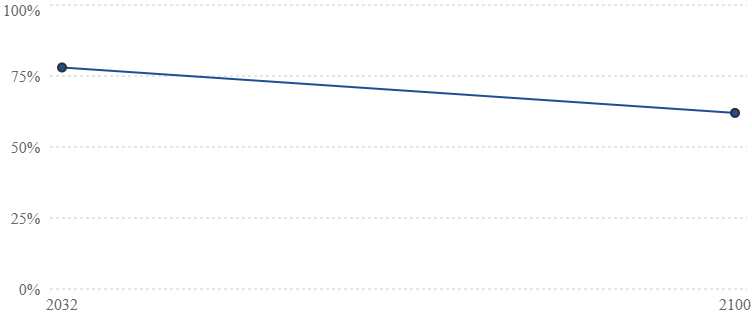
The chart below shows the official projection for the share of scheduled OASI benefits that continuing income could cover after reserve depletion. It is not a Google Trends search-interest graph.
Projected Social Security retirement benefits payable
Share of scheduled OASI benefits payable from continuing income under the 2026 Trustees Report’s assumptions, if Congress does not act.
Official research sources:
- Social Security Administration, 2026 Trustees Report and official announcement. SSA+2
- Social Security Administration, 2026 Trustees Report Summary, including the separate OASI and DI projections. Social Security+1
- Reuters, June 9, 2026, on the projected depletion date and potential benefit shortfall. Reuters
For a real Google search-interest graph: Embed a Google Trends chart for the phrase “Social Security trust fund depletion 2032,” selecting the United States and a suitable time range. Search-interest scores should come directly from Google Trends rather than being estimated.