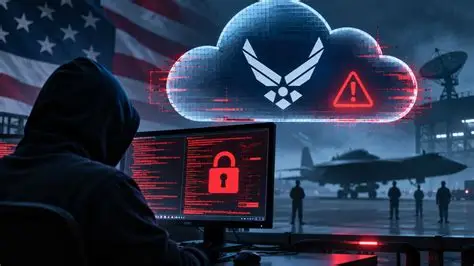
The news that hackers have breached the U.S. Air Force’s flagship cloud computing platform has brought military cybersecurity into the global spotlight. The reported incident involving Cloud One, a major digital infrastructure platform supporting U.S. Air Force operations, highlights the growing importance of protecting sensitive information in an increasingly connected world.
The incident was reported on November 27, 2026, following an investigation into unauthorized access discovered during a system upgrade. The breach has raised concerns about the security of military technology, personnel information, logistics systems, and digital infrastructure.
Although the full extent of the incident remains unclear, the development sends an important message to governments, technology companies, and cybersecurity professionals. Strong digital protection is no longer optional. It is an essential part of national security.
At the same time, this incident creates an opportunity to strengthen cybersecurity strategies, improve cloud infrastructure, and accelerate investment in advanced digital defense systems. The future of military security will increasingly depend on the ability to identify threats, respond quickly, and protect critical information.
Hackers Breach Air Force: What Happened?
According to a Reuters investigation published on November 27, 2026, hackers breached Cloud One, one of the U.S. Air Force’s major cloud computing platforms.
The intrusion was reportedly discovered within the previous month during work to upgrade the system. Several people familiar with the incident described disruptions across the platform following the discovery.
Investigators have not publicly established the identity of the attackers, the complete extent of their access, or whether any information was stolen.
The U.S. Air Force declined to comment on the security status of specific networks and systems. However, it emphasized that measures are continuously taken to protect Department of the Air Force information, systems, and mission capabilities.
The incident has attracted considerable attention because Cloud One supports numerous applications connected to military administration, logistics, maintenance, and other important functions.
It also demonstrates how cyber threats can affect even large organizations with significant technological resources.
What Is Cloud One?
Cloud One is a major cloud computing platform developed to support the information technology requirements of the U.S. Air Force.
Initiated in 2017, the platform was designed to provide a centralized environment for hosting applications and managing digital services.
Rather than relying on completely separate computing systems, the Air Force uses Cloud One to bring together cloud resources from several major technology providers.
These include:
- Microsoft
- Amazon
- Oracle
- Alphabet, Google’s parent company
The platform supports applications involving personnel information, salary payments, logistics, aircraft maintenance, and other administrative and operational functions.
Some applications hosted within the environment also support military-related information systems.
One example is Cloud-Based Command and Control, which brings together air defense radar and other information feeds. Another is the Theater Integrated Combat Munitions System, which tracks munitions inventories across more than 200 U.S. Air Force locations worldwide.
This broad range of responsibilities explains why the reported breach has generated serious security concerns.
Cloud One is not simply an ordinary business platform. It forms part of a much wider digital environment supporting military operations.
How the Cyberattack Affected Air Force Operations
The discovery of unauthorized access reportedly resulted in several operational disruptions.
According to sources cited by Reuters, plans to migrate additional back-office applications to Cloud One were paused following the discovery.
Updates to applications already operating on the platform were also blocked while the incident was being assessed.
Additionally, some users reportedly had their administrator privileges revoked.
These steps indicate that security teams were taking precautions while examining the platform and evaluating potential risks.
Although restricting updates can create operational challenges, temporarily controlling access and changes may be necessary while investigating a suspected compromise.
Security teams must carefully balance two important responsibilities: maintaining operational services and ensuring that potentially compromised systems are safe to use.
The reported disruption highlights the importance of having reliable backup systems, clear recovery procedures, and effective cybersecurity response plans.
Control Plane Vulnerability Raises Security Concerns
One particularly important detail in the Reuters report involved the platform’s control plane.
A source familiar with the incident said the attackers had exploited a software vulnerability to reach this part of the cloud environment.
The control plane is responsible for managing cloud infrastructure, configurations, permissions, and other administrative functions.
It can be compared to a central control system that allows authorized administrators to manage different parts of a digital environment.
If an attacker gains unauthorized access to this layer, the potential consequences can be significant, depending on the permissions obtained.
In theory, access could provide opportunities to examine system configurations, application activity, or information about infrastructure operations.
One source suggested that such access could potentially expose information about military aircraft operations or the movement of spare parts.
However, it is important to distinguish between potential exposure and confirmed damage.
Reuters could not establish whether the attackers accessed these specific types of information. There is also no confirmed evidence in the report that aircraft or weapons systems were controlled by the hackers.
The investigation remains focused on understanding the nature and extent of the intrusion.
U.S. Cyber Command Steps In
The reported incident has also brought attention to the role of U.S. Cyber Command.
According to Reuters sources, investigators called on Cyber Command to assess the damage.
U.S. Cyber Command is responsible for military cyberspace operations and plays an important role in protecting American military digital capabilities.
Its involvement highlights the seriousness of protecting large-scale military cloud environments.
Cybersecurity investigations often require several areas of expertise, including network monitoring, digital forensics, vulnerability analysis, access management, and incident response.
Specialized teams can examine suspicious activity, identify potential entry points, determine which systems may have been affected, and recommend appropriate security improvements.
The assessment of Cloud One could provide valuable information for strengthening military cloud infrastructure and improving future incident response procedures.
The broader lesson is clear: modern military readiness depends not only on physical equipment but also on the security and reliability of digital systems.
Why Military Cloud Security Matters
Cloud computing has transformed the way governments and military organizations manage information.
It provides scalable infrastructure, flexible computing resources, centralized administration, and opportunities to improve operational efficiency.
However, these advantages also create new security responsibilities.
Military cloud platforms may support multiple applications, departments, contractors, and technology providers. Protecting such environments requires strong coordination and continuous monitoring.
A weakness in one component can potentially create risks for connected systems if security controls are insufficient.
This is why military organizations increasingly need comprehensive cloud security strategies.
Important protection measures include:
Advanced Access Controls: Only authorized personnel should receive access to sensitive systems, with permissions limited to their responsibilities.
Multi-Factor Authentication: Additional identity verification makes it more difficult for unauthorized individuals to access accounts.
Continuous Monitoring: Security teams need effective tools to identify unusual activity and investigate suspicious behavior.
Regular Security Testing: Vulnerability assessments and controlled security testing help organizations identify weaknesses before attackers exploit them.
Data Encryption: Sensitive information should be protected while stored and transmitted.
Backup and Recovery Systems: Reliable backups help organizations restore important services following cyber incidents.
These measures can strengthen the security of military infrastructure and improve its ability to withstand future attacks.
Growing Cybersecurity Threats Around the World
The Cloud One incident comes during a period of increased concern about cyberattacks affecting U.S. government institutions.
Reuters reported that several other cybersecurity incidents had recently affected government agencies and sensitive digital systems.
These incidents have increased attention on the security of federal networks, intelligence-related platforms, law enforcement databases, and government information systems.
The growing number of connected services has expanded the digital environment that security professionals must protect.
Cybercriminals and other malicious actors continually search for weaknesses in software, cloud infrastructure, identity systems, and organizational security practices.
Artificial intelligence is also changing the cybersecurity landscape.
AI technologies can help defenders identify suspicious patterns, analyze large amounts of security information, and respond to threats more efficiently.
At the same time, malicious actors may attempt to use advanced automation to discover weaknesses and increase the speed of cyber operations.
However, there is no confirmed evidence in the Reuters report that artificial intelligence was used in the Cloud One breach.
The important development is that cybersecurity teams must prepare for increasingly sophisticated threats, regardless of the tools used by attackers.
The Positive Side: An Opportunity to Strengthen Digital Defense
Although the reported breach represents a serious security challenge, it also highlights opportunities to improve military technology and digital protection.
Every major cybersecurity incident provides important lessons about the weaknesses that may exist within complex information systems.
A careful investigation can help organizations understand how unauthorized access occurred, identify gaps in security controls, and improve protection strategies.
The Cloud One incident could encourage several positive developments.
First, military organizations may place even greater emphasis on cloud security assessments and infrastructure monitoring.
Second, stronger identity management and access controls could help reduce the risk of unauthorized administrative access.
Third, improved coordination between government cybersecurity agencies and technology providers could strengthen incident response.
Finally, investment in advanced security technologies may accelerate as organizations recognize the importance of protecting critical digital infrastructure.
These improvements can contribute to a more resilient military technology environment.
The goal is not simply to prevent one type of attack. It is to build systems capable of identifying, containing, and recovering from different kinds of cyber threats.
Major Technology Companies and Their Role
Cloud One combines services from several major technology providers, including Microsoft, Amazon, Oracle, and Alphabet.
Their cloud technologies help support the infrastructure required to operate large digital environments.
The involvement of multiple cloud providers demonstrates the complexity of modern government technology systems.
Large organizations increasingly depend on interconnected platforms, software applications, cloud services, and external technology partners.
This creates opportunities for innovation and efficiency, but it also requires strong security responsibilities across the entire technology ecosystem.
Technology companies can contribute through secure infrastructure design, vulnerability management, continuous monitoring, software updates, and coordinated incident response.
Government organizations must also maintain clear security requirements and carefully manage access to sensitive information.
The Cloud One incident reinforces the importance of cooperation between public institutions and private technology providers.
What This Means for the Future of Military Technology
The reported breach highlights a major transformation taking place in modern defense systems.
Military strength increasingly depends on the ability to manage information securely and maintain reliable digital infrastructure.
Cloud computing, artificial intelligence, advanced analytics, satellite communications, and automated systems are becoming increasingly important to military operations.
These technologies offer significant advantages, but they also create new security challenges.
Future military infrastructure will likely require stronger protection at every level, from individual user accounts to centralized cloud management systems.
Organizations may increasingly invest in zero-trust security models, automated threat detection, secure software development, and advanced digital recovery capabilities.
Zero-trust security is based on the principle that access should never be automatically trusted. Every request must be properly verified according to identity, permissions, and security conditions.
Such approaches can help organizations reduce unnecessary access and limit the potential impact of compromised accounts.
The future of military technology will depend on combining innovation with reliable protection.
Lessons Businesses and Government Agencies Can Learn
The Cloud One incident also offers valuable lessons for organizations outside the military sector.
Businesses, financial institutions, hospitals, educational organizations, and government departments increasingly rely on cloud computing.
Their digital systems may contain sensitive customer information, financial records, employee details, and important operational data.
The security principles highlighted by this incident apply to all organizations managing valuable digital information.
Businesses should regularly review user permissions, maintain updated security policies, monitor system activity, and establish clear incident response procedures.
Organizations should also avoid depending entirely on a single security measure.
A strong cybersecurity strategy combines technology, employee awareness, risk management, and regular testing.
Prepared organizations are generally better positioned to respond to unexpected digital threats and maintain business continuity.
The incident is a reminder that cybersecurity is not simply an IT responsibility. It is an essential part of organizational leadership and long-term stability.
Conclusion
The reported hackers breach of the U.S. Air Force’s Cloud One platform has highlighted the growing importance of cybersecurity in modern military operations.
Although investigators have not established the full extent of the intrusion, the incident demonstrates how unauthorized access to cloud infrastructure can create significant concerns for sensitive digital environments.
The reported involvement of U.S. Cyber Command, temporary operational restrictions, and the investigation into potential vulnerabilities underline the importance of protecting military information systems.
At the same time, the incident presents an opportunity to strengthen digital defense, improve cloud security, and encourage closer cooperation between government agencies and technology providers.
The future belongs to organizations that can innovate while protecting the systems they depend on. Stronger security, better preparation, and continuous improvement can turn today’s cybersecurity challenges into important lessons for a safer digital tomorrow.