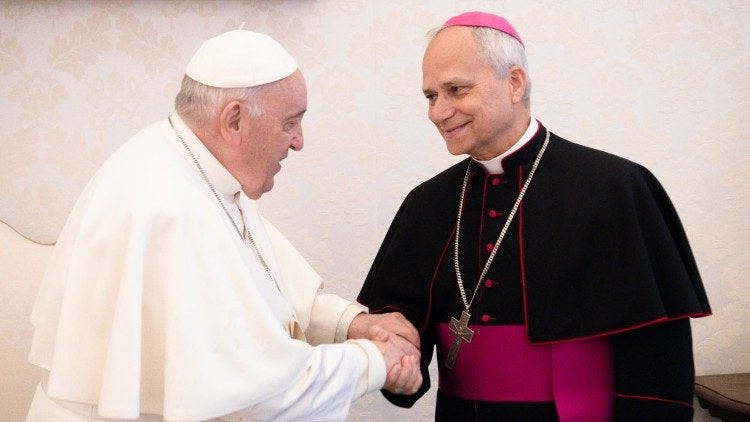
In a historic moment for the Catholic Church, Cardinal Robert Francis Prevost has been elected as the new pope, taking the papal name Leo XIV. At 69 years old, he becomes the first American to ascend to the papacy, marking a significant milestone in the Church’s 2,000-year history.
Early Life and Education
Born on September 14, 1955, in Chicago, Illinois, Robert Francis Prevost entered the Order of Saint Augustine (O.S.A.) in 1977. He earned a Bachelor of Science in Mathematics from Villanova University in 1977, followed by a Master of Divinity from the Catholic Theological Union in Chicago in 1982. Furthering his academic pursuits, he obtained a doctorate in Canon Law from the Pontifical University of St. Thomas Aquinas in Rome in 1987.
Missionary Work and Ecclesiastical Service
Cardinal Prevost’s missionary journey began in 1985 when he served in the Diocese of Chulucanas, Peru. Over the years, he held various positions, including prior of his community, ecclesiastical judge, and rector of the diocesan seminary. In 2014, he was appointed as the bishop of Chiclayo, Peru, where he served until 2023.
In 2023, Pope Francis appointed him as the Prefect of the Dicastery for Bishops and President of the Pontifical Commission for Latin America. In these roles, he was responsible for overseeing the appointment of bishops worldwide and addressing issues pertinent to the Latin American Church.
Papal Election and Leadership Style
Cardinal Prevost’s election as pope occurred on the second day of the conclave, where he secured a majority among the 133 cardinal electors. His election was celebrated by over 100,000 people in St. Peter’s Square.
Known for his linguistic abilities, Cardinal Prevost is fluent in English, Spanish, Italian, French, and Portuguese, and can read Latin and German. This multilingual proficiency enhances his ability to communicate effectively within the diverse global Church.
Theological Perspectives and Public Reception
Cardinal Prevost is considered a moderate progressive within the Church. He has expressed support for Pope Francis’ emphasis on synodality and inclusivity, advocating for a Church that is welcoming to all, regardless of their backgrounds or choices.

His election has been met with widespread acclaim, with leaders from around the world extending their congratulations. Notably, former U.S. President Donald Trump congratulated him on his Truth Social platform, highlighting the historic nature of an American pope.
Conclusion
Pope Leo XIV’s election signifies a new chapter in the Catholic Church’s history, reflecting its global nature and the diverse backgrounds of its leaders. With his extensive experience in missionary work, ecclesiastical governance, and commitment to inclusivity, Pope Leo XIV is poised to lead the Church into a future that embraces unity, peace, and service to all.