When Paradise Turns White: Hawaii’s Winter Surprise
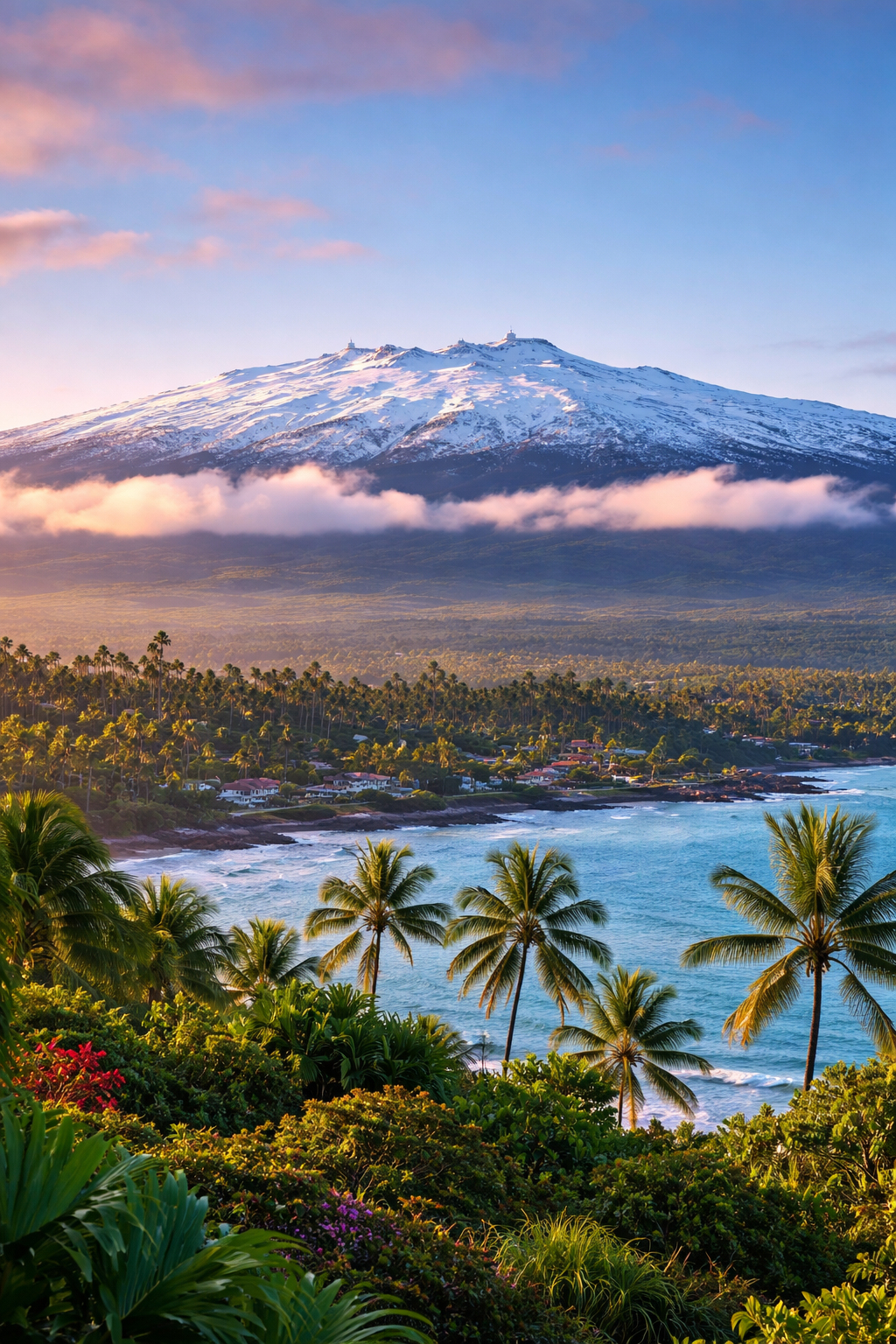
When paradise turns white, the transformation feels almost unreal. Hawaii, a place known for endless sunshine and warm ocean breezes, suddenly reveals a quieter, more powerful side of nature. As snow gently blankets the towering peaks, the island seems to pause, wrapped in a moment of rare magic. The contrast is breathtaking icy silence above, tropical life thriving below creating a scene that stirs wonder, disbelief, and deep emotion. This unexpected winter surprise reminds us that Hawaii is not just a destination of beauty, but a living masterpiece where nature boldly breaks its own rules and leaves everyone who witnesses it forever changed.
Does It Really Snow in Hawaii?
Yes, it does snow in Hawaii — but not where most tourists expect it. Snowfall does not occur on beaches or in coastal cities like Honolulu or Waikiki. Instead, snow forms on the highest mountain peaks, primarily on the Big Island of Hawaii.
The two main locations where snow is regularly observed are:
- Mauna Kea
- Mauna Loa
These volcanic mountains rise more than 13,000 feet above sea level, placing their summits high enough for temperatures to drop below freezing during winter months.
Why Does Snow Occur in a Tropical Climate?
Hawaii’s tropical climate might seem incompatible with snow, but altitude plays a crucial role. While sea-level temperatures remain warm year-round, temperatures decrease as elevation increases.
Key Factors That Cause Snow in Hawaii
- High Elevation
Mauna Kea stands at approximately 13,803 feet, making it one of the tallest mountains in the world when measured from base to peak. - Winter Storm Systems
During winter (typically December through March), cold air masses and Pacific storms can bring moisture and freezing temperatures to high elevations. - Temperature Drop with Altitude
On average, temperature drops about 3.5°F for every 1,000 feet of elevation gained. - Atmospheric Conditions
When moisture meets cold air at the summit, precipitation falls as snow instead of rain.
Where Can You See Snow in Hawaii?
Mauna Kea
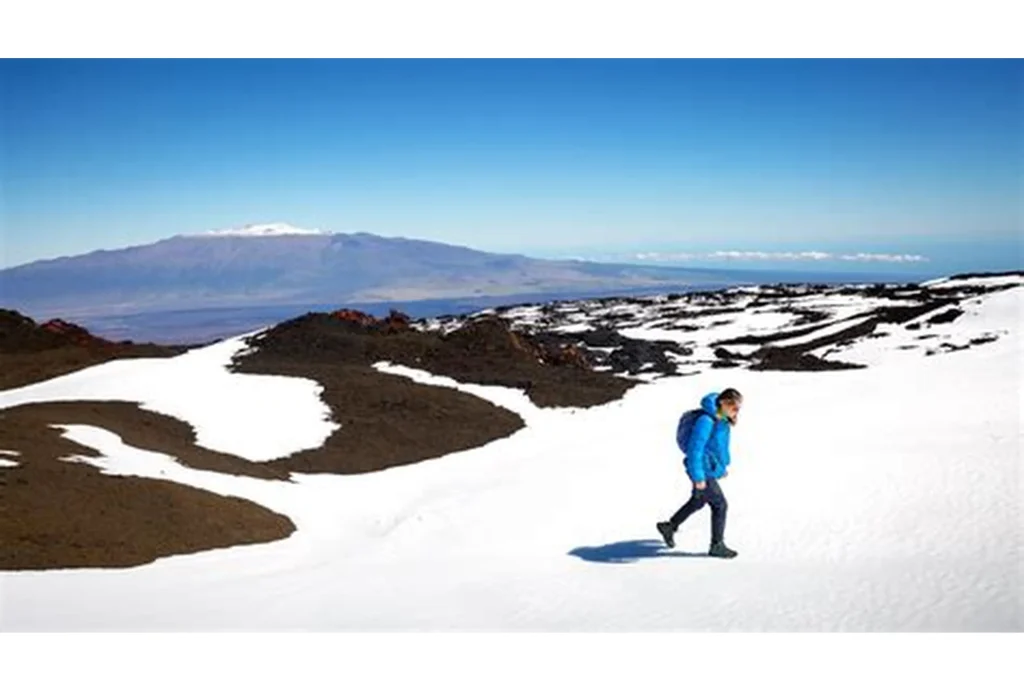
Mauna Kea is the most famous location for snow in Hawaii. Its summit is often capped with snow during winter months, creating a dramatic contrast against the surrounding lava fields.
This mountain is also home to world-class astronomical observatories, and snowfall occasionally impacts access to these facilities.
Mauna Loa
Mauna Loa, the world’s largest volcano by volume, also receives snowfall, though less frequently than Mauna Kea. When snow does fall, it can blanket vast areas due to the volcano’s massive size.
How Often Does It Snow in Hawaii?
Snowfall in Hawaii is not a one-time anomaly. It happens almost every winter, though the amount varies.
- Light snow occurs most years
- Heavy snowfall is less common but does happen
- Blizzards have been recorded in rare cases
Some winters bring only a dusting, while others create thick snow cover lasting several days or even weeks at the summit.
Can Tourists Visit the Snow?
Yes, but with caution.
While snow on Mauna Kea is a breathtaking sight, visiting requires preparation:
- Roads may close due to icy conditions
- Four-wheel drive vehicles are often required
- Altitude sickness is a real risk
- Weather can change rapidly
Visitors are advised to check local weather updates and follow safety guidelines before attempting a trip.
Cultural Significance of Snow in Hawaii
Snow holds cultural meaning in Hawaiian tradition. Mauna Kea is considered a sacred mountain, and snowfall is often viewed as a natural expression of balance between the elements.
Traditional Hawaiian chants and stories reference the cold regions of the mountains, showing that ancient Hawaiians were well aware of snow long before modern science explained it.
Environmental Impact of Snowfall
Snow plays a small but important role in Hawaii’s ecosystem.
Benefits to the Environment
- Water Storage: Melting snow contributes to groundwater recharge
- Climate Balance: Snow helps regulate temperature at high elevations
- Unique Habitats: Cold-adapted species rely on high-altitude conditions
Though limited in scope, snow helps maintain ecological diversity in Hawaii’s volcanic landscapes.
Upsides of Snow in Hawaii
Despite being rare, snowfall brings several unique advantages to the islands.
1. Natural Beauty and Contrast
Few places on Earth offer the visual contrast of snow-covered mountains rising above tropical forests and beaches. This makes Hawaii visually unique and globally fascinating.
2. Scientific Research Opportunities
Snow on Mauna Kea helps scientists study climate patterns, atmospheric changes, and weather systems in a tropical environment.
3. Tourism Interest
Snowfall attracts visitors eager to witness something unexpected. Seeing snow in Hawaii often becomes a once-in-a-lifetime experience.
4. Water Resource Support
As snow melts, it contributes to aquifers that supply freshwater to the island, especially during drier periods.
5. Cultural Preservation
Snow reinforces traditional knowledge and respect for Hawaii’s sacred mountains, supporting cultural awareness and education.
Snow vs. Lava: Hawaii’s Extreme Natural Diversity
One of the most fascinating aspects of snow in Hawaii is that it can occur simultaneously with volcanic activity. There have been instances where snow fell on Mauna Kea while lava flowed from Kīlauea, just miles away.
This rare combination highlights Hawaii’s extraordinary geological diversity and reinforces why the islands are studied worldwide.
Best Time of Year to See Snow in Hawaii
The best months to potentially see snow are:
- December
- January
- February
- March
January typically offers the highest chance, especially after winter storms pass through the region.
Common Myths About Snow in Hawaii
Myth 1: It Snows on Hawaiian Beaches
False. Snow only occurs at very high elevations.
Myth 2: Snow Happens Once in a Century
False. Snowfall happens nearly every year.
Myth 3: Hawaii Is Always Hot Everywhere
False. Temperatures vary greatly depending on elevation.
Final Thoughts
Snow in Hawaii is one of nature’s most surprising contradictions. While the islands are famous for tropical warmth, their towering volcanic peaks create the perfect conditions for snowfall. From the majestic slopes of Mauna Kea to the scientific and cultural significance of winter storms, snow adds another layer to Hawaii’s rich natural identity.
Understanding this phenomenon not only deepens appreciation for Hawaii’s geography but also reminds us that nature often defies expectations. Whether you’re visiting, studying weather, or simply fascinated by the world’s wonders, snow in Hawaii is proof that even paradise can have a winter side.