The White House press secretary holds one of the most visible communication positions in American government. Standing before journalists in Washington, the press secretary explains the president’s agenda, responds to questions about national and international developments, and helps communicate the administration’s position to the American public.
In October 2026, the role entered a new chapter when President Donald Trump appointed Katie Zacharia to replace Karoline Leavitt. Zacharia began her tenure on October 12, following Leavitt’s departure in August. Her first briefing with reporters took place on October 13, bringing fresh attention to the responsibilities and challenges of the position.
The appointment matters because communication is a vital part of modern leadership. People want to understand government decisions, journalists seek answers, and public institutions need ways to explain their actions. A press secretary operates at the centre of these competing expectations.
The position can also offer opportunities for professional growth, public engagement, and stronger communication between government and citizens. While political disagreements are inevitable, clear explanations, accurate information, and meaningful access to the press can help people better understand the decisions that affect their lives.
Who Is the White House Press Secretary?
The White House press secretary is the administration’s principal spokesperson to the news media. The position involves explaining presidential policies, sharing official announcements, responding to questions, and communicating the administration’s perspective on important developments.
The press secretary works closely with the president, communications officials, policy advisers, and other members of the administration. The job requires a strong understanding of current events, political priorities, public messaging, and the responsibilities of government.
A typical day may involve preparing for a briefing, reviewing policy updates, coordinating with officials, answering questions from journalists, and responding to breaking news. When a major domestic or international event occurs, the press secretary may need to explain the administration’s position quickly while avoiding inaccurate or premature statements.
The role is not simply about speaking confidently in front of cameras. It also requires preparation, judgement, discipline, and the ability to communicate complicated information in language the public can understand.
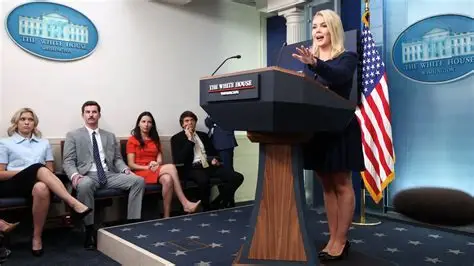
Katie Zacharia Becomes the New White House Press Secretary
President Donald Trump announced Katie Zacharia’s appointment on October 9, 2026. She succeeded Karoline Leavitt, who left the position in August to spend more time with her family. Zacharia officially began her new role on October 12.
Before her appointment, Zacharia worked as a senior communications adviser at Trump Media & Technology Group, the company associated with the social media platform Truth Social. She had also worked as a spokesperson for the Department of Homeland Security and appeared as a conservative commentator on television networks, including Fox News and Newsmax.
Zacharia is an attorney and a graduate of Pepperdine University’s law school. Her professional background combines legal education, political communication, media appearances, and experience supporting the administration’s public messaging. These experiences are relevant to a position that requires careful wording, rapid responses, and an understanding of political issues.
Trump publicly praised Zacharia when announcing his selection, expressing confidence in her ability to communicate the administration’s message. The appointment places her in a demanding position where every briefing can attract national attention and where statements may quickly circulate across television, news websites, and social media.
Her tenure will be judged not only by how confidently she presents the administration’s views but also by how effectively she handles difficult questions, explains decisions, and communicates information to the public.
Katie Zacharia’s First Press Briefing
Zacharia’s first appearance before reporters took place on October 13, 2026. According to the Associated Press, the briefing lasted approximately 14 minutes, and she took questions from three media outlets before ending the session. She described her role as helping amplify the president’s agenda and pointed to the president as his own principal spokesperson.
The first briefing offered an early look at her approach to the job. However, a single appearance is not enough to determine how her entire tenure will unfold. The more meaningful assessment will come through her handling of future briefings, the quality of the information shared, and the consistency of her communication.
Every new press secretary faces an adjustment period. The individual must understand the administration’s priorities, establish working relationships with journalists, and develop a communication routine that can withstand intense public scrutiny.
For Zacharia, the opportunity is significant. A successful tenure could demonstrate the value of preparation, clear messaging, and effective coordination across government departments. At the same time, regular engagement with journalists will remain important because public communication is strongest when important questions can be raised and addressed.
The Main Responsibilities of a White House Press Secretary
1. Explaining Presidential Policies
Government decisions can involve complicated legal, economic, diplomatic, and administrative issues. The press secretary helps explain the administration’s stated objectives and the reasoning behind its decisions.
For example, a new economic policy may affect businesses, workers, families, and international trade. A clear explanation can help people understand what the administration intends to achieve and what changes may follow.
Good communication does not require every citizen to agree with a policy. It allows people to understand the decision and evaluate its possible consequences.
2. Answering Journalists’ Questions
Press briefings give journalists an opportunity to ask questions about government actions and seek clarification about important developments.
Questions may concern employment, immigration, healthcare, national security, foreign relations, public spending, or presidential decisions. Some questions are straightforward, while others involve controversy or incomplete information.
A capable press secretary must listen carefully, understand the issue, and respond as accurately as possible. When an answer is not yet available, acknowledging that limitation and providing a reliable update later can be more useful than offering speculation.
3. Communicating During Emergencies
During a national emergency or international crisis, the public needs timely and dependable information. Conflicting reports can increase confusion, especially when people are worried about their safety or the consequences of an unfolding event.
The press secretary can help communicate confirmed information, explain what officials are doing, and direct attention to authoritative updates. Accuracy is especially important in these circumstances because an incorrect statement may create unnecessary fear or misunderstandings.
4. Coordinating With Government Officials
A press secretary cannot work effectively in isolation. The role requires communication with policy advisers, department spokespeople, legal teams, and senior administration officials.
Coordination helps ensure that public statements accurately reflect the information available across government. It can also reduce contradictions and make it easier for journalists to identify the correct source for specific questions.
5. Representing the Administration Publicly
The press secretary is often one of the most recognisable representatives of the White House. Tone, preparation, clarity, and professionalism can influence how the administration’s message is received.
Although the role is political, the communication responsibilities are substantial. Public statements should be understandable, claims should be supported by evidence, and corrections should be made when information proves inaccurate.
Why the White House Press Secretary Matters to Ordinary People
The work of a White House press secretary may appear distant from everyday life, but federal government decisions can affect millions of people.
Policies announced in Washington can influence taxes, jobs, healthcare, education, border security, international trade, and relations with other countries. The press secretary helps communicate the administration’s position on these matters to citizens who may not have time to follow every government document or official meeting.
Clear communication can make public information more accessible. It can help families understand policy changes, businesses prepare for regulatory developments, and communities follow decisions that affect local services or national priorities.
For people outside the United States, White House announcements can also provide insight into American foreign policy, economic direction, and international partnerships.
The positive potential of the position lies in its ability to make complex government activity easier to understand. When communication is accurate and accessible, citizens have a stronger foundation for informed discussion and decision-making.
Karoline Leavitt’s Departure and Her Legacy
Katie Zacharia’s appointment followed the departure of Karoline Leavitt, who served as White House press secretary from January 2025 until August 2026.
Leavitt became the youngest person to hold the position when she took office at age 27. She was a prominent public representative of the Trump administration and became widely recognised for her frequent press briefings and direct exchanges with reporters.
President Trump announced her departure in August, saying she wanted to spend more time with her young children and family. Leavitt subsequently announced a new role as a Fox News contributor, scheduled to begin on November 1, 2026.
Her time in the role demonstrated how modern political communication extends beyond the briefing room. Statements made during a press conference can rapidly become headlines, online clips, and subjects of public debate.
Her departure also highlights an important reality of public service: leadership positions change hands, but the responsibilities attached to them continue. Zacharia now inherits the task of communicating the administration’s agenda while building her own professional record.
The Importance of Transparency and Media Access
One of the greatest opportunities for any White House press secretary is to strengthen public understanding through transparent communication.
Transparency does not mean every sensitive detail can be disclosed immediately. Certain matters may involve national security, confidential negotiations, legal restrictions, or information that has not yet been verified. However, officials can still explain what is known, identify what remains uncertain, and provide updates when appropriate.
Journalists also play a valuable role by testing official claims, requesting supporting evidence, and bringing public concerns to the attention of government officials. A healthy exchange can help identify misunderstandings and encourage more complete explanations.
The press secretary and the media do not need to agree on every issue to fulfil their respective responsibilities. Their interaction is most useful when questions are relevant, answers are clear, and factual claims can be examined.
Expanding access to a wider range of media outlets can also help reach different audiences. At the same time, fair procedures and meaningful opportunities to ask questions are essential if public communication is to serve a broad audience.
The Challenges of the Position in the Digital Age
The modern press secretary works in a fast-moving information environment. A statement can be clipped, shared, translated, and debated online within minutes. A short video may reach millions of people before the complete briefing becomes available.
This creates opportunities as well as challenges. Social media allows official information to reach audiences directly, including people who rarely watch traditional news broadcasts. It can make speeches, policy announcements, and public statements easier to access.
However, speed also increases the risk of misinformation, missing context, and exaggerated interpretations. A short clip may not capture the full exchange, while an early report may later require correction.
Effective communication therefore depends on more than quick responses. It requires accuracy, context, consistency, and a willingness to distinguish confirmed facts from preliminary information.
The press secretary must also understand that credibility is built over time. Clear answers to difficult questions, accurate statements, and responsible corrections can help establish trust. Dismissive responses or unsupported claims can have the opposite effect.
What Could Define Katie Zacharia’s Tenure?
Zacharia’s early days in the role are only the beginning of a much larger public responsibility. Her performance will become clearer as she handles major policy announcements, difficult questions, breaking news, and the regular demands of the White House briefing room.
Several factors will be important in assessing her tenure.
Clarity: Can she explain complicated issues in language that ordinary people can understand?
Accuracy: Does the information she provides match verified facts and official records?
Responsiveness: Does she address relevant questions and explain when additional information is needed?
Consistency: Can she communicate the administration’s position reliably across changing circumstances?
Professionalism: Can she manage disagreements and intense scrutiny while maintaining a productive public exchange?
These standards apply regardless of political party. They offer a practical way to assess the work of a public spokesperson without assuming that every statement or policy must be accepted without examination.
For Zacharia, the opportunity is to establish a clear communication style, build effective working relationships, and demonstrate how a press secretary can make government information more accessible.
Final Thoughts
The White House press secretary is much more than a person standing behind a podium. The position connects presidential leadership with journalists, citizens, and the wider world. It requires communication skills, preparation, sound judgement, and the ability to respond under pressure.
Katie Zacharia began her tenure on October 12, 2026, after President Donald Trump selected her to replace Karoline Leavitt. Her first briefing on October 13 marked the beginning of a new chapter in the administration’s public communication.
The long-term significance of her appointment will depend on what follows. Clear explanations, reliable information, meaningful engagement with journalists, and responsible communication can help the public better understand government decisions.
Reference: Daily Talks Web
Add a stronger news-focused openingReduce repeated explanations of communication