The IndiGo power bank fire incident has drawn attention to an important issue in modern air travel: the safe handling of portable electronic devices. Power banks have become everyday essentials, helping passengers keep their phones charged during long journeys. Yet, when a battery overheats or catches fire inside an aircraft, a small device can quickly create a serious emergency.
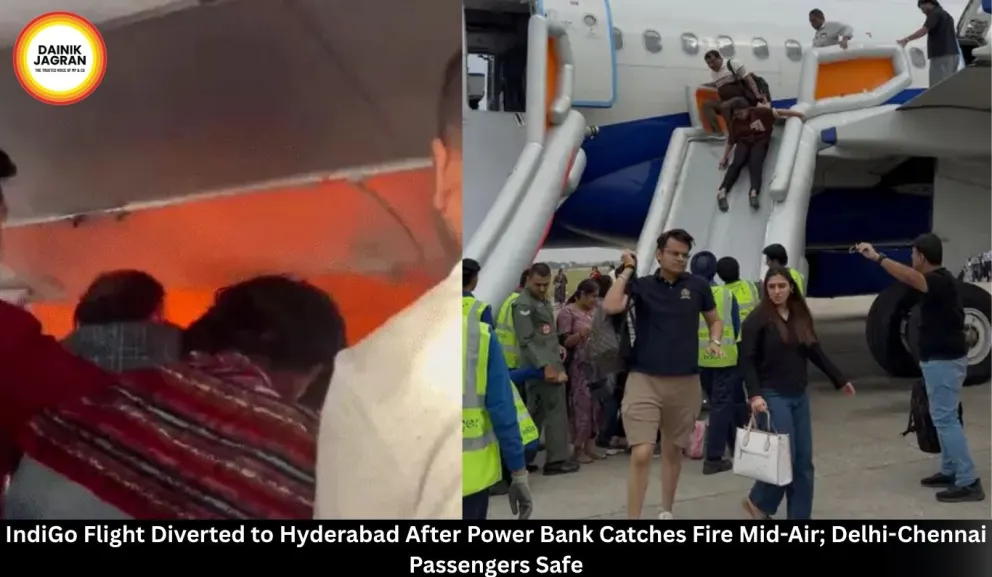
On October 11, 2026, IndiGo flight 6E 6115, travelling from Delhi to Chennai, was diverted to Hyderabad after smoke was detected from a passenger’s electronic device. News reports identified the device as a power bank that caught fire inside an overhead storage compartment. The aircraft landed safely at Rajiv Gandhi International Airport, and no injuries were reported. IndiGo said the crew responded promptly and an alternative aircraft was arranged to continue the passengers’ journey.
Although the incident caused understandable concern, it also highlighted something positive: the importance of trained cabin crew, established emergency procedures, and quick decisions that put human safety first. It serves as a powerful reminder that safer air travel depends on airlines and passengers working together.
What Happened During the IndiGo Power Bank Fire?
The incident involved IndiGo flight 6E 6115, an Airbus A321 scheduled to travel from New Delhi to Chennai. On October 11, the aircraft diverted to Hyderabad after smoke was detected from a personal electronic device in the cabin.
According to published reports, a passenger’s power bank caught fire inside an overhead storage bin while the aircraft was airborne. The crew responded to the situation, and the pilots diverted the aircraft in line with safety procedures. The flight landed at Hyderabad’s Rajiv Gandhi International Airport at approximately 3:59 p.m.
More than 180 people were reported to be on board. Fortunately, no injuries were reported in this incident. Passengers were subsequently provided with an alternative aircraft to continue their journey, while the airline worked to minimise disruption and provide updates.
An emergency diversion can be stressful for passengers, especially when smoke or flames are involved. However, landing at a suitable airport is an important safety measure when a potential onboard fire is suspected. Reaching the ground safely allows emergency teams to assist and the aircraft to be inspected.
The reported incident also reinforces why passengers should follow crew instructions immediately and avoid taking independent actions that could make an emergency more dangerous.
Why Can a Power Bank Catch Fire on a Flight?
Power banks usually contain rechargeable lithium-ion or lithium-based batteries. These batteries store substantial energy in a compact space, making them convenient for everyday use. When manufactured properly and handled according to instructions, they are widely used in portable electronics.
However, a battery can become dangerous if it is damaged, defective, overheated, or exposed to an internal short circuit. In some circumstances, this can trigger a process known as thermal runaway, in which heat builds rapidly inside the battery and may lead to smoke, fire, or the release of hazardous gases.
Several factors can increase the risk:
- Physical damage: A power bank that has been crushed, punctured, or dropped heavily may have internal damage that is not immediately visible.
- Battery defects: Poor manufacturing or faulty components can compromise battery safety.
- Excessive heat: Leaving a device in a hot environment or using it outside its recommended conditions can increase the risk of overheating.
- Damaged charging equipment: Incompatible or faulty cables and chargers can contribute to electrical problems.
- Age and wear: Batteries may deteriorate over time, particularly when repeatedly exposed to heat or physical stress.
The precise cause of the October 11 incident should not be assumed without the findings of an official investigation. The broader lesson is that even a familiar consumer device deserves careful handling, particularly in an aircraft cabin where an emergency requires an immediate and coordinated response.
The Positive Side: Why Safety Procedures Matter
An aviation emergency can quickly become frightening, but effective safety procedures are designed to reduce risk and protect lives. The IndiGo incident illustrates several important principles.
1. Quick Crew Response Can Make a Difference
Cabin crew members receive training to respond to onboard emergencies, including smoke and fire involving electronic devices. Their responsibilities include alerting the flight deck, following established procedures, coordinating with other crew members, and protecting passengers.
A calm, trained response can help prevent confusion from escalating. Passengers can support the crew by listening carefully, keeping aisles clear when instructed, and following directions without delay.
2. Pilots Must Prioritise Safety Over the Schedule
A diversion may delay a flight, disrupt connecting journeys, and inconvenience passengers. Nevertheless, when a possible fire is detected, the priority is to protect everyone onboard.
Choosing to divert to a suitable airport is not necessarily a sign that an aircraft has failed. It can be evidence that safety procedures are being followed appropriately. The objective is to bring the aircraft to a safe location where the situation can be assessed.
3. Emergency Planning Helps Reduce Uncertainty
Airlines prepare for unexpected situations through training, procedures, communication systems, and coordination with airport emergency services. While no safety system can eliminate every risk, preparation helps crews respond in a structured way instead of improvising under pressure.
4. Passenger Awareness Strengthens Safety
Airline safety is a shared responsibility. Passengers who know the rules for carrying batteries, recognise signs of damage, and report unusual heat or smoke can help crew members identify potential problems sooner.
The most useful response to this incident is not panic. It is greater awareness, practical precautions, and consistent compliance with airline instructions.
Power Bank Rules Passengers Should Know
One of the most important lessons from the IndiGo power bank fire is the need to check current airline rules before travelling.
IndiGo’s published baggage guidance states that power banks and spare or loose lithium batteries must be carried in hand baggage, not checked baggage. It also says these items must remain within the passenger’s personal reach, such as under the seat, in a seat pocket, or on the passenger’s person. They must not be stored in overhead compartments. IndiGo’s current guidance also says power banks should not be used to charge devices or recharged during the flight.
These rules are important because a battery problem needs to be noticed and addressed promptly. A device hidden in checked baggage or stored out of reach may be harder to identify quickly.
Passengers should always verify the latest rules directly with their airline because requirements can change and may differ between carriers or countries.
Essential Power Bank Safety Checklist
Before travelling, passengers should:
- Check the airline’s latest battery and baggage rules.
- Carry permitted power banks in hand baggage only.
- Keep power banks within personal reach and out of overhead bins when airline rules require this.
- Avoid using or charging power banks during the flight when prohibited.
- Never travel with a power bank that is swollen, leaking, unusually hot, cracked, or giving off an unusual smell.
- Protect the device from crushing, sharp objects, and accidental damage.
- Follow airline instructions about battery capacity and quantity.
- Tell a crew member immediately if a battery becomes unusually hot, begins to swell, or emits smoke.
These straightforward steps can reduce avoidable risks without making ordinary travel feel frightening.
What Passengers Should Do if a Power Bank Overheats
Recognising a warning sign is only useful when it is followed by the right response. If a power bank becomes unusually hot, starts swelling, produces smoke, or appears to be burning, passengers should alert a cabin crew member immediately.
Do not hide the device in a bag, place it in an overhead compartment, or attempt to carry it elsewhere without instructions. Do not try to manage a developing battery fire independently. Battery incidents can intensify quickly, and handling a hot or damaged battery may cause burns or expose a person to smoke.
Instead, follow the crew’s instructions and keep other passengers clear of the affected area when directed. If the crew instructs passengers to move or prepare for an evacuation, follow those directions promptly.
In an emergency, staying calm does not mean ignoring the danger. It means taking the situation seriously while allowing trained professionals to coordinate the response.
How to Choose and Maintain a Safer Power Bank
Power banks offer convenience, but price and appearance should not be the only factors when choosing one.
Buy From a Reliable Seller
Choose a reputable manufacturer and seller. Look for clear capacity information, credible safety certifications where applicable, and a warranty or customer support service. Avoid suspiciously cheap devices with unclear specifications, missing labels, or questionable claims.
Inspect the Device Regularly
Check the casing, ports, and cables for signs of damage. A swollen case, leaking material, unusual smell, repeated overheating, or visible cracks should be treated as a warning sign. Stop using a device that appears damaged and follow local guidance for safe battery disposal.
Use Compatible Accessories
Use charging equipment recommended by the manufacturer. Damaged cables, poor-quality adapters, and inappropriate charging equipment can create avoidable electrical risks.
Protect It From Heat and Impact
Do not leave a power bank in direct sunlight, near heaters, or in other excessively hot places. Avoid dropping it or storing it where heavy items can crush it. Follow the manufacturer’s storage and charging instructions.
Dispose of Damaged Batteries Responsibly
Lithium batteries should not be thrown casually into household rubbish where local waste rules prohibit it. Contact an appropriate battery recycling or hazardous-waste service for guidance. Proper disposal protects people who handle waste and helps prevent battery-related fires beyond the aircraft cabin.
A Previous IndiGo Incident Highlights the Need for Continued Awareness
The October incident was not the first reported power bank fire involving an IndiGo aircraft in 2026. On May 5, a power bank reportedly caught fire after flight 6E 108 arrived in Chandigarh from Hyderabad. The aircraft was evacuated, and reports said five people sustained injuries. That event further emphasised the importance of battery handling and emergency preparedness.
Each incident deserves careful investigation rather than speculation. The goal should be to establish what happened, identify contributing factors, and use reliable findings to improve safety practices.
Aviation safety continually evolves as new technologies and risks emerge. Portable batteries are useful, but airlines, regulators, manufacturers, and passengers must remain attentive to how these devices are carried and used.
The Importance of Responsible Reporting
Dramatic videos of an onboard fire can spread rapidly across social media. While such footage can help draw attention to a genuine safety issue, incomplete captions and unverified claims may also create unnecessary fear.
Responsible reporting should distinguish confirmed facts from eyewitness accounts and speculation. It should identify the flight and date accurately, report whether injuries were confirmed, and avoid declaring a cause before an investigation establishes it.
For travellers, official airline advisories and aviation authority guidance are more useful than rumours. For publishers, careful sourcing helps readers understand both the seriousness of an incident and the steps that can reduce future risk.
What This Incident Means for the Future of Air Travel
The IndiGo power bank fire is a reminder that modern aviation must continually adapt to the everyday technology passengers bring onboard. Phones, tablets, laptops, and portable chargers are now common travel companions, so battery safety deserves clear rules and consistent public awareness.
Airlines can help by communicating restrictions in booking information, at check-in, at boarding gates, and through cabin announcements. Manufacturers can support safer use by improving battery quality, providing clear instructions, and making warning signs easier to recognise. Passengers can contribute by buying reliable devices, inspecting them regularly, and following crew directions.
The positive outcome of the October 11 incident was that the aircraft landed safely and no injuries were reported. That outcome should not cause anyone to dismiss the risk. Instead, it should encourage continued investment in training, prevention, and practical safety education.
A safe journey depends on many small decisions made before and during a flight. Checking a power bank, packing it correctly, and responding promptly to a warning sign may seem like minor actions, but they can make a meaningful difference.
Final Thoughts
The strongest lesson is clear: safety must always come before convenience. Trained crews, careful decision-making, clear airline rules, and informed passengers all play an important role in protecting lives.
Travellers do not need to fear every power bank. They need to understand the risks, choose reliable products, follow current airline requirements, and report warning signs immediately. With awareness and responsible action, passengers can help make air travel safer for everyone.
Reference: Daily Talks Web
Add a concise incident timelineClarify reported facts versus claims