Elizabeth II was one of the most recognizable figures in modern history. As the longest-reigning monarch in British history, she dedicated more than 70 years to public service, national representation, and the responsibilities of the Crown. Her reign witnessed extraordinary changes in society, politics, technology, communication, and international relations.
Born on April 21, 1926, Elizabeth Alexandra Mary Windsor was not originally expected to become queen. Yet historical events transformed her life, placing her on a path that would make her a defining figure of the twentieth and early twenty-first centuries.
Queen Elizabeth II became monarch on February 6, 1952, following the death of her father, King George VI. She was just 25 years old. Her coronation took place at Westminster Abbey on June 2, 1953, in a ceremony that brought the traditions of the monarchy to a growing television audience.
Her story is one of duty, resilience, continuity, and adaptation. Although her reign was not without controversy or difficult moments, her dedication to the responsibilities of her position shaped the modern image of the British monarchy.
Even after her death on September 8, 2022, her influence remains an important part of British history and the wider story of the Commonwealth.
Early Life of Elizabeth II
Elizabeth was born in London during a period when the British monarchy remained a central institution in national life. Her parents were Albert, Duke of York, who later became King George VI, and Elizabeth Bowes-Lyon, later known as the Queen Mother.
As a young princess, Elizabeth was raised largely outside the expectation that she would one day become monarch. Her future changed dramatically in 1936 when her uncle, King Edward VIII, abdicated the throne. Her father became king, making Elizabeth the heir presumptive.
The change brought new responsibilities and greater public attention. Elizabeth began preparing for a life that would require discipline, patience, and an understanding of constitutional duties.
Her education included history, languages, and subjects that helped prepare her for public responsibilities. During the Second World War, she also began taking a more active role in supporting the country.
These early experiences helped shape her sense of duty. Her childhood was transformed by history, but she adapted to the responsibilities that came with her family’s position.
Elizabeth II During the Second World War
The Second World War was one of the most challenging periods in modern British history. The conflict affected families across the country, disrupted daily life, and created uncertainty for millions of people.
Elizabeth was a teenager during much of the war. She participated in radio broadcasts intended to encourage young people and reassure children who had been separated from their families. In 1945, she joined the Auxiliary Territorial Service, the women’s branch of the British Army at the time, where she trained as a driver and mechanic.
Her wartime service became an important part of her personal story. Rather than remaining entirely removed from the experiences of ordinary people, she took part in a form of practical service during a national emergency.
The experience helped establish a public image of Elizabeth as a person prepared to accept responsibility. It also connected her early life with the wider experiences of a generation that endured war, loss, and national recovery.
The principles of duty and service that emerged during these years would remain central to her public life for decades.
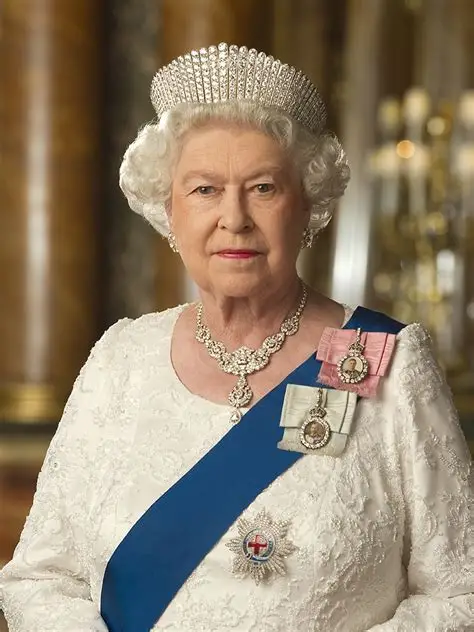
Becoming Queen at the Age of 25
Elizabeth’s life changed forever on February 6, 1952, when King George VI died. She was visiting Kenya as part of a royal tour when she received the news that her father had passed away.
At just 25, she became Queen Elizabeth II. Her return to Britain marked the beginning of a reign that would last more than seven decades.
Her coronation took place on June 2, 1953, at Westminster Abbey. The ceremony combined ancient traditions with the possibilities of modern broadcasting. Millions of people watched the event on television, while others listened on the radio. It was a landmark moment in the relationship between the monarchy and the public.
The young queen inherited responsibilities during a period of national and international transformation. Britain was rebuilding after the Second World War, and the country’s relationship with the wider world was changing.
Elizabeth’s role required her to represent the nation while remaining within the constitutional limits of the monarchy. She worked with successive prime ministers and carried out ceremonial duties that connected government, national institutions, and public life.
Her reign would eventually span 15 British prime ministers, beginning with Winston Churchill.
A Reign That Lasted More Than 70 Years
Queen Elizabeth II became the longest-reigning monarch in British history. Her reign began in 1952 and continued until her death in 2022, covering more than 70 years of profound change.
During this period, the world experienced the Cold War, major scientific discoveries, the expansion of television, the arrival of the internet, changing social attitudes, and the growth of digital communication.
Elizabeth remained a constant public figure throughout these transformations. While political leaders and governments changed, the monarchy continued to perform its constitutional and ceremonial functions.
Her responsibilities included meeting prime ministers, welcoming international leaders, opening Parliament, attending national commemorations, and representing Britain during official visits abroad.
The Royal Family’s official historical account describes her as a dedicated Head of the Commonwealth who visited communities across the United Kingdom and overseas throughout her reign.
Her longevity provided a sense of continuity for generations of people who had never known another British monarch. For many, her public presence became closely associated with major national events, annual traditions, and moments of collective remembrance.
However, a long reign also brought difficult decisions, public criticism, and challenges for the institution she represented. Her legacy is best understood by recognizing both her dedication to service and the complicated historical context in which she served.
Elizabeth II and the Commonwealth
The Commonwealth was an important part of Queen Elizabeth II’s work. It brought together independent countries with different histories, cultures, languages, and political systems.
As Head of the Commonwealth, Elizabeth supported cooperation and maintained relationships with leaders and communities across its member countries. Her visits and public appearances helped maintain the visibility of the organization during a period of major global change.
Her role carried particular historical significance because the Commonwealth developed as Britain’s former empire changed into a more diverse association of independent nations.
The queen’s position was largely symbolic and diplomatic rather than executive. She did not govern Commonwealth countries, but her presence offered an opportunity to recognize their shared connections and distinct identities.
Her international visits helped establish her as one of the most widely traveled heads of state of her era. They also created opportunities to meet people from different backgrounds and acknowledge achievements in public service, education, culture, and community life.
The Commonwealth remains an important part of her historical legacy, although its development and Britain’s imperial past continue to inspire debate about history, identity, independence, and the future of international relationships.
Marriage to Prince Philip and Family Life
Behind her public responsibilities, Elizabeth II also had a family life that developed alongside her reign.
She married Philip Mountbatten, later the Duke of Edinburgh, on November 20, 1947. Their marriage lasted more than 73 years, until Prince Philip’s death in April 2021.
Prince Philip supported the queen during official duties, royal tours, and public events. Their partnership became one of the defining personal relationships of her life.
Together, they had four children: Charles, Anne, Andrew, and Edward. Over the years, the family expanded to include grandchildren and great-grandchildren.
Balancing family life with the demands of the monarchy was a lasting challenge. The queen’s official schedule involved travel, public appearances, state responsibilities, and regular meetings, leaving much of her personal life subject to public interest.
Her family also experienced significant difficulties and controversies, some of which affected public confidence in the monarchy. These events demonstrated that the royal family, despite its official role and public image, was not immune to personal conflict or criticism.
Nevertheless, Elizabeth continued carrying out many of her duties while her family grew and changed across several generations.
The Queen’s Commitment to Public Service
Public service was one of the most recognizable themes of Elizabeth II’s reign.
Her work included supporting charitable organizations, recognizing achievements, attending community events, and meeting people involved in public service. Royal patronages helped bring attention to charities and organizations working in areas such as education, health, youth development, the environment, and community welfare.
The Royal Family’s historical records describe her links with hundreds of charitable, professional, and public service organizations. These relationships helped raise awareness of their work and recognize contributions that might otherwise receive limited public attention.
Her annual public duties also provided opportunities to celebrate acts of bravery, professional excellence, and service to local communities.
One important lesson from her life is the value of consistency. Her position demanded that she continue working through changing circumstances, including personal loss, national emergencies, and periods of public uncertainty.
Not every royal engagement produced a major headline, but the cumulative effect of thousands of meetings and appearances helped define her relationship with the public.
Her example illustrates how long-term service can become influential through repeated actions rather than a single dramatic achievement.
Modernizing the Monarchy While Preserving Tradition
Elizabeth II inherited an institution with centuries of history. Throughout her reign, she faced the challenge of preserving its traditions while responding to a rapidly changing society.
Television brought royal ceremonies into people’s homes. Later, digital media and the internet transformed how the public received information about the monarchy.
The queen’s coronation was a major milestone in televised royal history. Over subsequent decades, public access to royal events expanded, and the monarchy increasingly operated in a world shaped by instant news and widespread public scrutiny.
Modernization was not always simple. The royal family faced criticism over its public role, spending, personal conduct, and response to major events. The institution also had to adapt to changing expectations about transparency and accountability.
Elizabeth’s reign therefore represented both continuity and change. Traditional ceremonies and constitutional duties remained important, but the public environment surrounding them evolved dramatically.
Her ability to remain a recognizable figure throughout this transformation was one of the most distinctive features of her reign.
The experience also offers a broader lesson for longstanding institutions: preserving history does not eliminate the need to respond to the expectations of a changing society.
Platinum Jubilee: Celebrating 70 Years on the Throne
In 2022, Queen Elizabeth II reached a historic milestone with her Platinum Jubilee, marking 70 years since her accession to the throne.
The occasion recognized a period of service longer than that of any previous British monarch. Celebrations included official events, community gatherings, and public displays of appreciation throughout the United Kingdom and beyond.
The jubilee arrived during the final year of her life and gave people an opportunity to reflect on the remarkable length of her reign.
For many supporters, it represented a celebration of continuity and dedication. For historians, it also provided an opportunity to examine how Britain and the monarchy had changed since 1952.
The country that welcomed Elizabeth as queen was very different from the country that celebrated her 70th anniversary. Society, technology, international relationships, and the role of the United Kingdom in the world had all undergone major transformations.
Her Platinum Jubilee became a powerful symbol of the relationship between an individual monarch and generations of people who had lived under her reign.
Elizabeth II’s Death and National Mourning
Queen Elizabeth II died on September 8, 2022, at Balmoral Castle in Scotland, aged 96.
Her death marked the end of an extraordinary period in British history. For many people, she had been a constant presence throughout their lives, and the announcement prompted tributes from political leaders, public figures, organizations, and members of the public.
A period of national mourning followed. Her state funeral took place on September 19, 2022, bringing together members of the royal family, national representatives, and international leaders.
Her eldest son succeeded her as King Charles III, beginning a new chapter for the British monarchy.
The response to her death demonstrated how deeply her reign had become connected with public memory. People remembered her through personal experiences, historic broadcasts, photographs, royal visits, and national celebrations.
Her passing was not simply the loss of a monarch. It marked the conclusion of a reign that had connected several generations and witnessed enormous changes in everyday life.
The Lasting Legacy of Elizabeth II
Elizabeth II’s legacy is complex, reflecting both her extraordinary longevity and the changing world in which she served.
Her supporters remember her dedication, composure, and commitment to public duty. Her reign provided continuity during wars, political transitions, economic challenges, national celebrations, and periods of social change.
Her work with charities and public service organizations helped draw attention to causes and people across many communities. Her international visits also contributed to Britain’s diplomatic and ceremonial relationships with other countries.
At the same time, the monarchy she represented remains subject to debate about privilege, public accountability, Britain’s imperial history, and the institution’s place in modern democratic society. A balanced understanding of her legacy recognizes these concerns rather than treating her reign as free from controversy.
What makes her life historically significant is the scale of the transformation she witnessed and the length of time she occupied a central constitutional position.
She became queen in a world where television was still developing and left a world shaped by smartphones, social media, and instant global communication. She served through changing governments, shifting international relationships, and new expectations of public institutions.
Her life demonstrates the importance of adaptability, responsibility, and perseverance. It also reminds future generations that history is shaped by both individuals and the larger forces surrounding them.
Conclusion: Remembering a Historic Queen
Elizabeth II remains one of the most significant monarchs in British history. From her early years as a princess to her accession at 25 and her record-breaking 70-year reign, her life was shaped by responsibility on a remarkable scale.
She represented the United Kingdom at home and abroad, supported charitable causes, worked with successive prime ministers, and witnessed transformations that changed how people lived and communicated.
Her story includes moments of celebration, personal loss, national difficulty, and public controversy. Yet her enduring historical importance is undeniable.
The crown passed to King Charles III, but Elizabeth II’s place in history remains secure. Her life continues to inspire reflection on leadership, duty, resilience, and the responsibilities that come with serving others.
Elizabeth II’s legacy is ultimately a story of a life devoted to public responsibility and a reign that connected generations across more than seven decades of change.
Reference
This article is prepared for Daily Talks Web, your destination for biographies, history, royal news, and engaging stories.
Visit: https://dailytalksweb.com/
AIOSEO publishing tip: Use Elizabeth II as the focus keyphrase, keep the slug elizabeth-ii-life-and-legacy, and add a relevant featured image with descriptive alt text such as “Queen Elizabeth II during her reign.”