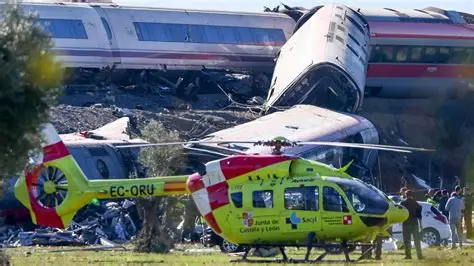
The Spain train crash on October 28, 2026, has brought grief and shock to Spain after two high-speed trains collided near Urda in the province of Toledo. The accident occurred on the railway corridor connecting Madrid with southern Spain, disrupting services and triggering a major emergency response.
Initial reports confirmed multiple deaths and injuries. The reported death toll has continued to change as authorities receive information from the scene. Sky News reported that local authorities had confirmed at least 39 deaths in a later update, while earlier reports gave lower figures. The final number of victims and injured passengers remains subject to official confirmation.
Behind every number are people with families, plans, hopes, and loved ones waiting for them. The accident is a painful reminder that public transportation safety is not merely a technical issue; it is a responsibility that affects real lives.
As emergency personnel work to assist survivors and authorities investigate what happened, attention is also turning toward passenger support, railway operations, and the lessons that may help prevent future disasters.
What Happened in the Spain Train Crash?
The collision occurred on the morning of Wednesday, October 28, near Urda in Spain’s Castilla-La Mancha region. According to Spain’s rail infrastructure administrator, Adif, the accident took place on the high-speed line between Madrid and Andalusia, near the section connecting Mora, Orgaz, and Urda.
The trains involved were operated by Renfe and Iryo. Early reporting indicated that a Renfe AVE train collided with an Iryo train that had stopped on the tracks. Two carriages reportedly derailed and went down an embankment, creating a serious emergency for passengers and responders.
The precise sequence of events is still being examined. Initial reports have raised questions about railway signalling and train movements, but the investigation must establish the facts before responsibility or a definitive cause can be determined.
Adif confirmed that rail traffic on the Madrid–Andalusia high-speed line had been suspended following the collision. Its rail network status page provides official information about the disruption and assistance arrangements.
The priority remains clear: reach those affected, provide medical care, identify victims, support families, and establish what happened.
Deaths and Injuries: What Is Known So Far?
The human cost of the Spain train crash is the most serious aspect of the unfolding story.
Authorities initially reported at least 10 deaths, with warnings that the number could rise. Later reporting from Sky News cited local authorities putting the toll at at least 39. These changing figures demonstrate why breaking-news casualty information must be treated carefully while rescue and identification work continues.
Multiple injuries have also been reported. The severity of those injuries and the final number of people affected require confirmation from the relevant authorities.
When a major transportation accident occurs, emergency services face several demanding tasks at once. They must reach injured passengers, assess medical needs, move people away from danger, coordinate hospital treatment, and locate anyone who may remain trapped or unaccounted for.
Families also need reliable information. Uncertainty about the condition or whereabouts of a loved one can be deeply distressing, making clear communication an essential part of the emergency response.
For readers following this developing story, official updates from Spanish authorities and the railway operators are the best way to verify new casualty figures. Unconfirmed names, photographs, and claims about individual victims should not be circulated.
Emergency Teams Respond to the Disaster
Emergency responders have been deployed to the crash site to assist passengers and coordinate rescue operations. Reports describe the involvement of firefighters, Civil Guard officers, Civil Protection personnel, and medical teams.
Such incidents require close cooperation between different services. Firefighters and rescue personnel assess damaged carriages and help people reach safety. Medical teams triage the injured and arrange transport for those requiring urgent treatment. Police officers help secure the area, manage access, and support the process of identifying victims.
Authorities in Castilla-La Mancha activated an emergency response operation. Regional officials also adjusted their schedules as attention shifted toward the unfolding disaster.
The work of emergency responders often takes place under difficult conditions. Damaged train carriages, unstable terrain, disrupted transport links, and uncertainty about the number of people affected can make rescue operations especially challenging.
Their efforts demonstrate the importance of preparedness, specialist training, and coordination between local and national agencies. The immediate priority is to protect life and provide care, while investigators work separately to preserve evidence and establish the causes of the collision.
Rail Services Between Madrid and Andalusia Suspended
The Spain train crash has also caused major disruption to rail travel.
Adif announced the suspension of traffic on the affected high-speed line connecting Madrid with Andalusia. The disruption affects passengers travelling between Madrid and southern destinations, including routes serving cities such as Seville, Córdoba, and Málaga.
Railway authorities established assistance points at major stations, including Madrid-Puerta de Atocha, Sevilla-Santa Justa, Córdoba-Julio Anguita, and Málaga-María Zambrano, according to Adif’s network update.
Renfe also announced arrangements allowing affected passengers to request changes or cancellations without charge, as reported in early coverage.
Travellers planning to use the corridor should check directly with their train operator before leaving for the station. They should verify whether their service is cancelled, delayed, or subject to an alternative arrangement, rather than relying on old schedules or social media posts.
People who need to travel urgently may need to consider alternative transport, but availability and journey times can change quickly during a major disruption.
The line should reopen only according to instructions from the responsible authorities. Safety checks, access for emergency teams, and the collection of evidence may all affect the timing.
What Caused the Spain Train Crash?
One of the most important questions is how two trains came into collision on a modern high-speed railway.
Early reports have raised the possibility of problems involving railway signalling and the instructions given to trains. Some accounts have suggested that a safety-system malfunction may have led to trains stopping and subsequent movements being managed manually. These details remain part of an evolving investigation and should not be treated as a final finding.
Railway safety relies on several layers of protection. Signalling systems communicate information about track occupancy and whether a train can safely proceed. Train-control technology monitors movement and speed, while railway controllers coordinate traffic and drivers follow operational instructions.
These systems are designed to reduce the risk of collisions, but investigators must examine whether the equipment worked correctly, whether procedures were followed, and whether communication or operational decisions contributed to the event.
A thorough investigation may involve reviewing signalling records, control-centre communications, train data, maintenance histories, track conditions, and witness accounts.
It is important not to assign blame before investigators have established the evidence. A responsible inquiry should distinguish between the immediate sequence of events and any deeper technical, organizational, or procedural factors.
The ultimate purpose is not only to understand what happened but also to identify changes that could improve safety for passengers and railway workers.
Why Railway Safety Matters
Rail travel carries millions of passengers every year and is an important part of modern transportation. High-speed services can connect cities efficiently, reduce travel times, and offer an alternative to road and air journeys.
However, the reliability of a rail network depends on constant attention to safety.
Effective railway safety requires several elements:
- Reliable signalling: Systems must accurately identify train positions and communicate movement restrictions.
- Preventive maintenance: Tracks, trains, communication equipment, and control systems need regular inspection and servicing.
- Clear procedures: Staff need clear instructions for normal operations, equipment failures, and unusual situations.
- Human-factors training: Controllers and drivers need preparation for high-pressure decisions and unexpected circumstances.
- Independent investigation: Serious accidents must be examined carefully so findings can inform practical improvements.
- Transparent communication: Passengers and families need accurate information during emergencies and disruptions.
These principles apply well beyond Spain. Every railway system can benefit from examining incidents, sharing lessons, and updating procedures when evidence shows that improvements are needed.
A major accident is devastating, but the response must extend beyond the immediate emergency. Careful investigation and meaningful action can help turn painful lessons into stronger protections for future passengers.
Support for Victims and Their Families
In the aftermath of a serious crash, victims and families need more than emergency medical care. They may also require information, practical assistance, emotional support, and help navigating the days and weeks ahead.
Authorities and railway operators play an important role in providing verified information, explaining available assistance, and directing families toward official support channels.
People seeking news about loved ones should rely on official contact points and avoid sharing personal details publicly. Unverified lists of victims can cause additional distress and may spread incorrect information.
The wider public can also help by respecting privacy, avoiding graphic or misleading posts, and allowing emergency teams to work without interference.
For people directly affected, recovery may be a long process. Serious injuries can require extensive treatment and rehabilitation, while the emotional effects of a sudden traumatic event may continue after the immediate danger has passed.
Compassionate communication and practical support can make a meaningful difference during this period. The needs of survivors and families should remain central as attention shifts from rescue operations to recovery and investigation.
Spain’s Railway Network and the Need for Public Confidence
Spain has developed an extensive high-speed rail network that connects major cities and supports business, tourism, and everyday travel. The network is an important part of the country’s transport infrastructure.
The crash near Urda will inevitably raise questions about safety, oversight, and the reliability of railway operations. Such questions deserve evidence-based answers rather than speculation.
Public confidence depends on more than the speed of trains or the convenience of routes. Passengers must also trust that infrastructure is maintained, procedures are followed, and potential hazards are addressed promptly.
Authorities can help maintain that confidence by communicating clearly, publishing investigation findings when appropriate, and explaining any corrective measures that follow.
It is equally important to recognize that one accident does not by itself establish the safety record of an entire transport system. Meaningful conclusions require verified evidence and comparisons across relevant data.
The most constructive response is to support the investigation, listen to the findings, and ensure that any necessary improvements are implemented.
How Passengers Can Respond to Major Rail Disruptions
Although passengers cannot control a railway emergency, practical steps can help them respond to sudden disruptions safely.
Check official travel updates. Before travelling, consult the railway operator or infrastructure authority for current service information.
Keep important details accessible. Save your ticket, booking reference, operator contact information, and details of any alternative travel arrangements.
Follow staff instructions. During an emergency, railway staff and emergency responders can provide instructions specific to the situation. Follow those directions rather than returning to a train or restricted area without permission.
Contact loved ones carefully. If your journey is disrupted, let family or friends know your location and any changes to your plans. Use official channels for urgent enquiries about missing or injured passengers.
Avoid spreading rumours. Do not repost unverified casualty figures, alleged causes, or identifying details. Reliable information is particularly important when families are searching for news.
These steps cannot eliminate the impact of a major accident, but they can help travellers make informed decisions while authorities manage the situation.
The Road Ahead: Turning Tragedy Into Meaningful Action
The Spain train crash is a painful reminder that transportation systems must continually earn public trust through safety, preparedness, and accountability.
The immediate work is to assist the injured, support bereaved families, identify everyone affected, and establish the full facts. In the longer term, the investigation should provide a clear account of the events and identify any improvements that are necessary.
Those improvements may involve equipment, operating procedures, staff training, communication, or oversight. Any changes should be based on evidence and directed toward reducing the risk of similar incidents.
The public also has a role in ensuring that the story remains focused on people rather than speculation. Respect for victims, careful reporting, and attention to verified findings help create a more responsible response to tragedy.
Progress in railway safety is often built through careful technical work and lessons learned from difficult events. Although no improvement can undo the loss experienced by families, meaningful action can help protect others in the future.
Conclusion: Remembering the People Behind the Headlines
The Spain train crash near Urda has left communities grieving and raised urgent questions about the safety of high-speed rail operations. With casualty figures changing as authorities provide updates, the full human cost and precise cause remain subjects of ongoing confirmation and investigation.
Emergency responders are working to help those affected, while railway authorities manage major service disruption and investigators examine the circumstances of the collision.
The most important priorities are to care for survivors, support families, communicate accurate information, and establish what happened without rushing to conclusions.
Above all, the people affected by this tragedy deserve compassion, dignity, and sustained support. Their lives must remain at the centre of the response.
A meaningful legacy of this tragedy would be a clearer understanding of what went wrong, stronger safeguards where needed, and renewed efforts to make rail travel safer for everyone.
Sources and Further Updates
- Sky News — Spain train crash live coverage
- EL PAÍS — Reporting on the collision near Urda
- Adif — Official rail network status
Reference: Daily Talks Web — https://dailytalksweb.com/
AIOSEO publishing note: Because this is a developing news story, recheck the official casualty figures, investigation findings, and service updates immediately before publishing or updating the article. Keep “Spain train crash” as the focus keyphrase and use the slug spain-train-crash.