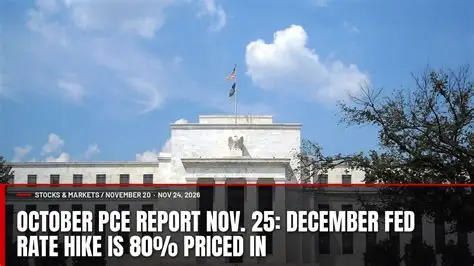
The PCE report has become one of the most important economic releases for investors, financial analysts, policymakers, and businesses across the United States. It provides valuable information about inflation, consumer spending, personal income, and the overall direction of the American economy.
As financial markets continue responding to changing economic conditions, the Personal Consumption Expenditures (PCE) Price Index remains a major indicator of inflation. The Federal Reserve closely monitors this measure when making decisions about interest rates and monetary policy.
The latest October 2026 PCE report, released on November 25, 2026, provides an important picture of the American economy. Inflation increased, but personal income also demonstrated encouraging growth. Consumer spending continued expanding in dollar terms, showing that households were still participating in economic activity despite ongoing price pressures.
The report offers a mixture of challenges and opportunities. Understanding its findings helps investors, businesses, and consumers recognize the economic developments that could influence financial markets in the coming months.
What Is the PCE Report?
The Personal Consumption Expenditures report is a monthly economic publication released by the U.S. Bureau of Economic Analysis (BEA).
It measures changes in the prices of goods and services purchased by consumers throughout the United States. These purchases include everyday necessities, healthcare services, housing-related services, transportation, entertainment, and many other expenses.
The PCE Price Index is particularly important because the Federal Reserve uses it as its preferred inflation measure.
Unlike some other inflation indicators, the PCE index captures a broad range of consumer spending and accounts for changes in purchasing behavior. This makes it an important tool for understanding the overall direction of inflation.
The report also includes information about personal income, disposable income, consumer spending, and personal savings.
Together, these indicators provide a broader understanding of household financial conditions and economic performance.
October 2026 PCE Report: Latest Economic Highlights
The October 2026 report delivered several important findings that deserve attention.
According to the Bureau of Economic Analysis, the PCE Price Index increased by 0.3% in October compared with the previous month. On a year-over-year basis, inflation reached 3.8%, compared with 3.6% in September.
Core PCE inflation, which excludes food and energy prices, also increased by 0.3% monthly and reached 3.3% annually, compared with 3.1% in September.
Other important economic figures included:
- Personal income increased 0.7% during October.
- Disposable personal income increased 0.8%.
- Personal consumption expenditures increased 0.3%.
- Real personal consumption expenditures were essentially unchanged.
- The personal saving rate reached 4.1%.
- Personal saving totaled approximately $1.00 trillion.
These figures demonstrate that the American economy continues experiencing meaningful income growth and consumer activity, even as inflation remains elevated.
The combination of stronger income and persistent inflation provides an important foundation for understanding the economic outlook.
Inflation Trends and Their Economic Importance
Inflation remains one of the most closely watched economic indicators because it directly affects household budgets, business costs, investment decisions, and financial markets.
The October PCE report showed that annual inflation increased to 3.8%. This indicates that the overall cost of consumer purchases remained significantly higher than one year earlier.
Monthly inflation, however, increased by 0.3%, showing a slower pace than September’s 0.5% monthly increase.
Core inflation also increased to 3.3% annually. Since this measure excludes food and energy, it helps economists identify underlying inflation trends without the influence of some of the most volatile price categories.
The Federal Reserve aims for 2% inflation over the longer term, measured by the annual change in the PCE Price Index.
Although current inflation remains above that target, monitoring monthly movements helps policymakers determine whether price pressures are accelerating or gradually improving.
For businesses, stable inflation can create better conditions for planning investments, managing operating expenses, and establishing long-term growth strategies.
For consumers, improved price stability can eventually strengthen purchasing power and financial confidence.
Core PCE: Why Investors Pay Attention
Core PCE is an important component of the overall PCE report.
It excludes food and energy prices because these categories can experience significant short-term fluctuations. Removing them provides a clearer view of underlying inflation pressures.
The October 2026 report showed that core PCE increased 0.3% monthly and 3.3% annually.
This increase deserves attention because persistent core inflation can influence the Federal Reserve’s approach to monetary policy.
Investors regularly examine core PCE because it provides useful information about the future direction of interest rates.
A gradual reduction in core inflation could create more favorable conditions for financial markets. Lower inflation pressure may eventually give policymakers greater flexibility to reduce borrowing costs.
However, the latest figures indicate that the inflation challenge is not yet over.
Understanding core PCE helps investors distinguish between temporary price movements and broader inflation trends.
Consumer Spending Shows Continued Economic Activity
Consumer spending is one of the most important drivers of the American economy.
The October 2026 report showed that personal consumption expenditures increased by $63.8 billion, representing a monthly increase of 0.3%.
Spending on goods increased by $11.8 billion, while spending on services increased by $52.1 billion.
This demonstrates the continued importance of services in household consumption.
Consumers continue spending on healthcare, transportation, entertainment, financial services, and other essential activities.
However, the difference between nominal and real spending is important.
Nominal spending measures the dollar value of purchases, while real spending adjusts for inflation.
The report showed that real PCE decreased by $5.8 billion, representing a decline of less than 0.1%.
This suggests that higher prices contributed to the increase in dollar spending, while the actual volume of goods and services purchased remained broadly unchanged.
For the wider economy, continued consumer activity remains encouraging, although stronger real spending would provide more convincing evidence of improving purchasing power.
Personal Income Growth Provides an Encouraging Signal
One of the positive developments in the October PCE report was the increase in personal income.
Personal income increased by $201.8 billion, representing a monthly growth rate of 0.7%.
Disposable personal income, which represents income remaining after personal current taxes, increased by $200.5 billion, or 0.8%.
This improvement matters because household income plays an important role in determining consumer confidence and spending capacity.
When people receive higher incomes, they may have more flexibility to manage household expenses, save money, reduce debt, and participate in economic activity.
The report also showed that the increase in personal income primarily reflected higher compensation, government social benefits, and personal income receipts on assets.
These developments provide an encouraging indication that income growth remains an important source of support for the American economy.
Sustained income growth could help households manage financial pressures and support future economic activity.
Federal Reserve Interest Rate Decisions and the PCE Report
The PCE report plays a major role in shaping expectations about Federal Reserve monetary policy.
The Federal Reserve uses inflation data, employment conditions, economic growth, and other indicators when deciding whether interest rates should increase, decrease, or remain unchanged.
When inflation rises above expectations, policymakers may maintain restrictive interest rates for longer to control price pressures.
Higher interest rates can increase borrowing costs for households and businesses. They can also influence mortgage rates, credit card payments, business financing, and investment decisions.
On the other hand, improving inflation conditions could eventually create opportunities for lower interest rates.
The October 2026 figures present a challenging situation for policymakers because annual inflation increased while monthly price growth remained at 0.3%.
Investors will therefore pay close attention to upcoming economic releases and Federal Reserve communications.
The next Personal Income and Outlays report, covering November 2026, is scheduled for December 23, 2026.
How the PCE Report Influences the Stock Market
The PCE report can create significant movements across financial markets because investors use inflation data to evaluate future interest rate expectations.
Stock markets often respond positively when inflation declines without a major slowdown in economic activity.
A combination of stable prices, rising incomes, and healthy consumer spending can support business earnings and investor confidence.
However, higher-than-expected inflation may create uncertainty.
Technology stocks, growth companies, financial institutions, and consumer businesses can all respond differently to changing interest rate expectations.
The latest report provides several important signals for investors.
Technology Stocks: Interest rate expectations can influence the valuation of technology companies, especially businesses whose valuations depend heavily on future earnings growth.
Banking Stocks: Changes in interest rates can affect lending activity, funding costs, and financial sector profitability.
Consumer Stocks: Spending trends provide valuable information about the strength of retail businesses and consumer-focused companies.
Bond Markets: Inflation data can influence Treasury yields and investor expectations about monetary policy.
Investors should examine the complete economic picture rather than reacting to one inflation figure.
Positive Economic Opportunities Ahead
Despite persistent inflation, the October PCE report highlights several developments that could support the American economy.
First, personal income increased by 0.7%, demonstrating continued growth in household earnings.
Second, disposable income increased by 0.8%, providing households with additional financial resources after taxes.
Third, consumer spending continued growing in dollar terms, reflecting ongoing demand for goods and services.
These developments matter because consumer activity supports businesses, employment, production, and economic expansion.
The United States also benefits from innovation across several important industries, including artificial intelligence, healthcare, financial technology, manufacturing, and digital services.
Investment in these sectors could create additional opportunities for productivity improvements and long-term economic growth.
If income growth remains healthy and inflation gradually becomes more stable, the economy could benefit from a stronger balance between household purchasing power and business activity.
This combination would provide a positive foundation for financial markets and economic confidence.
Risks and Challenges Highlighted by the Report
Although the latest PCE report contains encouraging economic developments, several challenges remain important.
Persistent Inflation: Annual PCE inflation increased to 3.8%, remaining considerably above the Federal Reserve’s 2% target.
Higher Borrowing Costs: Continued inflation pressure could influence interest rate decisions and keep borrowing costs elevated.
Consumer Purchasing Power: Rising prices can reduce the real value of household income, making everyday expenses more difficult to manage.
Weak Real Spending: Real PCE was essentially unchanged in October, suggesting limited growth in inflation-adjusted consumer purchases.
Economic Uncertainty: Changes in employment, business investment, energy prices, and global economic conditions could influence future inflation.
These challenges do not eliminate the opportunities within the American economy, but they demonstrate why careful monitoring of economic indicators remains essential.
PCE Report Outlook for 2026 and Beyond
The economic outlook will depend on how inflation, income, consumer spending, and employment develop over the coming months.
The October report highlights an economy where personal income continues increasing, while inflation remains a significant concern.
Investors and economists will be watching future PCE releases to determine whether price pressures are becoming more manageable.
A sustained improvement in inflation could support greater economic stability and potentially create more favorable conditions for financial markets.
Meanwhile, continued income growth and productive business investment could help maintain economic momentum.
The most important development to watch is the relationship between rising household income and real consumer spending.
If income growth translates into stronger inflation-adjusted spending without creating additional inflation pressure, it could become an encouraging signal for the broader economy.
The coming months will provide more information about the direction of monetary policy and the strength of American households.
Conclusion
The October 2026 PCE report provides an important picture of the American economy, highlighting both persistent inflation challenges and encouraging income growth.
These figures demonstrate that the economy continues to show meaningful activity despite ongoing price pressures.
For investors, businesses, and consumers, the PCE report remains an essential resource for understanding inflation trends and future economic possibilities.
Although the Federal Reserve faces continued challenges in bringing inflation toward its 2% target, improving income conditions and sustained economic activity provide important reasons to monitor the outlook with measured optimism.
The future direction of inflation will remain central to financial market expectations, but the strength of household income, innovation, and consumer demand could help support the next stage of American economic development.