The Canada–United States border is more than a geographical line separating two countries. It represents decades of friendship, economic cooperation, cultural exchange, shared opportunities, and international partnership. Stretching across thousands of kilometres, this remarkable border connects communities, businesses, families, travellers, and industries on both sides.
As the world’s longest international border between two countries, the Canada–United States border plays a powerful role in shaping North America’s economy and international relationships. From commercial trucks transporting goods to families visiting relatives, the border supports millions of daily connections that keep both countries moving forward.
The relationship between Canada and the United States is deeply connected through trade, energy, transportation, tourism, manufacturing, and technology. Although border security, immigration policies, trade disputes, and travel regulations continue to influence the relationship, the shared border remains one of the most important economic and geographical connections in the world.
Understanding the Canada–United States border helps explain how two neighboring nations cooperate, protect their interests, and create opportunities for businesses, communities, and individuals.
How Long Is the Canada–United States Border?
The Canada–United States border stretches approximately 8,891 kilometres, or 5,525 miles, making it the longest international border between two adjoining countries.
It extends from the Atlantic region in the east to the Pacific region in the west, while also including the boundary between Alaska and Canada’s Yukon and British Columbia. The border passes through forests, lakes, mountains, rivers, rural communities, and major urban areas.
The International Boundary Commission is responsible for maintaining and managing important aspects of the boundary.
The border separates several Canadian provinces and territories from U.S. states, creating a geographical connection between two countries with closely linked economies and societies.
Despite its enormous length and diverse landscape, the border has historically been characterized by cooperation and peaceful management.
This geographical relationship provides both countries with opportunities for commerce, tourism, infrastructure development, and cultural exchange.
Why the Canada–United States Border Is So Important
The Canada–United States border is one of the most economically important international boundaries in the world.
Canada and the United States maintain extensive trade relationships, interconnected supply chains, and significant investment ties. Businesses in both countries depend on the movement of products, services, materials, and workers across the border.
The relationship supports industries including automotive manufacturing, agriculture, energy, technology, transportation, construction, and financial services.
According to Canada’s official government information, approximately US$2.6 billion worth of goods and services crossed the border each day in 2024.
The economic relationship creates opportunities for companies to access customers, suppliers, production facilities, and markets across North America.
For many businesses, the border is not simply a barrier to international trade. It is an essential part of their daily operations.
Its importance also extends to communities that rely on cross-border employment, tourism, family connections, and regional economic activity.
Major Border Crossings Between Canada and the United States
The Canada–United States border includes numerous international crossings, bridges, tunnels, roads, rail connections, and transportation corridors.
Some crossings are particularly important because they connect major cities and industrial regions.
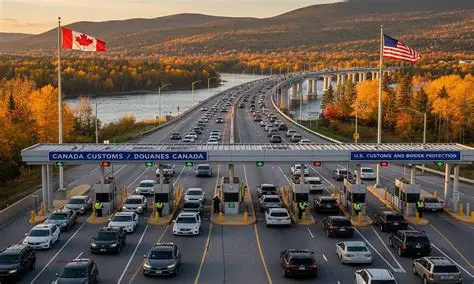
Windsor–Detroit Border Crossing
<text color=”secondary” size=”sm”>A major commercial gateway connecting Ontario and Michigan.</text>
The Windsor–Detroit corridor is one of the most important trade routes between Canada and the United States.
It connects Windsor, Ontario, with Detroit, Michigan, and supports significant movement of vehicles, commercial goods, and industrial materials.
The automotive industry depends heavily on this corridor because manufacturing supply chains frequently cross the border during production.
The Gordie Howe International Bridge is a major infrastructure development designed to strengthen transportation connections between the two cities.
The new crossing offers an additional route for commercial and passenger traffic, supporting transportation capacity and future regional development.
Niagara Falls–Buffalo Border Crossing
<text color=”secondary” size=”sm”>A major gateway for tourism, transportation, and commerce.</text>
The Niagara region connects Ontario with New York through several international crossings.
The Peace Bridge, Rainbow Bridge, and Lewiston–Queenston Bridge serve important transportation needs.
The region attracts visitors interested in Niagara Falls, shopping, recreation, cultural attractions, and international travel.
Commercial vehicles also use these crossings to transport products between Canada and the United States.
Vancouver–Washington Border Region
<text color=”secondary” size=”sm”>An important Pacific Northwest connection.</text>
The western section of the Canada–United States border connects British Columbia with Washington State.
Crossings such as Peace Arch and Pacific Highway connect communities around Vancouver and the Seattle region.
These transportation routes support tourism, commercial activity, business travel, and regional transportation networks.
The connection between British Columbia and Washington is particularly important for technology businesses, ports, transportation, and tourism.
Quebec–New York Border
<text color=”secondary” size=”sm”>A connection between eastern Canadian communities and the northeastern United States.</text>
Quebec shares a border with several U.S. states, including New York and Vermont.
Crossings in this region support tourism, agricultural transportation, manufacturing, international shopping, and regional business activity.
The border also connects communities that share cultural, historical, and economic relationships.
Trade Between Canada and the United States
Trade is one of the strongest foundations of the Canada–United States relationship.
The two countries exchange a wide range of products, including vehicles, machinery, agricultural products, energy resources, electronics, chemicals, and industrial materials.
Many goods are produced through integrated supply chains, meaning products may cross the border multiple times during manufacturing.
The automotive industry is one of the clearest examples of this cooperation. Components may be manufactured in one country, assembled in another, and transported across the border before reaching consumers.
The energy relationship is equally important.
Canada is a major supplier of energy resources to the United States, including oil, natural gas, electricity, and other energy-related products.
These connections help support industrial activity, energy infrastructure, employment, and economic development.
The Canada–United States–Mexico Agreement, known as CUSMA in Canada and USMCA in the United States, provides a framework for trade among the three North American countries.
Although trade policies and tariffs can influence the relationship, the interconnected nature of the two economies creates strong incentives for continued cooperation.
Travel Across the Canada–United States Border
The border is also an important gateway for international travellers.
People cross for tourism, family visits, shopping, business meetings, education, recreation, and other personal activities.
Many travellers use personal vehicles, buses, trains, or commercial transportation services to move between the two countries.
Popular destinations include major cities such as Toronto, Vancouver, Montreal, Seattle, Chicago, New York, and Detroit, along with national parks, lakes, shopping destinations, and cultural attractions.
Travellers should prepare carefully before crossing the border.
Important considerations include:
- Carrying valid travel documents.
- Checking entry requirements before departure.
- Declaring goods as required.
- Reviewing customs regulations.
- Checking border wait times.
- Understanding restrictions on food, plants, animals, and other items.
Border entry requirements can vary according to citizenship, immigration status, travel purpose, and other circumstances.
Checking official information before travel can help make the journey smoother and reduce unexpected delays.
Border Security and International Cooperation
Border security remains a major responsibility for both Canada and the United States.
Government agencies work together to protect communities, manage international movement, prevent criminal activity, and maintain the integrity of border systems.
Canada’s Border Services Agency and U.S. Customs and Border Protection are among the organizations responsible for managing border operations.
Their work includes processing travellers, inspecting commercial goods, enforcing regulations, identifying security risks, and supporting legal movement across international crossings.
The Royal Canadian Mounted Police and U.S. law enforcement agencies also cooperate on various security matters.
Border management requires a balance between security and efficiency.
Strong security measures help protect communities, while efficient procedures allow legitimate travellers and businesses to move across the border with fewer disruptions.
Technology, intelligence sharing, infrastructure investment, and cooperation between agencies continue to play important roles in improving border operations.
The Economic Benefits of a Strong Border Relationship
A well-managed Canada–United States border creates economic opportunities for both countries.
Businesses benefit from access to larger markets, transportation infrastructure, suppliers, customers, and investment opportunities.
Workers may benefit from economic activity connected to trade, manufacturing, transportation, logistics, tourism, and services.
Communities located near major crossings often depend on cross-border activity for employment and economic development.
The transportation sector also benefits from international connections.
Commercial trucks, rail networks, shipping facilities, and logistics companies help move products efficiently across North America.
The border supports industries ranging from agriculture and construction to healthcare technology and manufacturing.
When transportation systems operate efficiently, businesses can improve supply chain planning and reduce unnecessary delays.
These economic connections demonstrate how international cooperation can contribute to shared prosperity.
Challenges Facing the Canada–United States Border
Despite its importance, the Canada–United States border faces several challenges.
Trade Disputes: Tariffs and trade policy disagreements can increase costs for businesses and consumers while creating uncertainty for supply chains.
Border Delays: Traffic congestion, staffing shortages, infrastructure limitations, and increased travel demand can create delays at busy crossings.
Security Concerns: Government agencies must continually address criminal activity, trafficking, smuggling, and other security threats.
Infrastructure Investment: Bridges, roads, tunnels, inspection facilities, and transportation systems require ongoing maintenance and investment.
Environmental Challenges: Climate change, severe weather, flooding, wildfires, and environmental protection concerns can affect border infrastructure and transportation.
Addressing these challenges requires cooperation, planning, innovation, and investment.
The long-term strength of the border depends on maintaining infrastructure, improving security, supporting trade, and protecting the interests of communities on both sides.
Future Opportunities for the Canada–United States Border
The future of the Canada–United States border offers significant opportunities for technological innovation and economic development.
Modern transportation systems, digital customs processes, advanced security technologies, and improved infrastructure can help make border crossings more efficient.
Artificial intelligence, data analytics, automated inspection systems, and digital identity technologies may contribute to improved border management when implemented responsibly.
Infrastructure projects can also strengthen transportation connections and support future trade growth.
The development of electric vehicles, clean energy technologies, sustainable transportation, and advanced manufacturing could create new economic opportunities along the border.
Cross-border cooperation in research, innovation, energy, and environmental protection may also contribute to long-term regional development.
As global economic conditions change, both countries have opportunities to strengthen their relationship through investment, collaboration, and practical solutions.
The border’s future will depend on how effectively both nations balance security, economic growth, environmental responsibility, and the movement of people and goods.
Canada–United States Border and the Future of North America
The Canada–United States border remains a powerful symbol of geographical connection, economic cooperation, and international partnership.
Its role in trade, transportation, tourism, energy, and regional development makes it essential to the future of North America.
The border connects millions of people and supports businesses across industries that depend on international cooperation.
Although political disagreements and economic challenges may influence border policies, the shared interests of both countries continue to create opportunities for collaboration.
Improved infrastructure, stronger security, modern technology, and efficient transportation systems can help create a more resilient and productive border environment.
The future of North America will increasingly depend on the ability of Canada and the United States to maintain a strong, secure, and economically beneficial relationship.
Conclusion
The Canada–United States border is one of the world’s most important international boundaries, connecting two nations through trade, travel, infrastructure, energy, and shared opportunities.
Stretching approximately 8,891 kilometres, it represents a remarkable geographical and economic relationship that supports businesses, communities, families, and industries across North America.
Major crossings such as Windsor–Detroit, Niagara Falls–Buffalo, and the Vancouver–Washington corridor demonstrate the importance of international transportation and regional cooperation.
Trade, tourism, energy, manufacturing, and technological innovation continue creating opportunities on both sides of the border.
The Canada–United States border is more than a dividing line. It is a connection that supports economic growth, cultural exchange, and a shared future.
As both countries continue adapting to changing global conditions, this border will remain an essential part of North America’s economic strength and international partnership.