Extreme Heat Watch: Early Warning System That Saves Lives Daily
Heat kills more Americans than any other weather hazard. Floods, hurricanes, tornadoes, and blizzards combined don’t match the annual death toll from extreme heat. Yet this silent killer is also the most preventable. The upside? A sophisticated early warning system that gives you time to prepare, adapt, and survive.
The National Weather Service’s Extreme Heat Watch is your first line of defense. Issued when dangerous heat is possible within 24 to 72 hours, this alert transforms uncertainty into preparation. It converts vulnerability into resilience. It gives you the gift that saves lives in extreme weather: time.
The Power of Advance Warning
The Extreme Heat Watch represents one of the most significant advances in public health protection. Before March 2025, the National Weather Service used the term “Excessive Heat Watch.” The change to “Extreme Heat Watch” wasn’t cosmetic—it was strategic. Social science research proved that “extreme” conveys danger more effectively than “excessive.” The word choice matters because behavior change depends on perceived threat.
When an Extreme Heat Watch appears, conditions are favorable for dangerous heat, but timing and specifics remain uncertain. This is your window to act. Reschedule outdoor activities. Locate cooling centers. Check on vulnerable neighbors. Prepare your home. The 24-72 hour lead time separates panic from planning.
The upside is operational. You can adjust work schedules before the heat arrives. You can stock supplies before stores empty. You can verify air conditioning function before temperatures peak. You can communicate with family members before systems overload. This advance notice prevents the medical emergencies that occur when heat surprises communities.
Understanding the Alert Hierarchy
The National Weather Service operates a three-tier heat alert system. Each level demands different responses. Each provides specific upside through graduated preparation.
The Extreme Heat Watch sits at the top of the preparation phase. It signals potential for life-threatening conditions. When upgraded to an Extreme Heat Warning, danger is imminent or occurring. Immediate action becomes mandatory. The Heat Advisory occupies the middle ground—dangerous conditions expected, but not reaching warning thresholds.
This hierarchy provides strategic advantage. Communities can stage resources when watches are issued. Emergency managers can pre-position cooling supplies. Hospitals can prepare for surge capacity. Individuals can implement personal action plans. The graduated system prevents both underreaction and alert fatigue.
Local offices customize criteria based on regional acclimatization. Phoenix issues heat warnings at temperatures that would seem extreme in Alaska. This geographic specificity ensures relevance. A heat index of 105°F triggers warnings in the Northeast but might represent normal summer conditions in the Southwest. The upside is precision—alerts that match actual risk rather than arbitrary thresholds.
The Science Behind the Warning
Heat alerts depend on the Heat Index—a calculation combining air temperature and relative humidity to determine how hot conditions actually feel to the human body. At 95°F with 50% humidity, the Heat Index reaches 107°F. The body cannot cool itself effectively. Heat illness becomes likely.
The National Weather Service developed the experimental HeatRisk product to enhance traditional alerts. This seven-day forecast uses a 0-4 scale similar to the Air Quality Index. Level 4 indicates extreme risk for entire populations due to prolonged heat with little overnight relief. When HeatRisk reaches major or extreme levels, formal Extreme Heat Watches and Warnings follow.
This scientific foundation provides upside through accuracy. Modern forecasting predicts heat events days in advance. Meteorological models identify dangerous combinations of temperature, humidity, and duration. The watch system translates this science into actionable intelligence for public protection.
Preparation That Pays Dividends
The Extreme Heat Watch exists to enable preparation. The actions you take during the watch phase determine your safety during the warning phase. This preparation window offers multiple upsides for different populations.
For vulnerable individuals—older adults, young children, those with chronic illnesses—the watch period is critical. These groups face disproportionate heat risk. They need time to arrange transportation to cooling centers. They need time to verify medication storage temperatures. They need time to contact caregivers. The 24-72 hour window makes these arrangements possible.
For outdoor workers, the watch enables schedule modification. Construction, agriculture, and landscaping can shift to cooler hours. Employers can implement rest protocols. Workers can prepare hydration strategies. The Occupational Safety and Health Administration reports that heat-related workplace injuries and deaths spike during unexpected heat events. The watch system prevents these surprises.
For communities, the watch triggers institutional preparation. Cooling centers can extend hours. Utilities can prepare for demand surges. First responders can stage additional resources. Public health departments can issue targeted communications. This coordinated preparation transforms individual vulnerability into collective resilience.
The Health Protection Upside
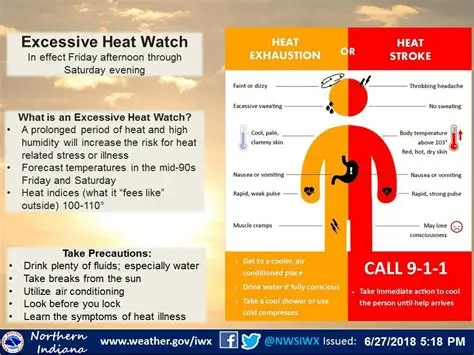
Heat-related illness follows a predictable progression. Heat cramps lead to heat exhaustion. Untreated heat exhaustion advances to heat stroke. At that stage, body temperature exceeds 103°F. Brain damage becomes possible. Death follows without immediate intervention.
The Extreme Heat Watch interrupts this progression. It prompts hydration before dehydration occurs. It encourages rest before exhaustion develops. It drives people to cooling environments before body temperature rises dangerously. The watch is preventive medicine delivered through meteorology.
The Centers for Disease Control and Prevention identifies heat as the deadliest weather hazard annually. Yet heat-related deaths are almost entirely preventable with proper warning and response. The watch system represents the warning component of this prevention strategy. Its existence means fewer emergency room visits. Fewer hospitalizations. Fewer fatalities.
Economic Protection Through Early Warning
The upside of Extreme Heat Watches extends beyond health to economics. Heat waves cause billions in productivity losses, infrastructure damage, and energy costs. Early warning enables mitigation that reduces these impacts.
Businesses can adjust operations before peak heat. Energy providers can prepare demand response programs. Supply chains can modify logistics. Agricultural operations can implement protective measures for livestock and crops. The 24-72 hour preparation window prevents the economic shocks that accompany surprise heat events.
Insurance data shows that heat-related claims drop significantly in communities with robust early warning systems. The watch system pays for itself through reduced losses. It represents infrastructure investment that generates returns through disaster prevention.
Community Resilience and Social Cohesion
The Extreme Heat Watch fosters community connection. The alert prompts neighbor checking. It reminds us to consider those without air conditioning. It encourages collective action to protect the vulnerable. This social upside transforms weather alerts into community strengthening.
Local emergency management agencies use watch periods to activate volunteer networks. Faith communities open cooling facilities. Nonprofits distribute supplies. The watch system coordinates these efforts, providing timing that enables effective response. Communities that prepare together during watches respond together during warnings.
The upside is social capital. Relationships formed during preparation phases persist beyond heat events. Neighbors who check on each other during watches develop ongoing connections. Institutional partnerships formed for heat response apply to other emergencies. The watch system builds community capacity that extends far beyond temperature management.
The Future of Heat Protection
Climate change intensifies heat risk. Extreme heat events increase in frequency, duration, and intensity. The upside of the watch system grows correspondingly. As heat becomes more dangerous, early warning becomes more valuable.
The National Weather Service continues refining its heat alert products. Integration with public health surveillance enables targeted warnings. Partnerships with community organizations improve reach to vulnerable populations. Technological advances in forecasting extend warning lead times. The watch system evolves to meet growing challenges.
Smart city technologies enhance watch effectiveness. Automated alerts reach mobile devices. Geographic targeting ensures relevance. Integration with building management systems enables automatic cooling adjustments. The upside of the basic watch multiplies through technological enhancement.
Conclusion: The Watch That Saves
The Extreme Heat Watch is more than a weather alert. It is a life-saving technology. A community protection system. An economic resilience tool. A public health intervention. It represents the upside of modern meteorology— the transformation of atmospheric science into human protection.
When your phone displays an Extreme Heat Watch, understand what it means. You have 24-72 hours to prepare. You have advance notice that dangerous conditions are possible. You have the information needed to protect yourself, your family, and your community.