Kharg Island: Iran’s Oil Empire Crown Jewel with Global Upside
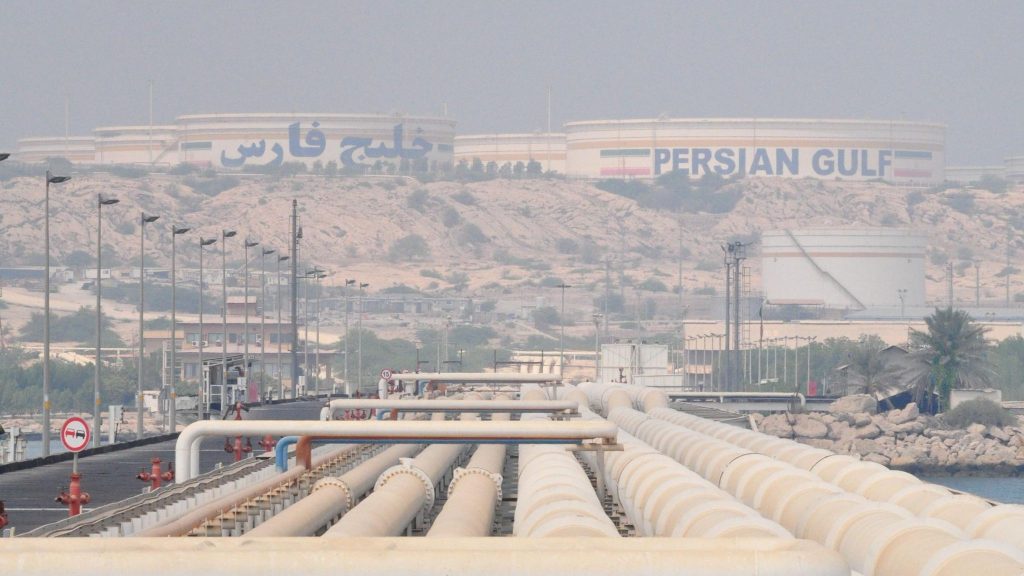
A tiny coral outcrop in the Persian Gulf holds the world’s energy markets in its hands. Kharg Island, barely 8 kilometers long and 4 kilometers wide, processes 90% of Iran’s crude oil exports. It stores 30 million barrels of petroleum. It loads 10 supertankers simultaneously. This “Forbidden Island” isn’t just an Iranian asset—it’s a global economic linchpin with unlimited strategic upside.
The numbers defy the island’s modest geography. Kharg handles approximately 950 million barrels of oil annually. At peak capacity, its facilities can process 7 million barrels per day. The terminal’s storage tanks, each holding up to 1 million barrels, create a petroleum reserve that influences global prices. When Kharg operates smoothly, energy markets stabilize. When it faces disruption, economies tremble.
The Economic Engine That Powers Nations
Kharg Island’s economic significance extends far beyond Iran’s borders. The terminal generates tens of billions of dollars in annual government revenue. It finances budgets, funds programs, and sustains a nation of 87 million people. Without Kharg, Iran’s economy would collapse within weeks.
The upside of this concentration is efficiency. Centralizing exports at one deep-water location creates massive economies of scale. Supertankers, too large for Iran’s shallow coastal waters, dock at Kharg’s extended jetties. Pipelines from major oil fields—Aboozar, Forouzan, Dorood, Ahvaz, Marun, and Gachsaran—converge here, creating an integrated network that minimizes transport costs and maximizes throughput.
China recognizes this value. As Iran’s primary oil customer, Beijing has built its energy security partly around Kharg’s consistent output. The terminal’s stability directly impacts Asian manufacturing, global shipping rates, and international commodity prices. When Kharg thrives, the upside ripples across continents.
The Deep-Water Advantage
Geography blessed Kharg with competitive advantages that artificial construction cannot replicate. The island sits 25 kilometers off Iran’s coast, surrounded by waters deep enough to accommodate the world’s largest tankers. Most of Iran’s coastline is too shallow for these vessels. Kharg solves this problem naturally.
The upside of this positioning is strategic flexibility. Iran can load massive volumes quickly, respond to market demands rapidly, and maintain export continuity despite regional tensions. The island’s Sea Island Terminal, with its four-berth capacity, and the main Kharg Terminal, with 10 berths, create redundancy that ensures operational resilience.
In May 2025, Iran expanded this capacity further. Rehabilitation of tanks 25 and 26 added 2 million barrels of storage. This wasn’t maintenance—it was growth. Even under international sanctions, Kharg’s infrastructure has modernized, automated, and expanded. The upside of persistent investment is a facility that operates at world-class standards despite political isolation.
Historical Resilience and Modern Evolution
Kharg’s story spans millennia. Archaeological evidence shows human settlement dating back over 4,000 years. The island served as a trading post for empires, a pearl harvesting center, and a strategic military outpost. The Portuguese claimed it. The Dutch built fortifications. The British occupied it twice. Through each era, Kharg’s geographic importance persisted.
The modern transformation began in 1958. Construction of the oil terminal, inaugurated in 1960, converted ancient strategic value into contemporary economic power. Iranian writer Jalal Al-e-Ahmad called it “the orphan pearl of the Persian Gulf” before this development—a name that captured both its isolation and its preciousness.
The upside of this history is institutional knowledge. Kharg has survived colonialism, revolution, war, and sanctions. During the Iran-Iraq War, Iraqi bombers repeatedly targeted the terminal. Facilities were destroyed. Operations halted. Yet reconstruction followed each attack. By 1988, despite massive damage, the terminal resumed exports. This resilience isn’t accidental—it’s engineered into the island’s DNA.
The Strategic Value Beyond Oil
Kharg’s significance transcends petroleum. The island hosts the Kharg Petrochemical Company, processing hydrocarbons into higher-value products. The Khemco Terminal exports liquefied petroleum gas and sulfur. These facilities diversify Iran’s energy economy, creating value-added products that command premium prices.
The upside of this integration is economic complexity. Kharg isn’t just a shipping point—it’s an industrial hub. Workers live on the island, creating a permanent community of engineers, technicians, and security personnel. The infrastructure supports not just extraction but transformation, making Kharg a complete energy ecosystem rather than a simple transit point.
The island’s airport, operated by the National Iranian Oil Company, facilitates rapid personnel movement and logistics coordination. The naval base on the eastern shore provides security. The Islamic Revolutionary Guard Corps maintains stringent access controls, earning the island its “Forbidden Island” moniker. This security infrastructure protects upside by ensuring operational continuity.
Global Market Influence
Kharg’s operations directly impact international energy markets. When the terminal functions at capacity, global oil prices find stability. When disruptions occur, volatility follows. Analysts at JPMorgan have noted that attacking Kharg would trigger severe retaliation and price spikes potentially reaching $150 per barrel.
This influence creates diplomatic upside. Nations seeking Iranian oil must engage with Kharg’s reality. Shipping companies, insurers, and traders all factor the terminal’s status into their calculations. Kharg becomes a lever in international relations, a physical asset that shapes abstract negotiations.
The terminal’s importance will only grow as energy transitions evolve. While the world shifts toward renewables, petroleum remains essential for decades. Kharg’s established infrastructure, proven reserves, and strategic position ensure its relevance through this transition. The upside isn’t temporary—it’s structural.
The Technological Achievement
Operating Kharg requires sophisticated engineering. Subsea pipelines stretch from offshore fields to onshore processing plants, then to the island’s storage facilities. Gravity-fed systems move oil efficiently, reducing energy costs and mechanical complexity. The Sea Island Terminal’s offshore loading systems handle supertankers in deep water without extensive dredging.
The upside of this technology is reliability. Despite sanctions limiting access to Western equipment, Iranian engineers have maintained and improved these systems. The terminal’s operational continuity through decades of pressure demonstrates technical competence that contradicts narratives of Iranian industrial incapacity.
Modernization continues. Satellite imagery shows ongoing construction, tank rehabilitation, and infrastructure expansion. Kharg evolves despite obstacles, finding upside in necessity. The island proves that constraint breeds innovation, that isolation fosters self-sufficiency, that pressure creates diamonds.
The Future of Energy Security
Looking forward, Kharg’s strategic importance will intensify. Global energy demand continues rising. Middle Eastern oil retains cost advantages that shale and offshore alternatives cannot match. The Strait of Hormuz remains the world’s most critical oil chokepoint, and Kharg sits 483 kilometers northwest of that passage, offering strategic depth.
The upside for Iran is clear. Maintaining Kharg’s operational excellence ensures economic survival regardless of political circumstances. The terminal provides leverage in negotiations, income in isolation, and continuity in chaos. For global markets, Kharg’s stability offers predictability in an unpredictable region.
As energy security concerns mount worldwide, Kharg represents both vulnerability and resilience. Its concentration of infrastructure creates risk. Its historical durability offers reassurance. The island embodies the complex reality of global petroleum dependence—a single point of failure that has never failed.
Conclusion: The Power of Strategic Assets
Kharg Island proves that physical geography retains power in a digital age. That concrete and steel, strategically placed, shape world events more than algorithms or abstractions. That a small island can influence global prices, national budgets, and international relations.
The upside of Kharg is the upside of strategic infrastructure done right. Efficiency through concentration. Resilience through investment. Influence through indispensability. The “Forbidden Island” isn’t just Iran’s energy lifeline—it’s a testament to how geographic advantages, properly developed, create enduring economic power.