George Lucas is more than the filmmaker behind Star Wars. He is a storyteller, innovator, entrepreneur, and creative pioneer whose imagination helped transform modern cinema.
From his early days as a young filmmaker in California to the creation of one of the most recognizable fictional universes in history, Lucas built a career around one powerful idea: imagination can turn impossible dreams into unforgettable experiences.
His journey is especially inspiring because his greatest achievements were not created by simply following established rules. Lucas repeatedly experimented with new storytelling techniques, visual effects, sound systems, editing technology, and business models.
Today, his influence can be seen far beyond one movie franchise. His work helped shape the way films are made, edited, experienced, marketed, and remembered.
The Early Life of George Lucas
George Walton Lucas Jr. was born on May 14, 1944, in Modesto, California. As a young man, he developed a strong interest in cars and originally imagined a future connected to racing.
A serious automobile accident changed the direction of his life. During his recovery, Lucas became increasingly interested in filmmaking and eventually pursued cinema at the University of Southern California.
At USC, he became part of a generation of young filmmakers who were beginning to challenge traditional Hollywood approaches. His student work demonstrated an interest in visual storytelling, technology, editing, and unconventional ideas.
This period became the foundation for a career that would eventually redefine popular filmmaking.
From Independent Filmmaker to Lucasfilm
Lucas began his professional feature-film journey with THX 1138, released in 1971. The film reflected his interest in futuristic stories and experimental filmmaking.
After the experience of making THX 1138, Lucas wanted greater creative independence. He established Lucasfilm in 1971 as a company that could support his future projects outside the traditional Hollywood system.
His next major project was American Graffiti, released in 1973.
The film was inspired by Lucas’s teenage experiences in California and focused on young people, friendship, cars, music, and the uncertainty of growing up. It became a major success and established Lucas as a filmmaker capable of connecting personal experiences with universal emotions.
The success of American Graffiti was also extremely important for the future of Lucasfilm. Its success helped create the opportunity for Lucas to move forward with the ambitious space-fantasy project that would become Star Wars.
The Birth of Star Wars
In 1977, George Lucas introduced audiences to Star Wars: A New Hope.
The film combined mythology, adventure, western influences, science fiction, memorable characters, groundbreaking visual effects, and innovative sound design. The result was a cinematic experience that felt different from anything audiences had experienced before.
The movie became a worldwide phenomenon and transformed Lucasfilm.
But the achievement was about more than creating a successful movie. Lucas demonstrated that a filmmaker could build an entire storytelling universe around characters, worlds, technology, music, merchandise, books, games, and future stories.
Lucasfilm’s own history describes A New Hope as a worldwide phenomenon that fueled the company’s growth. Its licensing and publishing efforts also helped redefine the possibilities of film-related consumer products and storytelling.
The success of Star Wars turned Lucas’s imagination into a cultural force that could reach generations.
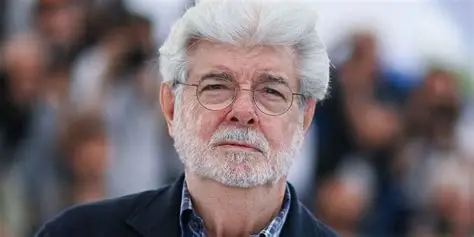
Building New Technology for Storytelling
One of George Lucas’s greatest contributions was his willingness to invest in technology.
Creating Star Wars required visual effects that were beyond what traditional filmmaking could easily provide. Lucas therefore helped establish Industrial Light & Magic, commonly known as ILM, to develop the necessary effects.
This decision became enormously significant.
ILM went on to become one of the most influential visual-effects companies in the world. Lucasfilm also developed innovations in sound, editing, computer graphics, digital filmmaking, and other areas.
The American Film Institute highlights Lucas’s pioneering work with technologies such as EditDroid, SoundDroid, THX, computer graphics, digital projection, and digital filmmaking. Star Wars: Episode II – Attack of the Clones later became a landmark as the first live-action feature produced entirely with digital cameras and a digital production toolset.
Lucas’s approach demonstrated an important lesson: technology becomes powerful when it serves creativity.
The Sound of a New Cinema
George Lucas understood that great filmmaking is not only about what audiences see.
It is also about what they hear.
Lucasfilm developed advanced sound and post-production capabilities that eventually became Skywalker Sound. The company’s innovations helped establish sound as a major part of the emotional experience of blockbuster cinema.
The world of Star Wars became memorable not only because of its spaceships and characters but also because of its distinctive sounds, music, dialogue, and atmosphere.
This attention to sound helped demonstrate that cinema is a complete sensory experience.
George Lucas and Indiana Jones
George Lucas’s influence was not limited to Star Wars.
He was also one of the creative forces behind the Indiana Jones franchise, working alongside filmmaker Steven Spielberg and other collaborators.
The Indiana Jones stories combined adventure, history, mystery, humor, action, and larger-than-life characters. Lucasfilm identifies the Indiana Jones adventures among the company’s major storytelling achievements alongside Star Wars.
Through these projects, Lucas showed his ability to build different kinds of worlds while maintaining a strong connection with audiences.
The Power of Taking Creative Risks
Perhaps one of the most inspiring aspects of George Lucas’s career is his willingness to take risks.
Star Wars was not an obvious project when Lucas first presented the idea. The concept combined different influences and challenged conventional expectations about what a major Hollywood movie could be.
According to the American Film Institute, the project required the support of 20th Century Fox executive Alan Ladd Jr., who believed in Lucas’s vision.
Lucas continued taking creative and technological risks throughout his career.
That willingness to experiment became part of his identity as a filmmaker.
His career offers a powerful message for aspiring creators: an unusual idea can become extraordinary when it is developed with determination, patience, and vision.
George Lucas and the Future of Filmmaking
Lucas’s influence extends into modern filmmaking technology.
His companies and creative projects helped advance computer-generated imagery, digital editing, sound, visual effects, and digital cinema.
Lucasfilm’s technological legacy includes innovations associated with ILM, Skywalker Sound, computer imaging, and digital filmmaking.
The significance of this work is easy to see today.
Modern movies frequently depend on sophisticated digital effects, computer-generated environments, virtual production, advanced sound design, and digital cameras. Many of these technologies have roots in decades of experimentation by filmmakers and technology teams who were willing to challenge traditional methods.
Lucas was one of the major figures who helped make that transformation possible.
The George Lucas Museum of Narrative Art
George Lucas’s creative journey has also expanded beyond filmmaking.
The Lucas Museum of Narrative Art, founded by George Lucas and Mellody Hobson, is scheduled to open to the public in Los Angeles on September 22, 2026. The museum is dedicated to visual storytelling across cultures and centuries.
The museum’s collection reaches far beyond Star Wars. Its inaugural exhibitions span more than 1,300 works across more than 30 galleries and approximately 100,000 square feet of exhibition space. The collection explores visual storytelling through areas including painting, illustration, comics, cinema, murals, and historical art.
This project represents another important part of Lucas’s legacy.
Rather than treating storytelling as something limited to movies, the museum explores the larger human tradition of communicating ideas through images.
That makes the project a natural extension of Lucas’s lifelong interest in visual storytelling.
A Legacy That Goes Beyond Star Wars
George Lucas’s name will always be strongly connected with Star Wars, but his legacy is much broader.
He helped establish companies and technologies that influenced generations of filmmakers. He supported visual effects, sound design, computer graphics, editing systems, digital filmmaking, gaming, and other forms of storytelling.
Lucasfilm’s history also includes Lucasfilm Games, Lucasfilm Animation, Skywalker Sound, ILM, and other creative divisions that expanded storytelling into different mediums.
His influence can therefore be understood in two ways.
First, he created stories that became part of global popular culture.
Second, he helped build the technological and creative infrastructure that allowed other storytellers to create new worlds of their own.
The Inspirational Side of George Lucas
The most powerful part of George Lucas’s story may not be any individual movie.
It may be the journey itself.
A young man interested in cars discovered filmmaking. A student filmmaker experimented with cameras and editing. An independent director created American Graffiti. A visionary filmmaker imagined Star Wars. A production challenge led to the creation of new technology. A movie company grew into a global storytelling organization.
At every stage, Lucas demonstrated the value of imagination combined with action.
His career shows that creativity does not always begin with certainty. Sometimes it begins with curiosity, experimentation, and the courage to attempt something that has never been done before.
George Lucas’s Lasting Impact
Decades after Star Wars first reached theaters, George Lucas remains one of the defining figures in modern cinema.
His stories continue to introduce new generations to adventure and imagination. His technological contributions continue to influence filmmakers. His companies helped establish new standards for visual effects and sound. His museum project expands his passion for storytelling into a broader cultural space.
The Lucas Museum’s mission is especially meaningful because it reflects an idea that has been present throughout Lucas’s career: stories connect people. The institution describes narrative art as a universal tradition that can inspire individuals, shape beliefs, and build communities.
That idea captures much of what makes Lucas’s career so significant.
The Enduring Legacy of a Dreamer
George Lucas did not simply make movies.
He helped create new possibilities.
He demonstrated that a filmmaker could imagine an entirely new universe, develop the technology needed to bring it to life, and inspire millions of people along the way.
His journey from California filmmaker to global creative pioneer is a story of imagination, persistence, innovation, and belief in the power of storytelling.
From American Graffiti to Star Wars, from ILM to digital filmmaking, and now to the Lucas Museum of Narrative Art, George Lucas’s story continues to demonstrate one enduring truth:
A powerful idea can change the way people see the world.
Reference
For more entertainment, celebrity, technology, and trending stories, visit Daily Talks Web.
This version is structured for WordPress and includes the requested AIOSEO elements, strong search-friendly headings, and a positive legacy-focused angle.