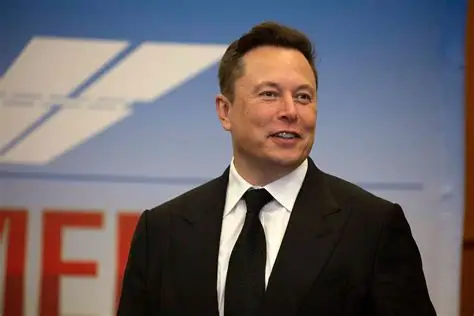
Few modern entrepreneurs have influenced technology as dramatically as Elon Musk. His name has become closely associated with electric vehicles, reusable rockets, artificial intelligence, satellite internet, social media, and ambitious ideas about humanity’s future.
Musk’s career is built around a willingness to pursue difficult problems that many people once considered unrealistic. From helping transform the electric-vehicle industry to pushing reusable rockets into mainstream spaceflight, his companies have repeatedly attempted to move technology into new territory.
Today, Musk’s influence extends across several major technology sectors. He leads Tesla and SpaceX and has also been involved with companies and projects including neural ink, The Boring Company, X, and xAI. In 2026, the technology landscape around Musk is evolving particularly quickly, with artificial intelligence becoming an increasingly important part of his business strategy. Tesla identifies Musk as its CEO and describes his leadership across electric vehicles, energy products, and related technologies.
The story of Elon Musk is therefore not simply about wealth or business success. It is about ambition, experimentation, risk-taking, and the belief that technology can solve problems that appear impossibly large.
The Early Entrepreneurial Journey of Elon Musk
Elon Musk’s entrepreneurial career began in the early internet era.
Before becoming famous for rockets and electric vehicles, Musk was involved in internet businesses, including Zip2 and the company that became PayPal.
These early experiences helped him develop an understanding of software, online commerce, technology, and rapidly changing markets.
The success of these ventures gave Musk the financial resources and confidence to pursue significantly more ambitious projects.
Instead of simply continuing within the technology sector he already understood, he moved into industries where the challenges were considerably greater.
That decision became one of the defining characteristics of his career.
Elon Musk and Tesla
One of the most important chapters in Musk’s career is his relationship with Tesla.
Tesla helped accelerate the global transition toward electric vehicles and demonstrated that electric cars could be positioned as desirable, high-performance products rather than simply alternatives for environmentally conscious consumers.
Tesla’s product development expanded from the Roadster into vehicles such as the Model S, Model X, Model 3, Model Y, and Cybertruck. The company also developed large-scale energy-storage products.
Musk has served as Tesla’s chief executive since 2008, making his leadership one of the longest-running stories in the modern automotive technology industry.
Transforming the Electric Vehicle Industry
The broader importance of Tesla goes beyond individual vehicles.
Electric vehicles require changes throughout the transportation ecosystem, including:
- Battery technology
- Charging infrastructure
- Manufacturing
- Software
- Energy storage
- Automotive design
Tesla’s growth helped make electric vehicles a central part of the global automotive conversation.
The company’s focus on software, over-the-air updates, battery development, and charging infrastructure also helped demonstrate how automobiles could increasingly function as technology platforms.
Elon Musk and SpaceX
SpaceX represents another extraordinary part of Musk’s career.
Founded in 2002, SpaceX was created with an ambitious goal of making spaceflight more accessible and ultimately helping humanity become a multi planetary civilization.
The company’s progress has included major advances in reusable rocket technology.
SpaceX’s Falcon 1 became the first privately developed liquid-fueled rocket to reach orbit in 2008. The company later demonstrated the reuse of Falcon 9 rockets and Dragon spacecraft, changing expectations around commercial launch technology.
The Power of Reusable Rockets
Traditional spaceflight has historically involved expensive hardware that was discarded after use.
SpaceX challenged that model by developing reusable launch systems.
Reusable rockets can potentially reduce the cost and complexity of reaching orbit by allowing expensive hardware to fly multiple times.
This approach has influenced the wider space industry and helped establish commercial spaceflight as one of the most dynamic areas of modern aerospace.
Starship and the Bigger Space Vision
SpaceX’s Starship program represents an even more ambitious stage of Musk’s space vision.
The system is being developed as a large reusable transportation platform designed for missions involving both Earth orbit and destinations beyond Earth.
Musk’s long-term vision includes establishing a self-sustaining human presence on Mars.
Whether that ultimate vision can be achieved remains a major technological challenge, but the ambition itself has helped keep long-term space exploration at the center of public conversation.
Starlink and Global Connectivity
Another major SpaceX initiative is Starlink, a satellite-based internet network designed to provide high-speed connectivity to locations where traditional broadband infrastructure can be difficult, expensive, or unreliable.
Satellite internet can offer important opportunities for:
- Rural communities
- Remote businesses
- Emergency services
- Isolated regions
- Disaster response
- Maritime users
The technology demonstrates how space infrastructure can provide practical benefits on Earth rather than existing solely for exploration.
Elon Musk and Artificial Intelligence
Artificial intelligence has become an increasingly important part of Musk’s technology ambitions.
His AI company, xAI, was established with the goal of developing advanced artificial intelligence systems.
In February 2026, SpaceX announced that it had acquired xAI, bringing the AI company into SpaceX’s broader corporate structure.
The merger represents an important development because it brings AI research closer to SpaceX’s enormous computing, engineering, satellite, and infrastructure ambitions.
The Rise of Grok
One of xAI’s best-known products is Grok, an artificial intelligence system designed for reasoning, conversation, and generative capabilities.
The company’s current mission is to accelerate scientific discovery through AI, with a focus on reasoning, real-time voice, and generative media.
The development of advanced AI systems adds another major dimension to Musk’s technology portfolio.
Instead of focusing on a single industry, his current ecosystem increasingly connects:
- AI
- Space technology
- Computing
- Robotics
- Transportation
- Energy
- Communications
Tesla and the Future of AI
Artificial intelligence is also central to Tesla’s long-term technological strategy.
The company has invested heavily in software, autonomous-driving technology, robotics, and machine learning.
One of the most ambitious projects associated with Tesla is Optimus, a humanoid robot designed to perform useful physical tasks.
The larger vision is to combine advanced AI with machines capable of operating in the physical world.
If successful, such technology could eventually influence manufacturing, logistics, household assistance, and other industries.
neural ink and Human-Computer Interfaces
Musk is also associated with neural ink, a neurotechnology company developing brain-machine interfaces.
The basic idea behind brain-computer interfaces is to create a communication pathway between neural activity and computing systems.
Potential applications could eventually include:
- Assistive technologies
- Communication tools
- Computer control
- Medical applications
- New forms of human-computer interaction
neural ink represents one of the most futuristic areas of Musk’s business interests because it focuses directly on the relationship between humans and machines.
The Boring Company and Transportation
Urban congestion is another problem Musk has attempted to address.
The Boring Company focuses on tunneling technology and underground transportation systems.
The concept is based on creating transportation routes beneath congested urban areas.
The company’s work illustrates a broader pattern in Musk’s career: identifying a major infrastructure problem and attempting to approach it through engineering and technology.
Elon Musk and X
Musk’s technology portfolio also includes social media.
He acquired Twitter in 2022 and later transformed the platform under the name X.
The platform has become an important part of his broader digital ecosystem, connecting social communication, news, creators, businesses, and technology.
His ownership of X has also made him an even more prominent participant in public debates surrounding technology, free expression, media, and online communities.
A Business Philosophy Built Around First Principles
One of the ideas frequently associated with Musk is first-principles thinking.
Rather than accepting existing assumptions, the approach involves breaking a difficult problem down into its fundamental components.
For example, instead of asking how expensive an established technology is, a first-principles approach examines:
- What materials are actually required?
- What processes create the cost?
- Which assumptions are unavoidable?
- Which parts can be redesigned?
This mindset has influenced the engineering culture surrounding several of Musk’s companies.
The Upside of Bold Innovation
The strongest positive lesson from Musk’s career is the value of ambitious experimentation.
Not every idea succeeds immediately.
Some projects experience delays, technical setbacks, financial pressure, or criticism.
But innovation rarely comes from avoiding difficult problems.
Musk’s companies have demonstrated the potential upside of repeatedly attempting technologies that once seemed commercially or technically unrealistic.
That approach has helped push conversations forward in electric transportation, spaceflight, AI, satellite communications, and robotics.
Elon Musk’s Influence on Future Technology
Musk’s influence extends beyond the products produced by his companies.
Competitors have responded to changes in the markets his businesses helped reshape.
The electric-vehicle industry has become significantly more competitive.
Commercial space companies have expanded.
Satellite internet has become a serious communications technology.
Artificial intelligence has become one of the world’s most important technology races.
Robotics is receiving unprecedented investment.
These developments show how one entrepreneur’s willingness to take large risks can contribute to wider technological competition.
The Importance of Long-Term Thinking
Perhaps the most powerful aspect of Musk’s public technology vision is its long-term focus.
Electric vehicles address transportation and energy.
Reusable rockets address the cost of spaceflight.
Starlink addresses global connectivity.
AI addresses computation and knowledge.
Neural interfaces explore the future relationship between humans and machines.
Mars exploration represents an even longer-term vision for human civilization.
These goals operate on very different timelines, but they share a common theme: building technologies intended to change what is possible.
Challenges and Responsibility
Musk’s influence also comes with significant responsibilities.
Technology companies operating at enormous scale must consider:
- Safety
- Privacy
- Regulation
- Environmental effects
- Employment
- Public trust
- Responsible AI development
Ambition can create extraordinary opportunities, but powerful technologies require careful management.
The future of AI, autonomous systems, biotechnology, and space technology will depend not only on technical achievement but also on responsible decision-making.
Elon Musk’s Continuing Legacy
Musk’s ultimate legacy will not be determined by a single company or product.
It will likely be measured by how much his work influenced entire industries.
Tesla helped make electric vehicles mainstream.
SpaceX changed expectations around reusable rockets.
Starlink expanded the possibilities of satellite connectivity.
xAI has entered the increasingly competitive AI industry.
neural ink is exploring the frontier of brain-computer interfaces.
Together, these efforts represent a remarkably broad technology portfolio.
The Future Looks Bigger Than Ever
As of 2026, Musk’s technology ecosystem is entering another major period of change. xAI has joined SpaceX, while AI development is becoming increasingly integrated with large-scale computing and space infrastructure. The current xAI organization describes its mission as accelerating scientific discovery, with products including Grok and large-scale computing infrastructure.
This combination could create new possibilities across multiple industries.
The future may bring closer connections between AI, robotics, autonomous transportation, satellite networks, and space infrastructure.
Those possibilities remain ambitious, but ambitious ideas have been a defining feature of Musk’s career from the beginning.
Conclusion
Elon Musk has become one of the most influential technology entrepreneurs of the modern era by repeatedly pursuing ideas that challenge established expectations. His work across Tesla, SpaceX, Starlink, xAI, neural ink, X, and other ventures has placed him at the center of several of the world’s most important technology conversations.
His story demonstrates the power of ambitious thinking. Electric vehicles, reusable rockets, satellite internet, advanced AI, robotics, and brain-computer interfaces were once considered futuristic concepts by many people. Today, they are active areas of technological development.
The most inspiring part of Musk’s journey is not simply the scale of his businesses. It is the willingness to attempt difficult things, accept enormous risks, learn from setbacks, and continue pushing toward long-term goals.
Reference
For more technology, business, and informative content, visit Daily Talks Web.