San Francisco’s bluegrass community is remembering Jeanie Poling, a beloved singer, guitarist, community builder and passionate supporter of live music whose influence reached far beyond the stage.
Poling died on August 26, 2026, at the age of 67, following several years of living with cancer. Her death has prompted an outpouring of remembrance from musicians and friends across California’s bluegrass community.
For more than four decades, Jeanie was closely connected with San Francisco’s folk, country and bluegrass scene. Alongside her husband, Chuck Poling, she performed, organized music events, hosted jams and helped create welcoming spaces where musicians could learn, perform and build friendships.
Her contribution was not defined only by recordings or performances.
Jeanie’s greatest achievement was arguably the community she helped create.
She had a rare ability to make music feel accessible. Experienced musicians could share a stage with beginners, established performers could encourage newcomers, and audiences could experience the warmth of live acoustic music in an intimate setting.
That spirit made Jeanie Poling an important part of San Francisco’s musical identity.
A Young Woman Finds Her Home in San Francisco
Jeanie Poling was originally from Long Island, New York, but moved to San Francisco when she was 19 years old in 1979.
She arrived with a sense of adventure and quickly developed a deep connection with the city. A California Bluegrass Association profile recalled that she came west with a backpack and soon felt that San Francisco was where she wanted to build her life.
She attended San Francisco State University, where she studied urban development.
Her professional life eventually included work connected to city planning, but music remained an important part of her identity.
That combination was part of what made her story so distinctive.
Jeanie was not simply someone who happened to perform music.
She was a member of the community in every sense, balancing family, professional responsibilities and an enduring passion for traditional music.
Meeting Chuck and Finding a Musical Partner
Music also brought Jeanie and Chuck Poling together.
The couple met through San Francisco’s folk music community and began singing together. Their shared musical connection eventually became a partnership that lasted more than four decades.
Their relationship became one of the enduring stories of the Bay Area bluegrass scene.
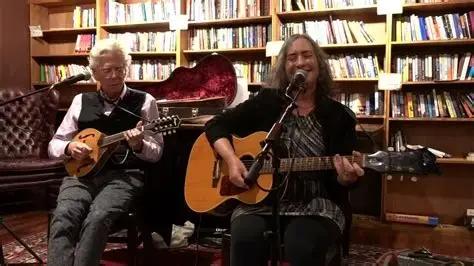
Together, they performed as Jeanie and Chuck, combining Jeanie’s guitar and lead vocals with Chuck’s mandolin and harmony singing.
Their music was rooted in traditional country and bluegrass but also reflected their personalities and deep knowledge of the genre.
Their partnership demonstrated how music can become part of everyday life rather than simply something reserved for the stage.
Jeanie and Chuck’s Country Roundup
Jeanie and Chuck became fixtures in the San Francisco folk and bluegrass community.
Their performances under the name Jeanie and Chuck’s Country Roundup gave audiences a chance to experience traditional country and bluegrass music in a relaxed setting.
Historical music listings identify Jeanie on guitar and lead vocals, with Chuck contributing mandolin and harmony.
Their performances were part of a larger Bay Area acoustic music network that included musicians, festivals, jams and community events.
Jeanie’s voice became particularly recognizable within that environment.
She was known for her powerful singing and wide-ranging musical knowledge, with friends describing her as someone who could seemingly draw from an enormous catalog of songs.
That knowledge helped make her an important musical resource for other performers.
A Home for Bluegrass at the Plough and Stars
One of Jeanie Poling’s most important contributions came through her long association with the Plough and Stars in San Francisco.
For more than 20 years, Jeanie and Chuck hosted a bluegrass and country jam at the neighborhood pub.
The gathering became an important meeting point for Bay Area musicians.
A San Francisco city publication documented the couple hosting a monthly bluegrass jam at the Plough and Stars on Clement Street, highlighting their role in the neighborhood’s music culture.
The importance of a regular jam cannot be measured simply by attendance numbers.
These gatherings give musicians a place to practice.
They help beginners gain confidence.
They allow experienced players to exchange ideas.
They create friendships that can last for decades.
Jeanie understood that community is one of the foundations of traditional music.
Building Opportunities for Other Musicians
Jeanie’s generosity extended beyond her own performances.
She and Chuck helped organize showcases and events that gave local musicians opportunities to perform.
The California Bluegrass Association noted that the couple hosted monthly events and showcases that helped many San Francisco bluegrass musicians get their start.
This part of Jeanie’s legacy is particularly powerful.
An artist can leave behind recordings, awards and memorable performances.
But an artist who helps other artists find their voice leaves something even larger.
Jeanie helped create pathways.
Musicians who may once have been uncertain about performing could step onto a small stage, participate in a jam and gradually become more confident.
Some of those musicians went on to develop careers of their own.
Her influence therefore spread through the people she encouraged.
The Bluegrass Country Jam
For approximately two decades, Jeanie and Chuck were also associated with the Bluegrass Country Jam at the Plough and Stars.
The event became part of San Francisco’s local bluegrass culture and reflected Jeanie’s commitment to keeping traditional music alive in an urban environment.
Her work demonstrated that bluegrass did not need to remain limited to rural settings.
It could thrive in San Francisco.
It could find an audience in neighborhood pubs, community gatherings, festivals and informal jams.
That ability to connect different worlds was one of her greatest strengths.
Chickwagon Junction and Musical Exploration
Jeanie also performed with Chickwagon Junction, a side project connected to the Bay Area’s country and bluegrass scene.
Her musical activities extended across different groups and collaborations, allowing her to explore different sounds while remaining connected to acoustic traditions.
She was also associated with other local projects, including BettyJacks.
Her willingness to collaborate reflected her approach to music.
She did not treat music as a competition.
She treated it as a shared experience.
That philosophy helped make her a natural community builder.
A Musician Known for Versatility
One of the most frequently remembered aspects of Jeanie Poling’s musicianship was her versatility.
She had a commanding singing voice and a remarkable knowledge of songs.
Friends and fellow musicians remembered her ability to move comfortably through different musical styles.
Her approach was rooted in traditional music, but her musical curiosity kept her connected to a broad community.
That combination helped her remain relevant across generations.
Young musicians could learn from her knowledge of traditional songs.
Experienced performers could appreciate her musicianship.
Audiences could simply enjoy the energy she brought to a performance.
Music During Difficult Years
Even while dealing with serious health challenges, Jeanie continued participating in the musical community.
Recent tributes noted that she continued performing at festivals, farmers markets and other local events during her illness.
That commitment speaks to the central role music played in her life.
For Jeanie, music was not simply an occupation.
It was a source of connection, happiness and purpose.
Her continued participation also allowed her to spend time with the people and community she loved.
Her determination became part of the story her friends now remember.
A Passion for Live Music
Jeanie’s love of live music extended beyond her own performances.
She was also a passionate supporter of other musicians.
The California Bluegrass Association described her as someone whose appreciation for other people’s music was generous and outspoken.
That quality is important in a creative community.
Artists need audiences, but they also need encouragement from other artists.
Jeanie offered that encouragement freely.
She celebrated other people’s talents and helped create spaces where those talents could be shared.
Her influence therefore reached beyond the songs she personally performed.
Her Connection to Hardly Strictly Bluegrass
Jeanie Poling was also a devoted attendee of Hardly Strictly Bluegrass, San Francisco’s major free bluegrass and roots music festival.
Although she did not become known primarily as a performer on the festival’s main stages, she was deeply connected to its community.
Her husband Chuck became involved with the festival as a stage host, and the couple’s connection to the event reflected their broader role in San Francisco’s acoustic music culture.
For Jeanie, festivals were another opportunity to celebrate the music and people she loved.
Her presence as a listener and supporter was part of the wider culture that keeps live music alive.
A Legacy That Reaches Beyond the Stage
Jeanie Poling’s greatest legacy cannot be captured by a discography alone.
Her impact can be seen in the musicians she encouraged.
It can be found in the people who discovered bluegrass through a jam she helped organize.
It can be heard in the songs performed by musicians who once shared a stage with her.
It can be felt in the friendships formed through community events.
This is what makes her story so meaningful.
She did not simply perform music.
She helped build a place for music to flourish.
The Power of Community
Traditional music survives through community.
Songs are passed from one musician to another.
Techniques are shared.
Stories are remembered.
New performers learn from experienced players.
Jeanie Poling understood that process deeply.
Her long-running jams and showcases created an environment where those traditions could continue.
The California Bluegrass Association’s tribute described her as someone who cultivated musicians who became more confident and determined because they had been touched by her influence.
That may be one of the most meaningful descriptions of her legacy.
A person’s influence becomes especially powerful when it helps other people become stronger.
Remembering Jeanie Poling With Gratitude
The loss of Jeanie Poling is deeply felt across San Francisco’s bluegrass and folk music communities.
But her story also gives people many reasons for gratitude.
She spent decades doing something she loved.
She shared music with her husband.
She helped raise a family.
She supported local musicians.
She helped create long-running community events.
She continued performing even during difficult years.
And she made people feel welcome.
Those are achievements that cannot be reduced to a single award or performance.
They represent a life devoted to connection.
A Musical Spirit That Continues
Jeanie Poling’s passing does not erase the musical community she helped build.
The jams, musicians, friendships and songs she supported can continue.
Every time a group of musicians gathers in San Francisco to play traditional country or bluegrass, part of the culture Jeanie helped strengthen remains alive.
Every musician who gained confidence through one of her events carries a small piece of her influence forward.
Every person who hears one of her recordings can encounter her musical spirit again.
That is the beauty of a musical legacy.
It keeps moving.
Jeanie Poling’s Lasting Legacy
Jeanie Poling will be remembered as a powerful singer, guitarist, devoted music lover and central figure in San Francisco’s bluegrass community.
She arrived in the city as a young woman searching for a place to build her future.
She found that place.
She found a musical community.
She found a life partner in Chuck.
She built a family.
And she spent decades helping other people find their own place in music.
Her contribution was never only about being onstage.
It was about creating stages for others.
It was about opening doors.
It was about making traditional music feel alive, welcoming and relevant.
That is why her legacy reaches so deeply.
Jeanie Poling gave San Francisco more than songs.
She gave it community.
She gave musicians encouragement.
She gave audiences unforgettable moments.
And she helped keep bluegrass traditions alive for another generation.
Her voice may now be silent, but the musical community she helped nurture continues to sing.
Reference
For more music, entertainment, culture and inspiring stories, visit Daily Talks Web.
This article is built around Jeanie Poling’s music, San Francisco roots, community-building work, family partnership with Chuck, and lasting influence on Bay Area bluegrass.