The latest jobs report provides an important snapshot of the U.S. labor market as the country moves deeper into the final quarter of 2026.
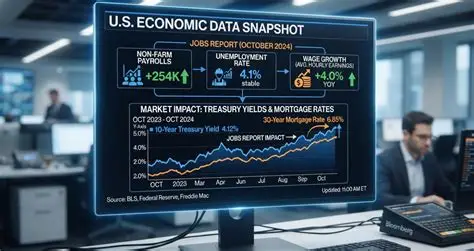
According to the U.S. Bureau of Labor Statistics, nonfarm payroll employment increased by 29,000 in September 2026, while the unemployment rate remained relatively stable at 4.2%. Employment across major industries changed little during the month.
The headline numbers show a labor market that is moving at a measured pace rather than experiencing dramatic month-to-month expansion.
That slower pace deserves attention, but the report also contains constructive signals.
Health care continued adding jobs, construction employment increased, manufacturing remained above its recent low and average hourly earnings continued to rise.
For workers, businesses and job seekers, the report offers valuable information about where opportunities remain visible and how the employment environment is evolving.
What the Latest Jobs Report Shows
The September 2026 Employment Situation contains data from two major surveys conducted by the Bureau of Labor Statistics.
The household survey provides information about employment status and unemployment, while the establishment survey measures nonfarm payroll employment, hours and earnings by industry.
The September report showed:
- Nonfarm payroll employment increased by 29,000.
- The unemployment rate was 4.2%.
- About 7.1 million people were unemployed.
- Labor-force participation was 61.8%.
- The employment-population ratio was 59.2%.
- Average hourly earnings increased to $37.81.
- Average hourly earnings rose 3.0% over the previous 12 months.
- The average private-sector workweek remained 34.4 hours.
Together, these figures provide a broader picture than the headline payroll number alone.
The data show a labor market that continues to generate employment and wage income while adjusting to changing economic conditions.
Unemployment Remains Within a Relatively Narrow Range
One of the notable features of the September jobs report is the stability of the unemployment rate.
The unemployment rate stood at 4.2%, and the BLS reported that it has remained between 4.1% and 4.3% since March 2026.
This stability provides an important piece of context for understanding the employment environment.
Monthly payroll changes can fluctuate because of seasonal factors, business reporting patterns and other temporary influences. Looking at unemployment over several months can provide a broader perspective.
The September report therefore adds another month of relatively stable unemployment conditions.
Wage Growth Continues to Provide Encouragement
Another constructive feature of the latest jobs report is continued wage growth.
Average hourly earnings for private nonfarm employees increased by 5 cents, or 0.1%, in September, reaching $37.81.
Over the previous 12 months, average hourly earnings increased by 3.0%.
For workers and households, wages remain one of the most important parts of the employment picture.
Paychecks influence household budgets, spending power, savings and financial planning. Continued annual wage growth therefore remains an important part of the broader labor-market story.
The latest numbers demonstrate that compensation continues to move upward even as payroll growth becomes more moderate.
Health Care Remains an Important Source of Employment
Health care continued to stand out in the September employment data.
Health care employment increased by 17,000 jobs during the month, although the pace was slower than the average monthly increase of 33,000 over the preceding 12 months. Ambulatory health care services added 13,000 jobs, while hospitals added 12,000. Nursing and residential care facilities declined by 9,000.
The continued expansion of health care employment highlights the importance of this sector in the American labor market.
Health care includes a wide range of occupations, from medical professionals and technicians to administrative, support and service roles.
Its continued employment growth provides opportunities for workers with different educational backgrounds and professional skills.
Construction Continues to Add Jobs
Construction employment also increased in September.
The sector added approximately 11,000 jobs, close to its average monthly increase of 10,000 over the previous 12 months. Employment in nonresidential specialty trade contractors continued to trend upward, adding 12,000 jobs during September.
Construction remains closely connected to infrastructure, housing, commercial development and other economic activity.
The September figures demonstrate that employment opportunities continue to develop within specialized areas of the construction industry.
For workers with technical skills and trade experience, these areas can remain an important part of the wider employment landscape.
Manufacturing Shows Signs of Continued Strength
Manufacturing employment changed little in September, increasing by 9,000 jobs.
More importantly, the BLS reported that manufacturing employment has increased by 72,000 jobs since its recent low in December 2025.
That longer-term movement provides useful context.
A single month’s figure can sometimes obscure broader trends. The increase since December demonstrates that manufacturing employment has experienced improvement from its recent low point.
Employment gains in plastics and rubber products manufacturing and machinery manufacturing contributed to September’s increase.
Manufacturing remains an important source of skilled employment, technical careers and industrial expertise.
Financial Activities Face a Different Trend
Not every part of the labor market moved in the same direction.
Employment in financial activities decreased by 7,000 in September. The BLS reported that employment in the sector has fallen by 129,000 since its recent peak in May 2025, with insurance carriers and related activities accounting for much of that decline.
This difference between industries demonstrates why the jobs report should be viewed as a broad economic measurement rather than a description of every worker’s experience.
Some industries are expanding, others are stabilizing and some are adjusting their employment levels.
For job seekers, this reinforces the value of transferable skills and flexibility across sectors.
Revisions Add More Context to the Jobs Report
The September report also included revisions to previous payroll estimates.
July employment was revised downward from an earlier estimate of a 21,000 increase to a 10,000 decrease.
August employment was revised from a 162,000 increase to a 133,000 increase.
The BLS stated that the combined employment change for July and August was 60,000 lower than previously reported.
Employment statistics are regularly revised as additional reports become available and seasonal factors are recalculated.
These revisions demonstrate why economic trends are often best understood through multiple months of data rather than a single preliminary figure.
For readers following the jobs report, revisions are not simply technical details. They help create a more complete picture as additional information becomes available.
The Labor Force Remains an Important Part of the Story
The September report showed a labor-force participation rate of 61.8%, while the employment-population ratio was 59.2%. Both measures changed little during the month.
These measurements help explain the employment picture beyond the unemployment rate.
The labor-force participation rate represents the share of the civilian noninstitutional population that is working or actively looking for work.
The employment-population ratio measures the share of the population that is employed.
Together, these indicators help economists and businesses understand how people are participating in the labor market.
Millions of Americans Remain Connected to the Workforce
The report also contains encouraging evidence of continued labor-market participation.
Approximately 7.1 million people were unemployed in September, while 5.8 million people outside the labor force said they currently wanted a job.
The distinction between unemployment and people outside the labor force is important.
A person generally needs to be actively looking for work to be counted as unemployed. Someone who wants a job but is not currently searching or is unavailable to start is generally outside the labor force.
These figures show the depth and complexity of the employment market.
They also highlight the importance of connecting people who want work with training, employers and opportunities.
Long-Term Unemployment Remains Worth Watching
The number of people unemployed for at least 27 weeks was approximately 1.9 million in September, accounting for 27.1% of unemployed people.
Long-term unemployment can create challenges for workers because extended periods away from employment may make returning to the labor market more difficult.
At the same time, continued investment in education, professional development and skills training can help people rebuild confidence and strengthen their connection to employment.
The modern job market increasingly rewards adaptability.
Skills that can be transferred between industries can give workers additional pathways when particular sectors slow down.
What the Jobs Report Means for Job Seekers
For people searching for employment, the latest report offers several practical lessons.
First, opportunities remain available even when overall hiring slows.
Health care and construction continued to add jobs in September, while manufacturing employment remained above its December 2025 low.
Second, skills matter.
Workers who continue developing digital, technical, communication, analytical and industry-specific abilities can broaden their employment options.
Third, patience can be valuable.
A slower hiring environment may require more applications, stronger resumes and greater flexibility regarding roles, industries or locations.
The positive side is that every application, interview and new skill can strengthen a person’s position for the next opportunity.
What the Jobs Report Means for Businesses
Businesses can also use employment data to understand broader workforce conditions.
The September report shows that labor-market growth has moderated while wages continue to increase.
Employers can respond by focusing on productivity, workforce development, retention and efficient hiring.
Training existing employees can also help businesses fill skill gaps without relying exclusively on external recruitment.
A changing labor market can therefore become an opportunity for companies to invest in people.
Businesses that build adaptable teams may be better positioned to respond when demand changes.
The Bigger Economic Picture
The jobs report is one of the most closely followed economic indicators because employment connects directly to household income, consumer spending and business activity.
The September 2026 figures show moderate payroll growth, relatively stable unemployment and continued wage increases.
The report does not describe every aspect of the economy, and one month of data should not be treated as a complete economic forecast.
Instead, it provides another important piece of evidence for understanding current labor-market conditions.
The most constructive reading comes from examining the different signals together.
Employment continues.
Wages continue to rise.
Major sectors continue to create opportunities.
And unemployment remains within a relatively narrow range.
The Upside of a Changing Job Market
A changing labor market can create uncertainty, but it can also create new possibilities.
Industries evolve.
New technologies create different roles.
Businesses develop new services.
Workers gain new skills.
Entire career paths can change within a few years.
The strongest opportunity often comes from recognizing these changes early and responding with preparation.
For job seekers, that may mean learning a new digital skill, earning a professional certification or exploring industries with continuing demand.
For employers, it may mean investing more heavily in training and employee development.
For students, it can mean choosing education that combines theoretical knowledge with practical skills.
The jobs report is therefore more than a monthly collection of statistics. It is a snapshot of millions of individual career journeys.
Building Opportunity Through Skills
One of the most positive lessons from employment data is the continuing value of adaptability.
Workers do not always need to remain inside one narrow career path.
Skills such as communication, problem-solving, technology use, project management and teamwork can transfer across industries.
Technical skills can also create pathways into specialized occupations.
As businesses change, employees who continue learning can position themselves for emerging opportunities.
Lifelong learning has become an increasingly important part of career development.
A Balanced View of the September Jobs Report
The September 2026 jobs report contains both areas of strength and areas requiring attention.
Payroll employment increased by 29,000, but growth was modest.
Unemployment remained at 4.2%.
Wages increased 3.0% over the previous year.
Health care and construction added jobs.
Manufacturing employment remained above its December 2025 low.
At the same time, financial activities employment continued to decline, and previous payroll estimates were revised downward.
These details illustrate why employment data should be interpreted carefully.
The report does not tell a single simple story.
Instead, it shows an economy where different industries and groups are experiencing different conditions at the same time.
Final Thoughts
The latest jobs report presents a measured but meaningful picture of the U.S. labor market.
September 2026 brought a 4.2% unemployment rate, modest payroll growth, continued wage increases and ongoing employment gains in areas such as health care and construction.
The broader message is one of adaptation.
Economic conditions change, industries evolve and hiring patterns shift. Yet opportunities continue to emerge for people who build skills, remain flexible and stay connected to the changing needs of employers.
For workers, the future can be strengthened through learning and preparation.
For businesses, it can be strengthened through investment in people.
The jobs report is ultimately about more than numbers.
It is about people building careers, businesses creating opportunities and households working toward greater financial stability.
Even during periods of slower employment growth, those opportunities continue to matter.
Reference
For more business, economy, employment and current news coverage, visit Daily Talks Web.