The Strait of Hormuz is one of the most important waterways in the world. Narrow in geography but enormous in global importance, this strategic passage connects the Persian Gulf with the Gulf of Oman and the Arabian Sea. It serves as a critical gateway for energy exports from some of the world’s largest oil and natural-gas producers.
For decades, the Strait of Hormuz has represented both opportunity and vulnerability. Its waters support international trade, connect energy-producing countries with global markets, and contribute to the economic stability of nations far beyond the Middle East.
In 2026, its importance has become even more visible. Months of conflict and disruption have reduced shipping through the waterway, while Iran, Oman, Qatar, and other international actors have pursued diplomatic efforts aimed at restoring more normal maritime movement. Reuters reported on August 28 that mediators were working toward reopening the strait, while shipping traffic remained far below earlier levels.
Despite the challenges, the Strait of Hormuz also represents a powerful opportunity for cooperation.
A more stable and secure waterway can support lower energy-market uncertainty, stronger international trade, regional economic development, and renewed confidence in global supply chains.
What Is the Strait of Hormuz?
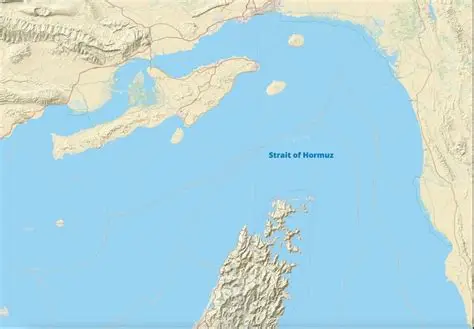
The Strait of Hormuz lies between Iran to the north and Oman to the south. It connects the Persian Gulf with the Gulf of Oman and ultimately the Arabian Sea.
The U.S. Energy Information Administration identifies it as one of the world’s most important oil chokepoints because enormous volumes of petroleum and liquefied natural gas pass through the waterway.
Its geography makes it strategically important.
Although relatively narrow compared with open ocean routes, the strait is deep and wide enough to accommodate some of the world’s largest crude-oil tankers.
This makes it a natural gateway between Gulf energy producers and international consumers.
Why the Strait of Hormuz Matters to the World
The importance of the Strait of Hormuz extends far beyond the countries immediately surrounding it.
Energy markets are global.
Oil produced in the Gulf can eventually power vehicles, factories, airlines, shipping operations, electricity systems, and industries thousands of miles away.
According to the EIA, oil flows through the Strait of Hormuz averaged about 20.9 million barrels per day during the first half of 2025, equivalent to roughly one-fifth of global petroleum liquids consumption and around one-quarter of global maritime oil trade.
The waterway is also important for liquefied natural gas.
The EIA estimated that about 11.4 billion cubic feet per day of LNG moved through the strait during the first half of 2025, representing more than 20% of global LNG trade.
These figures explain why developments around Hormuz can quickly attract worldwide attention.
The Strait of Hormuz and Global Energy Security
Energy security depends not only on how much oil and gas exist but also on whether those resources can reach consumers.
The Strait of Hormuz is therefore a crucial part of the global energy network.
Saudi Arabia, the United Arab Emirates, Qatar, Kuwait, Iraq, Iran, and other regional producers depend to varying degrees on maritime routes connected to the Gulf.
When shipping operates normally, energy can move efficiently toward major markets in Asia and elsewhere.
When movement is disrupted, transportation costs and market uncertainty can increase.
The EIA has emphasized that disruption at major oil chokepoints can cause supply delays, higher shipping costs, and higher energy prices.
This makes stability around Hormuz valuable not only for producers but also for consumers.
Asia’s Connection to the Strait of Hormuz
Asian economies are especially important to the story.
The EIA reported that approximately 89% of crude oil and condensate moving through the Strait of Hormuz went to Asian markets during the first half of 2025. China, India, Japan, and South Korea together accounted for approximately 74% of Hormuz crude oil and condensate flows.
This creates a strong economic connection between the Gulf region and Asia.
Factories, transportation networks, airlines, households, and industries across Asia rely on reliable energy supplies.
A stable Strait of Hormuz therefore supports economic activity far beyond the Middle East.
The Strait of Hormuz in 2026
The waterway has faced an extraordinary period in 2026.
The regional conflict that began earlier in the year significantly disrupted maritime traffic.
According to the EIA’s August 2026 outlook, oil flows through the Strait of Hormuz fell sharply during the first half of 2026. The agency estimated average flows at 14.9 million barrels per day in the first quarter and only 4.9 million barrels per day in the second quarter.
The decline demonstrates how quickly geopolitical instability can affect physical energy markets.
However, the situation has also shown the ability of markets and governments to adapt.
The EIA reported in July that shipping traffic had increased following a June memorandum of understanding between the United States and Iran aimed at ending the conflict and reopening the strait.
Renewed Diplomatic Efforts
Diplomacy has become an important part of the current Strait of Hormuz story.
Iran and Oman have been discussing arrangements intended to support maritime movement.
Recent proposals have included a temporary navigation corridor and mine-clearance efforts.
The discussions are significant because Oman has historically played an important diplomatic role in the region.
AP reported that Iran and Oman were discussing a temporary navigational corridor through the Strait of Hormuz, with a longer-term arrangement also under consideration.
These efforts provide a positive path forward.
Instead of allowing the waterway to remain a permanent source of disruption, regional diplomacy can focus on predictable navigation, maritime safety, and economic stability.
The Positive Power of Cooperation
The Strait of Hormuz demonstrates how interconnected modern economies have become.
No single country exists in complete isolation from international energy markets.
Producers need buyers.
Consumers need reliable supplies.
Shipping companies need safe routes.
Ports need predictable traffic.
Governments need economic stability.
This creates an incentive for cooperation.
A stable Strait of Hormuz benefits multiple sides simultaneously.
Regional governments can protect trade.
International shipping companies can operate with greater confidence.
Energy producers can reach customers.
Importing countries can improve supply security.
Consumers can benefit from reduced uncertainty.
Alternative Routes and New Infrastructure
The current disruption has also encouraged Gulf countries to examine alternative ways of transporting energy.
Saudi Arabia and the United Arab Emirates already have pipelines that can bypass at least part of the Strait of Hormuz.
The EIA estimates that Saudi Arabia’s East-West crude oil pipeline and the UAE’s Abu Dhabi pipeline together could provide approximately 4.7 million barrels per day of capacity to bypass the strait.
Recent reporting indicates that Gulf countries are accelerating efforts to expand alternative export infrastructure.
These projects cannot completely replace Hormuz, but they can add resilience.
That is an important long-term benefit.
A more diversified energy transportation system can reduce the consequences of future disruptions.
The UAE’s Growing Energy Infrastructure
The United Arab Emirates has been among the countries investing in alternative routes.
The Abu Dhabi Crude Oil Pipeline allows some UAE oil to reach export terminals without passing through the Strait of Hormuz.
Recent reports indicate that the UAE is planning additional infrastructure expansion, strengthening its ability to move energy through alternative pathways.
This could make the wider Gulf energy system more flexible.
Infrastructure diversification is not necessarily a replacement for Hormuz.
Instead, it can complement the waterway by creating additional options.
Saudi Arabia and Energy Resilience
Saudi Arabia also has an important role in regional energy security.
Its East-West pipeline connects oil-producing areas with the Red Sea, allowing some crude to bypass the Strait of Hormuz.
Expanding and maintaining such infrastructure can provide additional resilience during periods of maritime disruption.
This demonstrates a broader lesson from the current situation.
Energy security is strongest when countries have multiple reliable routes rather than depending entirely on one pathway.
The Importance of LNG
Oil is not the only energy product associated with the Strait of Hormuz.
Liquefied natural gas is also extremely important.
Qatar is one of the world’s major LNG exporters, and much of its maritime energy trade depends on routes through the Gulf.
The EIA’s analysis shows that more than 20% of global LNG trade moved through Hormuz during the first half of 2025.
Reliable LNG transportation is important for electricity generation, industrial activity, heating, and energy security in importing countries.
Stable maritime access can therefore support both oil and natural-gas markets.
The Strait of Hormuz and Oil Prices
Oil prices respond to expectations as well as physical supply.
When traders believe a major supply route could face prolonged disruption, prices can rise because markets anticipate tighter availability.
When confidence improves and shipping resumes, some of that risk premium can disappear.
The EIA reported in July 2026 that increased shipping through Hormuz contributed to an improved global oil outlook and expected crude and gasoline prices to benefit as production and trade flows recovered.
This shows how diplomacy and maritime stability can have economic effects far beyond the region.
A Strategic Waterway With Global Consequences
The Strait of Hormuz is often described as a geopolitical chokepoint.
That description reflects its strategic importance.
A disruption can affect:
- Oil prices
- Natural-gas markets
- Shipping costs
- Insurance premiums
- Manufacturing
- Transportation
- Inflation
- Energy security
- International trade
However, its significance should not be viewed only through the lens of conflict.
The same waterway that creates strategic vulnerability also creates enormous economic opportunity when it remains open.
Open shipping means commerce.
Commerce means jobs, investment, exports, imports, and economic growth.
Maritime Safety and International Shipping
Safe navigation is essential for commercial shipping.
Tanker crews, shipping companies, port authorities, naval forces, and governments all have roles in maintaining maritime safety.
The current situation has highlighted the importance of clear navigation arrangements and communication between regional authorities.
The reported discussions between Iran and Oman around a temporary shipping corridor show how practical cooperation can support the return of commercial traffic.
Safety arrangements are particularly important when waterways are affected by conflict or potential hazards.
The Economic Opportunity of a Stable Hormuz
A stable Strait of Hormuz can become a powerful economic asset for the region.
Reliable maritime traffic can encourage:
- Energy investment
- Port development
- Shipping activity
- Regional trade
- Tourism
- Logistics growth
- Infrastructure investment
- International business cooperation
The Gulf region has already become an important center for global trade and logistics.
Improved maritime stability can strengthen that position.
The Future of Energy Security
The current crisis may accelerate a broader transformation in global energy security.
Countries are increasingly interested in:
- Alternative pipelines
- Strategic petroleum reserves
- Diverse energy suppliers
- Renewable energy
- Energy efficiency
- Regional electricity networks
- Multiple shipping routes
This does not mean the Strait of Hormuz will become unimportant.
Its geography ensures that it will remain strategically significant.
Instead, the future may involve a combination of reliable Hormuz shipping and stronger alternatives.
That would create a more resilient global energy system.
Renewable Energy and the Long-Term Picture
The growth of renewable energy could eventually reduce some countries’ dependence on imported fossil fuels.
Solar power, wind energy, battery storage, nuclear power, and improved energy efficiency can diversify national energy systems.
For Gulf countries, this transformation can also create an opportunity to invest in new industries while maintaining their importance in global energy markets.
The Strait of Hormuz will remain important during this transition.
But over the long term, a more diversified global energy system could reduce the impact of any single disruption.
Why the Strait of Hormuz Still Matters
Despite efforts to create alternative routes, the Strait of Hormuz remains extraordinarily important.
Its capacity and geographical position make it difficult to replace completely.
The EIA’s data shows just how much energy traditionally moves through the waterway.
For that reason, maintaining safe navigation remains a global economic priority.
The strongest future is not one in which countries compete endlessly over the chokepoint.
It is one in which regional stability, infrastructure diversification, diplomacy, and international trade work together.
A More Stable Future
The recent diplomatic efforts involving Iran and Oman provide a potential path toward greater stability.
Reuters reported on August 28 that mediators were focusing on reopening the Strait of Hormuz as part of broader efforts to resolve the regional conflict.
At the same time, shipping traffic remained significantly below earlier averages, showing that restoring confidence may take time.
The opportunity is clear.
A stable maritime corridor can reduce pressure on energy markets and help rebuild confidence among shipping companies and international buyers.
It can also encourage the region to pursue longer-term mechanisms for maritime cooperation.
Conclusion
The Strait of Hormuz is one of the world’s most important waterways, connecting the energy-rich Persian Gulf with international markets.
Its importance comes from more than geography.
It is a gateway for oil, LNG, trade, investment, and economic activity. During the first half of 2025, roughly 20.9 million barrels of petroleum liquids per day moved through the strait, while more than 20% of global LNG trade also passed through it.
The disruptions of 2026 have demonstrated the risks associated with dependence on a major maritime chokepoint. Yet they have also created opportunities for stronger infrastructure, improved energy diversification, and renewed diplomacy.
Alternative pipelines can add resilience.
Renewable energy can diversify future supplies.
Improved navigation arrangements can strengthen maritime safety.
Diplomatic cooperation can help restore confidence.
The story of Hormuz is ultimately a story of interdependence.
Its waters connect producers with consumers, Asia with the Gulf, and regional stability with global economic confidence.
A peaceful, secure, and reliably navigable Strait of Hormuz would benefit not only the countries of the Middle East but people and businesses around the world.
Its greatest potential is therefore not as a symbol of confrontation, but as a gateway for stability, commerce, cooperation, and shared prosperity.
Reference
For more world news, geopolitics, energy, business, and international affairs coverage, visit Daily Talks Web.