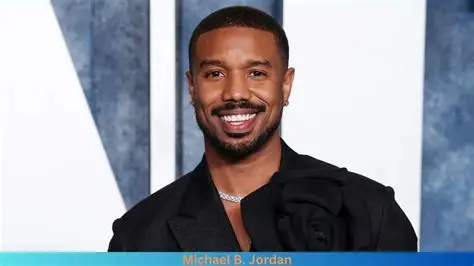
Michael B. Jordan: Oscar Winner and Hollywood’s Most Powerful Star
Some careers arrive fully formed. Others build with such deliberate force that their impact becomes inevitable. Michael B. Jordan’s trajectory represents the latter—a decade-long ascent from promising newcomer to Oscar-winning leading man that has redefined what Black stardom looks like in modern Hollywood. His 2026 Academy Award for Best Actor in Sinners wasn’t just a personal victory. It was a cultural coronation, validating a career built on excellence, entrepreneurship, and the unwavering belief that representation creates opportunity.
At 39, Jordan stands at the intersection of artistic achievement and industry power. He is an actor who demands challenging roles. A producer who creates opportunities for others. A businessman who understands that ownership equals leverage. The upside of his Oscar win extends far beyond the statuette—it unlocks the next phase of a career that promises to shape cinema for decades.
The Oscar Moment That Changed Everything
The 98th Academy Awards on March 15, 2026, delivered a moment that will echo through Hollywood history. When Michael B. Jordan’s name was announced for Sinners, he became the latest in a distinguished line of Best Actor winners, joining the company of Sidney Poitier, Denzel Washington, and Will Smith. His acceptance speech carried the weight of that lineage.
“Thank you to the Black actors that came before me,” he declared, acknowledging the pioneers who carved paths through exclusion. This wasn’t just gratitude—it was recognition of debt, of standing on shoulders, of continuing a struggle that predates his birth. The upside of his visibility is inspiration for the next generation, proof that persistence through industry barriers eventually breaks them.
Jordan’s victory in Sinners, where he played dual roles as twins Smoke and Stack, demonstrated technical range that few actors attempt. The physical demands of distinguishing two brothers through subtle mannerisms. The emotional depth of exploring their complex relationship. The star power of carrying a $90 million budget film to critical and commercial success. The Academy recognized comprehensive excellence, not just a single performance.
The Ryan Coogler Partnership: Cinema’s Most Dynamic Duo
Jordan’s Oscar triumph represents the culmination of a creative partnership that has produced four remarkable films. Fruitvale Station (2013) announced both talents to the world. Creed (2015) reinvigorated a franchise while establishing Jordan as a leading man. Black Panther (2018) became a cultural phenomenon. Sinners (2026) delivered Oscar gold.
The upside of this collaboration is mutual elevation. Coogler provides Jordan with roles that challenge and showcase his range. Jordan gives Coogler a performer capable of realizing ambitious visions. Their work together demonstrates that Black creative partnerships can generate both artistic prestige and commercial dominance, disproving industry assumptions that such projects face limited audiences.
Coogler’s own Oscar win for Best Original Screenplay on the same night validated their shared excellence. The duo’s simultaneous triumphs suggest that the future of Hollywood lies in collaborative creation across writing, directing, and performing. Jordan’s next projects, whatever they may be, will carry the weight of this proven partnership.
From Newark to Hollywood Royalty
Jordan’s origin story defies easy categorization. Born in Santa Ana, California, raised in Newark, New Jersey, he began modeling at age 10 and acting professionally shortly after. His early television work on The Wire and Friday Night Lights demonstrated precocious talent, but the transition to film stardom required navigation of an industry that offers limited pathways for Black actors.
The upside of his persistence is representation. Jordan’s career choices—Fruitvale Station’s social realism, Creed’s franchise reinvention, Black Panther’s Afrofuturism, Sinners’ genre ambition—prove that Black leading men need not be confined to narrow typecasting. He has played superheroes and boxers, historical figures and fictional twins, demonstrating range that commands respect and opportunity.
His physical transformation for roles, particularly the Creed films, established a new standard for actor commitment. The training, the diet, the discipline required to convincingly portray a professional boxer across three films showed work ethic that translates into industry credibility. Jordan doesn’t just perform roles—he embodies them completely.
Outlier Society: Production Power
In 2016, Jordan launched Outlier Society Productions with a revolutionary mandate: adopt inclusion riders on all projects. This wasn’t charity—it was strategy. By requiring diversity in casting and crew, Jordan created infrastructure for change while building a production company that now generates substantial industry influence.
The upside of this entrepreneurial approach is ownership. Jordan isn’t waiting for Hollywood to offer roles. He’s creating them. Outlier Society’s development slate includes projects that center Black experiences without marginalizing them. The company’s success proves that inclusive filmmaking is commercially viable, providing data that convinces risk-averse executives to follow similar paths.
His production work extends his impact beyond performances. By creating opportunities for writers, directors, and actors who might otherwise face industry barriers, Jordan multiplies his influence. The Oscar win enhances this leverage, making Outlier Society an even more attractive partner for studios seeking credibility and commercial appeal.
The Cultural Upside of Visibility
Jordan’s stardom transcends film. His inclusion in People magazine’s Sexiest Man Alive lists, his presence at fashion’s highest levels, his social media following of millions—all create a platform that extends his influence beyond cinema. This visibility is not vanity; it’s power.
The upside is cultural normalization. When Michael B. Jordan appears in luxury advertising, attends Met Galas, and wins Oscars, he occupies spaces that were historically reserved for white stars. His presence in these venues changes perceptions of who belongs, what Black stardom looks like, and what audiences will accept.
His public persona—thoughtful, ambitious, socially engaged—provides a counter-narrative to stereotypes about Black masculinity. Jordan demonstrates that strength includes vulnerability, that success includes social responsibility, that excellence is the best response to discrimination.
The Future: Unlimited Upside
At 39, Jordan enters a new phase. The Oscar win provides leverage for any project he desires. His production company offers creative control. His financial success—Sinners grossed $263 million worldwide on a $90 million budget—proves his commercial viability.
The upside is generational influence. Jordan can now develop projects that launch careers, tell untold stories, and reshape industry practices. He can mentor younger actors facing the barriers he overcame. He can advocate for systemic change from a position of undeniable achievement.
His next announced project, an adaptation of the novel The Silver Bear, suggests continued ambition. The role of an assassin offers physical demands and psychological complexity that will showcase post-Oscar range. Whatever follows, Jordan will approach it with the work ethic and strategic thinking that defined his rise.
Conclusion: The Power of Persistence
Michael B. Jordan’s Oscar win represents more than individual achievement. It validates a career built on excellence in the face of industry limitations. It demonstrates that Black actors can achieve Hollywood’s highest honors while maintaining creative integrity and commercial success. It opens doors that will admit the next generation of talent.
The upside of his victory is transformation. Transformation of what leading men look like. Transformation of what stories get told. Transformation of who gets to tell them. Jordan didn’t just win an Oscar—he won the power to shape cinema’s future.