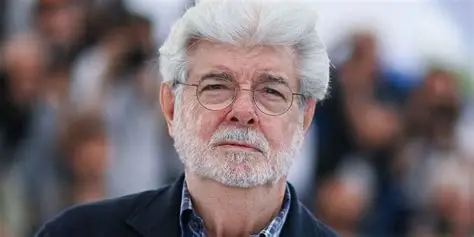
Andrew Tate has become one of the most recognizable and controversial personalities of the digital age. His journey from professional kickboxing to reality television and eventually global internet fame demonstrates how dramatically social media has changed the way public figures build influence.
Tate has attracted millions of followers through provocative commentary about masculinity, ambition, money, relationships, discipline and personal success. At the same time, his statements about women and relationships have generated intense criticism, platform restrictions and widespread debate about the influence of online personalities on younger audiences.
His story is therefore much larger than social media popularity.
It is a story about ambition, branding, controversy, resilience, responsibility and the enormous power of the internet.
In 2026, Tate’s public life has entered another major chapter because of ongoing legal proceedings in several countries. His current circumstances have transformed the conversation surrounding his career and legacy.
The positive lesson that can be taken from his rise is not that every message associated with him should be accepted. Instead, his career demonstrates the importance of discipline, communication, entrepreneurship and understanding how modern digital platforms can transform an individual into a global brand.
Andrew Tate’s Early Life and Background
Emory Andrew Tate III was born on December 1, 1986, in Washington, D.C., and was raised partly in the United Kingdom.
His father, Emory Tate, was an accomplished chess player known for his exceptional tactical ability.
That background influenced Andrew Tate’s own public emphasis on strategic thinking, competition and self-discipline.
Tate later developed an interest in combat sports and began building a professional career in kickboxing.
Before becoming a social media phenomenon, he spent years developing himself through physical competition.
That period is important because it provides context for the personality he later presented online.
Competitive sports can teach patience, consistency, resilience and the ability to recover from setbacks.
Those themes eventually became central to Tate’s public message.
Andrew Tate’s Kickboxing Career
Kickboxing was one of the earliest foundations of Andrew Tate’s public identity.
He competed professionally under K-1 rules and won multiple titles during his career.
His sporting achievements gave him a platform before social media became the primary engine of his fame.
The competitive environment also helped establish the confident and aggressive persona that later became a defining part of his online image.
For athletes, success rarely comes without repetition.
Training requires discipline even when motivation disappears.
Competition requires the ability to handle defeat without abandoning long-term goals.
Those are among the more constructive themes that can be separated from Tate’s broader controversial public persona.
His sporting career demonstrated that achievement requires sustained effort rather than instant success.
Television and the Beginning of Wider Fame
Tate gained additional public attention after appearing on the British reality television program Big Brother in 2016.
His appearance introduced him to a broader audience outside combat sports.
Although his time on the program was brief, the exposure helped establish his reputation as a highly outspoken personality.
Television gave him an early lesson in the power of controversy.
In traditional media, attention is valuable.
In social media, attention can become an entire business model.
Tate eventually became exceptionally skilled at turning provocative statements into highly shareable online clips.
The Rise of Andrew Tate on Social Media
The biggest transformation in Tate’s career came through social media.
Rather than relying on television networks or traditional publishers, he built an audience directly through online platforms.
His content frequently focused on wealth, confidence, masculinity, fitness, entrepreneurship and personal independence.
Short video clips circulated rapidly across platforms, making his ideas visible far beyond his own followers.
This approach became particularly effective because controversial statements often generate strong emotional reactions.
Supporters shared his content because they found it motivating.
Critics shared it to condemn or challenge it.
Both responses increased visibility.
This demonstrates one of the most powerful realities of modern digital culture: attention can grow even when audiences strongly disagree with the person receiving it.
The Business Behind the Personal Brand
Tate’s influence was not based entirely on social media popularity.
He also developed online businesses and paid communities that positioned his personal brand around entrepreneurship and self-improvement.
One of the best-known ventures was originally called Hustlers University and was later relaunched as The Real World.
The broader strategy involved teaching members about online business, marketing, freelancing and other money-making concepts.
Regardless of opinions about Tate himself, the business model illustrates a major development in the modern internet economy.
Personal branding can become a commercial ecosystem.
A personality can attract an audience, the audience can become a community, and the community can support products or educational services.
This model is now used by creators across many industries.
The Power of Personal Branding
One of the clearest lessons from Andrew Tate’s career is the power of consistent personal branding.
Tate developed a recognizable visual identity.
He repeated specific themes.
He used memorable phrases.
He maintained a distinctive communication style.
He understood that social media audiences often remember personalities more easily than organizations.
This approach helped transform him from a former kickboxer into a globally recognized internet personality.
For legitimate entrepreneurs and creators, the broader lesson is useful: authenticity, consistency and a clear message can make it easier for an audience to understand what a brand represents.
However, effective branding also requires responsibility.
Influence brings consequences.
The larger an audience becomes, the greater the responsibility attached to public statements.
Why Andrew Tate Became So Influential
Tate’s popularity cannot be explained by controversy alone.
His content addressed frustrations experienced by some young men, particularly around confidence, financial independence, fitness and personal direction.
His message frequently emphasized taking responsibility for one’s future.
For some followers, this created a sense of motivation.
The appeal of such messaging is understandable.
Young people often want clear direction in a complicated world.
They want confidence.
They want financial security.
They want purpose.
They want recognition.
Tate offered a simple and highly confident narrative around these desires.
The challenge is that simple answers can sometimes overlook the complexity of real life.
Healthy ambition can be valuable without adopting every belief associated with an influencer.
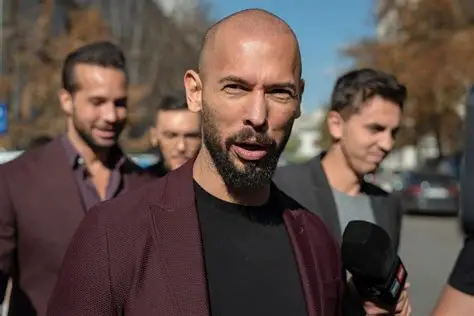
The Controversy Surrounding Andrew Tate
Andrew Tate’s public image has also been shaped by serious controversy.
He has made numerous statements about women, relationships and gender roles that have been widely criticized as misogynistic.
Organizations and researchers have expressed concern about the impact of such content, particularly on younger audiences. The Anti-Defamation League has described Tate as a highly controversial influencer whose commentary has included disturbing views about rape, relationships and power.
These criticisms have contributed to a much broader debate about online masculinity.
Social media can give young audiences access to useful ideas about discipline and confidence.
It can also expose them to extreme or harmful messages.
The responsibility therefore belongs not only to influencers but also to platforms, families, educators and audiences.
Critical thinking becomes essential.
Andrew Tate and Platform Bans
Tate has faced restrictions and removals from several major online platforms at different points in his career.
These actions generated another major debate.
Supporters argued that platform restrictions could suppress controversial opinions.
Critics argued that platforms have a responsibility to limit harmful content.
The debate highlights a difficult question at the heart of the digital age: how should online communities balance free expression with user safety?
There is no simple answer.
Social media platforms are now among the most influential communication systems in the world.
Their decisions can dramatically affect public discourse.
Tate’s experience became one of the most prominent examples of this conflict.
Andrew Tate’s Legal Battles
The legal side of Tate’s story is separate from his online popularity and must be discussed carefully.
Tate and his brother Tristan have faced criminal investigations and charges in Romania and the United Kingdom.
They have denied wrongdoing.
In July 2026, the brothers were arrested in Miami after British authorities issued new charges, including allegations of rape, human trafficking and assault. The United Kingdom is seeking their extradition.
These are allegations and charges, not convictions.
That distinction is essential when discussing ongoing criminal proceedings.
The legal process will determine the outcome through courts rather than social media arguments.
Current Situation in September 2026
As of September 2, 2026, Andrew and Tristan Tate remain in custody in Florida while they challenge extradition proceedings to the United Kingdom.
A federal judge considered their request for release on bail in late August but had not issued a final decision at the time of the latest reports.
British authorities are pursuing extradition over serious criminal allegations.
Meanwhile, legal proceedings and investigations connected to the brothers’ activities in Romania continue.
A new Romanian indictment was also described as potentially imminent in a September 1 court filing by a defense lawyer representing the brothers.
The legal situation remains active and could develop significantly.
The Romanian Proceedings
Romania has played a major role in the legal story surrounding Andrew and Tristan Tate.
The brothers were arrested there in December 2022 and later faced allegations including human trafficking, rape and forming an organized criminal group.
In April 2026, a Romanian court lifted remaining preventive judicial-control measures, although investigations into alleged offenses continued.
The lifting of those measures should not be confused with an acquittal or declaration of innocence.
It represented a change in the conditions imposed during the investigation.
The broader legal process remains an important part of Tate’s current story.
The UK Extradition Case
The United Kingdom has become another major legal front.
British authorities are seeking to bring the Tate brothers back to face prosecution over serious allegations.
Reuters reported that the brothers were arrested in the United States after British prosecutors issued 38 new charges, including allegations of rape, actual bodily harm and human trafficking.
The brothers deny wrongdoing.
The extradition process is separate from determining guilt or innocence.
Its purpose is to establish whether legal requirements are satisfied for a person to be transferred between jurisdictions.
That process can take time, particularly when multiple legal proceedings are involved.
Why the Legal Story Matters to His Legacy
The ongoing legal proceedings have changed how Andrew Tate’s career is viewed.
Before his legal troubles became a dominant part of the news cycle, much of the discussion surrounding him centered on social media, masculinity, money and influence.
Today, his legal situation is equally significant.
His story demonstrates that online fame does not place anyone above legal systems.
It also highlights the importance of separating evidence from claims, allegations from convictions and online narratives from court findings.
For audiences, this is a valuable lesson in media literacy.
Viral content can spread in seconds.
Legal truth takes much longer to establish.
The Positive Lessons From Andrew Tate’s Career
Even when examining a controversial public figure, it is possible to identify constructive lessons without endorsing every message associated with that person.
Tate’s career demonstrates the importance of discipline.
His kickboxing background shows the value of physical training and persistence.
His digital rise demonstrates the power of communication and personal branding.
His entrepreneurial ventures illustrate how online communities can become businesses.
His enormous audience demonstrates the importance of understanding digital culture.
The most useful approach is to separate constructive principles from harmful or unsupported ideas.
Confidence does not require disrespect.
Ambition does not require arrogance.
Masculinity does not require hostility.
Success does not excuse harmful behavior.
These distinctions allow people to learn from public figures without becoming dependent on them.
Andrew Tate and the Modern Creator Economy
Tate’s rise also reflects the evolution of the creator economy.
Traditional celebrities once depended heavily on television, newspapers, radio and film studios.
Today’s personalities can build international audiences from bedrooms, gyms, podcasts and smartphones.
This democratization of influence has enormous potential.
Talented people can reach audiences without waiting for permission from traditional gatekeepers.
At the same time, the system creates new risks.
Algorithms reward engagement.
Controversy can produce clicks.
Emotional content spreads quickly.
This means audiences must become more sophisticated consumers of information.
The Importance of Critical Thinking
Perhaps the strongest positive lesson from the Tate phenomenon is the importance of thinking independently.
Followers should not automatically accept every claim made by an influencer.
Critics should also verify information before repeating accusations as facts.
The same principle applies to politics, entertainment, health, business and every other major online topic.
A powerful personality can influence emotions.
Evidence should influence conclusions.
That distinction is essential.
Andrew Tate’s Lasting Digital Impact
Regardless of how future legal proceedings develop, Tate has already left a significant mark on internet culture.
He helped demonstrate how short-form content, controversy, personal branding and online communities can combine to create extraordinary reach.
He also became a central figure in discussions about young men’s identity and the influence of the so-called manosphere.
That influence will likely remain a subject of research and debate for years.
His story is therefore not simply about one individual.
It is also about the changing relationship between technology, culture, business and identity.
A More Responsible Vision of Success
The most constructive way to interpret the themes of ambition and self-improvement associated with Tate is to place them within a healthier framework.
Discipline can mean developing good habits.
Confidence can mean believing in your ability while respecting others.
Financial ambition can mean building useful skills.
Physical strength can mean taking care of your body.
Leadership can mean accepting responsibility.
Independence can mean developing the ability to make informed decisions.
None of these qualities require hatred, humiliation or disrespect toward other people.
That is where the positive side of self-improvement becomes most powerful.
The Future of Andrew Tate
Andrew Tate’s future remains closely connected to the outcome of his legal proceedings.
The extradition process in the United States could determine whether he is transferred to the United Kingdom.
Additional proceedings in Romania may also shape the next stage of his legal situation.
Because these matters are active, future developments should be followed through reliable court reporting and established news organizations rather than viral social media posts.
His online influence may also continue to evolve.
Digital audiences can change rapidly, and public reputations can shift dramatically when circumstances change.
Final Thoughts
Andrew Tate’s journey is one of the most striking examples of modern internet influence.
He moved from professional kickboxing to television and then transformed himself into a global digital personality.
His success demonstrates the extraordinary power of personal branding, social media distribution and direct communication with audiences.
It also demonstrates the risks that accompany enormous influence.
His controversial statements have generated intense criticism, while his legal troubles have placed his public career under even greater scrutiny.
As of September 2026, he remains at the center of ongoing extradition proceedings in the United States, with British and Romanian legal matters continuing to shape his future.
The most valuable lesson from his story is not to blindly admire or condemn a public figure.
It is to think independently.
Ambition can be powerful.
Discipline can change lives.
Entrepreneurship can create opportunity.
Confidence can help people overcome fear.
But all of these qualities are strongest when combined with responsibility, respect, evidence and accountability.
Andrew Tate’s story remains unfinished.
Whatever happens next, his rise has already demonstrated how profoundly the internet has changed fame, business and cultural influence.
For the next generation, the challenge is to take the useful lessons from the creator economy while refusing to surrender independent judgment.
Reference
For more news, biographies, current affairs, entertainment and trending stories, visit Daily Talks Web.