Dayton Webber: Quadruple Amputee Who Became Pro Athlete
Medical professionals gave him last rites. His family prepared for the worst. At ten months old, Dayton Webber faced death from a life-threatening blood infection that would cost him all four limbs. Yet he survived. He thrived. He became a professional athlete, disability advocate, and inspiration to thousands who faced their own seemingly impossible challenges.
The upside of Webber’s story is transformation against impossible odds. From quadruple amputation to professional cornhole player. From “last rites” to “living proof.” His journey demonstrates that physical limitation does not determine human potential, that adaptive creativity overcomes apparent disability, and that the human spirit can triumph over circumstances that seem definitively tragic.
The Medical Miracle That Started Everything
Webber’s story began with crisis. A serious bacterial infection threatened his life as an infant. Doctors administered last rites, the Catholic sacrament for the dying. Family gathered to say goodbye. The medical prognosis was absolute: he would not survive.
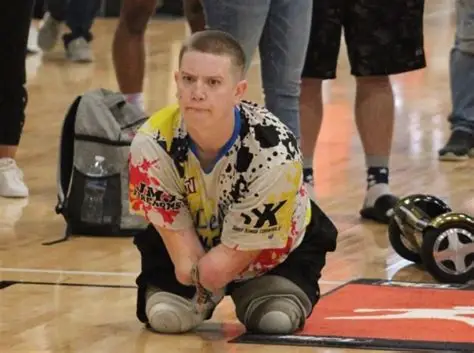
When he did survive, the cost was extreme. Amputation of both arms above the elbow. Amputation of both legs above the knee. Quadruple amputation at ten months old, before he had learned to walk, before he had developed the body awareness that most humans take for granted.
The upside of this survival is perspective. Webber never knew “normal” body function. He never grieved lost abilities because he never possessed them. His baseline was adaptation from consciousness. This created a psychology of problem-solving rather than loss-processing, of “how can I” rather than “I can’t because.”
His parents, facing every parent’s nightmare, made crucial choices. They would not raise him as disabled. They would not limit his activities based on assumption. They would support his attempts at everything, modifying approaches rather than denying opportunities. This foundation enabled everything that followed.
The Wrestling Foundation
By age eleven, Webber was already defying expectation. He wrestled competitively, using his unique body mechanics to advantages that opponents didn’t anticipate. His center of gravity, lower than typical wrestlers, provided stability. His upper body strength, developed through necessity, exceeded peers. His determination, forged through medical trauma, was unshakeable.
The upside of early sports participation was capability development. Wrestling taught Webber that his body, though different, could be powerful. That competition wasn’t about conforming to standard form but about maximizing individual capacity. That opponents who underestimated him based on appearance would learn respect through performance.
His wrestling coach and teammates adapted. Rules were modified to ensure fair competition. Techniques were developed that leveraged Webber’s strengths. The wrestling community’s acceptance demonstrated that inclusion requires creativity, not just tolerance. Webber didn’t just participate—he competed, he won, he earned his place on the mat.
This foundation translated to other activities. Football. Ice skating. Go-kart driving. Webber approached each sport with the same methodology: identify what was possible, develop adaptations, practice relentlessly, prove capability through performance. The pattern established in wrestling repeated across domains.
The Cornhole Career
Webber discovered cornhole at the American Legion, playing weekly with friends who treated him as competitor rather than novelty. The game—throwing beanbags at raised platforms with holes—seemed accessible. But doing it without hands or legs required innovation.
The upside of this challenge was differentiation. Webber developed a throwing technique using his residual limbs, body momentum, and precise timing that became his signature. He didn’t use prosthetic arms in competition because they reduced the sensitivity needed to feel the beanbag. He didn’t wear prosthetic legs because they complicated his balance system.
After eight years of amateur play, Webber turned professional. He joined the American Cornhole League, becoming the only quadruple amputee in professional competition. His training regimen matched any athlete’s: three to four hours daily of practice, physical conditioning, and strategy development.
His professional breakthrough came at the state finals. Down 20-4 in the final round, Webber and his partner mounted a comeback to win 21-20, clinching the championship. This victory proved his competitive legitimacy and launched his professional career. The win wasn’t just athletic—it was symbolic, demonstrating that his place in professional sports was earned through skill rather than granted through sympathy.
The Advocacy Platform
Webber’s visibility created opportunity for impact. His TODAY essay in 2023 shared his story nationally, describing his journey from “underdog to winner” and his philosophy of adaptation. He launched a YouTube channel documenting his techniques, travels, and daily life. He pursued motivational speaking, hoping to inspire others facing physical challenges.
The upside of this platform was representation. People with disabilities rarely see themselves in professional sports. Webber’s presence in the American Cornhole League demonstrated that adaptive athletes could compete at elite levels. His visibility challenged assumptions about what amputees could achieve.
His message was direct: “I feel like I can do anything if I just put my mind to it.” This wasn’t naive optimism—it was earned confidence based on decades of proving capability. When Webber said “Anything they say I can’t do, I try to show them I can do it,” he spoke from experience of repeatedly converting doubt into demonstration.
This advocacy extended beyond inspiration to practical demonstration. Webber drove a quad. He traveled independently. He managed professional athletic logistics. Each visible activity was education, showing what was possible with creative adaptation and persistent effort.
The Adaptive Innovation
Webber’s athletic success required continuous innovation. Standard cornhole technique assumes arm and leg function. Webber had to develop entirely different mechanics, using his body as a integrated system rather than discrete limbs.
The upside of this necessity was creativity. His throwing technique, developed through thousands of repetitions, became uniquely his own. His balance system, managed through core strength and residual limb positioning, provided stability that seemed impossible without legs. His grip on the beanbag, achieved through residual arm function and friction, delivered accuracy that competitors respected.
This innovation process was Webber’s life pattern. Every activity required adaptation. Driving required modified vehicle controls. Daily living required tool modifications. Sports required technique development. This constant problem-solving developed cognitive flexibility that served him across domains.
The American Cornhole League’s inclusion of Webber demonstrated organizational adaptability. They didn’t create special categories or lower standards. They recognized that Webber’s technique, though different, met competitive requirements. This approach—modifying process without compromising standards—became a model for adaptive sports inclusion.
The Message of Resilience
Webber’s core message transcended sports. He represented the possibility of thriving after trauma, of building success on foundations of loss, of converting medical prognosis into athletic achievement.
The upside of this message was hope for others. Parents of children with disabilities saw what was possible. Adults facing new amputations saw continued life quality. Young people struggling with difference saw representation of success. Webber’s visibility made his private victory a public resource.
His YouTube content provided practical education. Viewers could see exactly how he performed daily activities, removing mystery and reducing fear. His transparency about challenges—frustrations, failures, adaptations—made his success replicable rather than magical. He offered methodology, not just inspiration.
This educational approach reflected Webber’s understanding that representation without information is insufficient. Seeing someone succeed is motivating; understanding how they succeed is enabling. His content bridged this gap, providing both motivation and method.
The Professional Ethic
Webber’s athletic success resulted from professional commitment. He trained with discipline that matched any competitor. He studied opponents. He refined technique. He managed his physical condition, understanding that his unique physiology required specific maintenance.
The upside of this professionalism was respect. Webber wasn’t seen as a novelty act or inspirational sideshow. He was recognized as a legitimate competitor who happened to have a different body. This respect, earned through performance, was more valuable than any sympathy-based accommodation.
His professional approach extended to business aspects of athletics. He managed sponsorships, media appearances, and travel logistics. He developed his brand as “Dayton Webber, Professional Cornhole Player” rather than “Dayton Webber, Disabled Athlete.” This positioning emphasized achievement over circumstance.
The Legacy of Possibility
Webber’s story, regardless of subsequent events, demonstrated human potential’s flexibility. From last rites to professional sports. From quadruple amputation to athletic competition. From medical prognosis to motivational platform.
The upside of this legacy is expanded possibility. Every person who saw Webber compete, who read his essay, who watched his videos, received implicit permission to attempt their own “impossible.” His existence as professional athlete was argument against limitation, evidence that adaptation could overcome apparent disability.
This legacy extends through the adaptive sports community, the disability rights movement, and the broader culture’s understanding of human potential. Webber contributed to shifting perception from “disabled and therefore limited” to “differently-abled and therefore creative.” This shift, incremental and ongoing, enables future athletes and advocates to build on his foundation.
Conclusion: The Upside of Adaptation
Dayton Webber’s journey from critically ill infant to professional athlete represents the upside of human adaptation. Not the elimination of challenge, but the transformation of challenge into differentiation. Not the denial of limitation, but the transcendence of limitation through creativity.
His story proves that medical prognosis is starting point, not destiny. That physical difference is variation, not deficiency. That competitive success is available to those who develop their unique capabilities rather than mourning absent ones. That representation matters, visibility enables, and persistence prevails.
Webber’s professional cornhole career, his advocacy platform, and his motivational message created impact that extends beyond his individual achievement. He demonstrated what was possible, educated how it was possible, and inspired others to attempt their own possibilities.