Eclipse Today: August 12, 2026 Total Solar Eclipse Guide
The eclipse today, August 12, 2026, is one of the most spectacular astronomical events of the year. A total solar eclipse is crossing parts of the Northern Hemisphere, creating a rare opportunity for millions of people to witness the Moon pass directly between Earth and the Sun. For those inside the path of totality, daylight will briefly transform as the Moon completely covers the Sun.
The eclipse today is not only a breathtaking experience for sky watchers but also an important scientific event. Researchers are using the eclipse to study the Sun’s outer atmosphere, Earth’s atmosphere, and the effects of temporary changes in sunlight. With its combination of natural beauty, scientific importance, and emotional wonder, the August 12, 2026, eclipse is a celestial moment worth remember.
What Is Happening With the Eclipse Today?
A solar eclipse occurs when the Moon moves between Earth and the Sun and temporarily blocks some or all of the Sun’s light.
Today’s event is a total solar eclipse, meaning that observers inside the narrow path of totality can see the Moon completely cover the Sun for a short period.
NASA’s eclipse calculations identify August 12, 2026, as a total solar eclipse with the greatest eclipse occurring at approximately 17:45:51 UTC. The maximum duration of totality along the central path is about 2 minutes and 18 seconds.
The exact experience depends heavily on location. People outside the path of totality may see only a partial eclipse, while observers directly beneath the Moon’s central shadow can experience totality.
Where the Total Solar Eclipse Is Visible
The path of totality stretches across a comparatively narrow part of the Northern Hemisphere.
Totality is visible from parts of:
- Greenland
- Iceland
- Northern Russia
- Spain
- Portugal
- The Atlantic Ocean
NASA also reports that partial eclipse viewing is possible across much wider areas, including parts of the United States, Canada, Europe, and northwestern Africa.
This distinction is important because a location can be relatively close to the eclipse’s path and still experience only a partial eclipse.
Spain Becomes a Major Eclipse Destination
Spain is one of the most important land areas for today’s eclipse.
Parts of the country fall within the path of totality, giving observers an opportunity to experience the Moon completely covering the Sun.
NASA’s scheduled coverage notes that totality begins in Iceland before reaching Spain later in the event.
For astronomy enthusiasts, this makes Spain an especially exciting destination for eclipse observation.
Iceland and the Arctic Sky
Iceland is another major viewing location.
The island’s position along the eclipse path gives observers the opportunity to experience totality against a dramatic natural landscape.
The combination of mountains, ocean, changing daylight, and the darkened sky can create an unforgettable visual experience.
Weather remains an important consideration for eclipse observers because clouds can obscure the Sun even when a location is perfectly positioned geographically.
What Totality Looks Like
The most dramatic stage of a total solar eclipse is totality.
As the Moon moves directly in front of the Sun, the bright solar disk gradually disappears.
During totality, observers may notice:
- A sudden reduction in daylight
- A darker sky
- A visible solar corona
- Brighter stars and planets
- Unusual shadows
- Changes in the surrounding atmosphere
The visual transformation can happen quickly, creating an experience unlike an ordinary daytime sky.
The Solar Corona
One of the greatest scientific and visual attractions of totality is the solar corona.
The corona is the Sun’s extremely hot outer atmosphere. Under normal conditions, the Sun’s overwhelming brightness makes it difficult to observe directly.
During totality, the Moon blocks the bright solar surface, allowing the much fainter corona to become visible.
Researchers can use this rare opportunity to study the structure and behavior of the Sun’s outer atmosphere.
Why Scientists Study Today’s Eclipse
The eclipse provides more than a spectacular view.
NASA-supported researchers are using the event to investigate the Sun’s corona and the temporary changes caused by the eclipse.
NASA says a WB-57 high-altitude research aircraft will be used to chase the Moon’s shadow and study the corona. Researchers supported through the Nationwide Eclipse Ballooning Project are also conducting atmospheric experiments in Iceland and Spain.
These observations can help scientists better understand the Sun and Earth’s atmosphere.
Eclipse Effects on Earth’s Atmosphere
A solar eclipse temporarily reduces the amount of sunlight reaching parts of Earth.
That sudden change can influence local atmospheric conditions.
Scientists have studied eclipse-related effects such as:
- Temporary cooling
- Changes in atmospheric circulation
- Wind variations
- Changes in the ionosphere
The temporary reduction in solar energy provides researchers with a naturally occurring experiment that is highly predictable in both location and timing.
Eclipse Today and NASA Coverage
People outside the path of totality do not have to miss the event.
NASA is providing live coverage of the August 12 eclipse, including views from locations along the path and interviews with experts. NASA’s published schedule says its broadcast begins at 1:15 p.m. Eastern Time, with totality beginning in Iceland at 1:45 p.m. Eastern and in Spain at 2:28 p.m. Eastern.
This makes online viewing an excellent option for people whose local skies do not provide a clear view.
Eclipse Viewing Safety
A solar eclipse must be viewed safely.
Looking directly at the Sun without appropriate eye protection can cause serious eye injury. Ordinary sunglasses do not provide adequate protection.
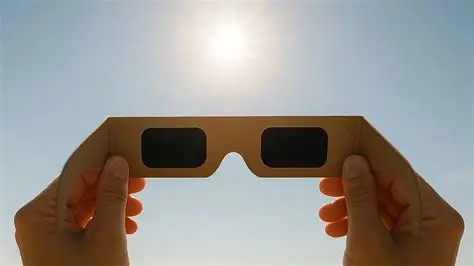
During the partial phases, viewers should use properly designed solar-viewing glasses or an appropriate solar filter.
The safest approach is to follow guidance from established astronomy and space agencies and use equipment specifically designed for solar observation.
Why Ordinary Sunglasses Are Not Enough
Regular sunglasses reduce brightness, but they are not designed to filter the Sun’s intense visible and invisible radiation to the level required for direct solar viewing.
The fact that the Sun appears partially covered does not make the remaining visible sunlight safe to stare at.
Proper solar protection is therefore essential throughout the partial phases.
Safe Ways to Enjoy the Eclipse
People can experience today’s eclipse without putting their eyesight at risk.
Safe approaches include:
- Using certified solar-viewing glasses
- Using a properly filtered telescope or camera
- Watching an official live stream
- Using indirect projection methods
- Following instructions from professional astronomy organizations
Children should receive particular guidance because they may be tempted to look directly toward the Sun.
Photography During the Eclipse
Today’s event is also an exciting opportunity for photography.
However, photographing the Sun requires appropriate equipment and filters.
A normal camera pointed directly at the Sun can potentially suffer damage, while an unfiltered optical system can expose the photographer’s eyes to dangerous sunlight.
Solar filters designed for the specific equipment being used are essential for safe direct-solar photography.
The Emotional Power of an Eclipse
Scientific explanations tell us how an eclipse happens, but they do not fully capture how it feels.
For a few minutes, a familiar daytime environment can become strangely quiet and dim.
People gather together, look toward the sky, and experience a celestial alignment that has been unfolding throughout the solar system for billions of years.
That combination of science and wonder is one reason eclipses continue to fascinate humanity.
A Shared Human Experience
Eclipses have inspired people across cultures and generations.
Ancient civilizations carefully observed unusual changes in the sky, while modern scientists use sophisticated instruments to investigate the same celestial mechanics with extraordinary precision.
Today’s eclipse connects those two traditions.
The event is both a scientific phenomenon and a reminder of humanity’s enduring desire to understand the universe.
Eclipse Today for Astronomy Enthusiasts
For amateur astronomers, today’s eclipse provides an excellent opportunity to observe celestial mechanics in action.
It can also inspire newcomers to explore:
- The Moon
- The Sun
- Planetary motion
- Space science
- Astrophotography
- Amateur astronomy
A single eclipse can turn casual curiosity into a lasting interest in the night sky.
The Best Part of Today’s Eclipse
The greatest advantage of a total solar eclipse is its rarity.
The Moon and Sun appear almost exactly the same size in Earth’s sky because of a remarkable coincidence involving their relative sizes and distances.
When the geometry aligns precisely, the Moon can cover the bright solar disk while leaving the corona visible around its edge.
That alignment creates one of nature’s most extraordinary sights.
Eclipse Today: A Moment Worth Remembering
Whether viewed from the path of totality, experienced as a partial eclipse, or watched through a trusted live stream, today’s event is an opportunity to pause and appreciate the scale of the universe.
The Moon is orbiting Earth.
Earth is orbiting the Sun.
And for a brief moment, their positions create a shadow that sweeps across the planet.
The event is predictable, measurable, and scientifically understandable—but it can still feel profoundly magical.
Looking Beyond Today’s Eclipse
Today’s total solar eclipse is part of a continuing sequence of celestial events.
Eclipses occur because of the constantly changing alignment of the Sun, Moon, and Earth. Each event follows predictable astronomical patterns, allowing scientists to calculate eclipse paths far into the future.
For today’s observers, however, the focus is simpler: enjoy the moment, observe safely, and appreciate the remarkable view.
Final Thoughts
The eclipse today, August 12, 2026, is a spectacular total solar eclipse and one of the year’s most important astronomical events. Totality crosses parts of Greenland, Iceland, northern Russia, Spain, Portugal, and the Atlantic, while a much larger area experiences a partial eclipse.
Beyond its beauty, the eclipse offers scientists an opportunity to study the solar corona and Earth’s atmosphere. NASA-backed research teams are using aircraft and scientific balloons to gather observations during the event, turning a few extraordinary minutes of darkness into valuable scientific data.
For everyone watching, the best part is the sense of wonder. The eclipse is a reminder that the universe is constantly moving around us, often in ways that are invisible until the right moment brings everything into perfect alignment.
Today, the sky gives the world one of those moments.