The White House is far more than a famous building in Washington, D.C. For more than two centuries, it has stood at the center of American political life, serving simultaneously as the home of the president, a workplace for the executive branch, a venue for diplomacy, and a powerful symbol of the United States.
Located at 1600 Pennsylvania Avenue, the White House has witnessed moments of celebration, crisis, war, political transformation, and national renewal. Every president since John Adams has lived there, making the building a remarkable thread connecting generations of American leadership.
Its significance reaches beyond politics. The White House represents continuity. Presidents change, administrations change, and national priorities evolve, but the institution remains. That enduring presence gives the building a unique place in American history and in the imagination of people around the world.
From its early construction under George Washington to its modern role in presidential government, the White House reflects the nation’s growth, challenges, achievements, and hopes for the future.
What Is the White House?
The White House is the official residence and workplace of the president of the United States.
The building complex includes the presidential residence, the West Wing, the East Wing, offices for senior staff, and other facilities supporting presidential operations. The Oval Office is located in the West Wing and serves as one of the most recognizable workplaces associated with the American presidency.
The National Park Service recognizes the White House as both the home and office of the president and identifies it as a National Historic Landmark.
This combination of home, office, ceremonial space, and historical landmark makes the White House unlike almost any other building in the world.
The Beginning of the White House
The story of the White House began during the creation of Washington, D.C.
President George Washington selected the site for the presidential residence in 1791. A competition was then held to select its design, and Irish-born architect James Hoban won the competition.
The cornerstone was laid on October 13, 1792, marking the beginning of construction.
Washington supervised the early development of the capital and approved Hoban’s design, but he never lived in the completed residence.
After approximately eight years of construction, President John Adams and First Lady Abigail Adams moved into the building in 1800. They became its first presidential residents.
That moment established a tradition that continues today.
James Hoban and the Architecture
James Hoban designed the White House with strong Georgian and neoclassical influences.
The building’s balanced proportions, columns, windows, and classical details helped establish an elegant appearance appropriate for the nation’s presidential residence.
The design was practical as well as symbolic.
It needed to function as a home and a place where the president could conduct official responsibilities.
Over time, additions and renovations changed the building, but Hoban’s original architectural character remained an essential part of its identity.
Why It Is Called the White House
The building was not always officially called the White House.
For much of the nineteenth century, it was commonly known as the President’s House or Executive Mansion.
The exterior was whitewashed in the late 1790s, and the name “White House” gradually entered common use. The name became official during Theodore Roosevelt’s presidency in 1901.
The simple name eventually became one of the most recognizable political symbols in the world.
Today, “the White House” can refer not only to the physical building but also to the president’s administration and executive staff.
The White House and the War of 1812
One of the darkest moments in the building’s history occurred during the War of 1812.
On August 24, 1814, British forces entered Washington and set fire to the President’s House. The building suffered severe damage.
The destruction could have marked the end of the young nation’s presidential residence.
Instead, the building was rebuilt.
Architect James Hoban returned to help reconstruct the residence, demonstrating the resilience that would become one of the most important themes in the White House’s history.
President James Monroe eventually moved into the rebuilt building in 1817.
The rebuilding transformed a moment of national vulnerability into a story of recovery.
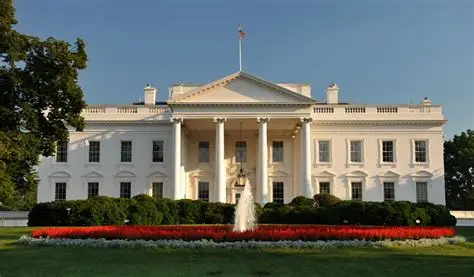
The North and South Porticos
The White House gradually developed many of the features that people recognize today.
The South Portico was constructed during James Monroe’s administration, while the North Portico was added during Andrew Jackson’s presidency.
These features strengthened the building’s distinctive classical appearance.
Today, the North and South facades are among the most recognizable architectural views in Washington.
The Oval Office
Few rooms in the world are as closely associated with political leadership as the Oval Office.
The office was created as part of the expansion of the West Wing during the early twentieth century. President William Howard Taft had an oval-shaped presidential office constructed within the enlarged office wing.
The Oval Office became a powerful symbol of the presidency.
Presidents have used the room to:
- Meet foreign leaders
- Sign legislation
- Address national crises
- Meet advisers
- Make important announcements
- Conduct diplomatic discussions
Its famous desk, artwork, photographs, and changing decor have reflected the personality and priorities of different administrations.
The West Wing
The West Wing is the center of presidential work.
It contains offices and spaces used by the president and senior staff, making it one of the most important working environments in the U.S. government.
The West Wing developed significantly during Theodore Roosevelt’s major renovation of the White House in 1902. The renovation moved presidential offices away from the main residence into a dedicated office area.
This helped create the modern separation between the presidential home and the president’s working environment.
The East Wing
The East Wing has traditionally provided additional space for White House operations and ceremonial functions.
Over the decades, presidents and their administrations have considered ways to expand the complex to accommodate the demands of modern presidential events.
The current White House describes an East Wing expansion project involving a proposed State Ballroom designed to provide substantially more event space.
Such projects demonstrate how the White House continues adapting to the demands of modern government while preserving its historic identity.
The White House as a Home
Behind the political headlines, the White House is also a family home.
Presidents and their families have lived in the residence while managing the enormous responsibilities of the presidency.
The official White House site describes the residence as containing 132 rooms, 35 bathrooms, and six levels, along with numerous doors, windows, fireplaces, staircases, and elevators.
This combination of domestic life and national responsibility makes the presidential residence unique.
Families experience ordinary moments such as meals, celebrations, holidays, and private time within a building that is constantly associated with public life.
The White House as a Workplace
The White House is also a center of executive decision-making.
The president works with advisers, Cabinet officials, military leaders, diplomats, and other government officials.
The executive branch is responsible for implementing and enforcing federal laws passed by Congress, with the president serving as head of the executive branch and commander in chief.
The White House therefore functions as part of a much larger governmental structure.
Its decisions can affect domestic policy, international relations, economic strategy, national security, and millions of lives.
A Place for Diplomacy
The White House frequently welcomes foreign leaders and diplomats.
State dinners, official meetings, bilateral discussions, and ceremonial events create opportunities for presidents to strengthen relationships with other nations.
The State Floor has hosted countless leaders and dignitaries throughout American history.
These events combine diplomacy with ceremony.
They also demonstrate how the White House serves as an international symbol of American government.
Presidential Traditions
The White House contains traditions that have developed over generations.
Presidential families have introduced different customs, decorations, celebrations, and social events.
Holiday traditions are particularly famous, with the building becoming a major national symbol during the Christmas season.
Other traditions involve:
- State dinners
- Official receptions
- Presidential speeches
- Medal ceremonies
- Signing events
- Diplomatic meetings
These traditions help connect modern administrations with earlier generations.
A Living Museum of American History
The White House is sometimes described as a living museum because its history is not frozen in the past.
Every administration adds another chapter.
The official White House describes the building as both the president’s home and a living museum of American history.
Objects, furniture, artwork, rooms, and architectural features can carry stories from different periods of the nation’s development.
Walking through the building’s history is therefore like moving through the history of the American presidency itself.
The White House Has Survived Major Challenges
The building has experienced fire, structural problems, political upheaval, and major renovations.
One of the most dramatic transformations occurred during Harry Truman’s presidency.
By the middle of the twentieth century, structural problems had become serious. A major reconstruction dismantled much of the interior while preserving the exterior walls. The Truman family returned to the reconstructed residence in 1952.
This massive project preserved the building for future generations.
The Symbolism of the White House
The White House represents more than the person occupying the presidency.
It symbolizes:
- Democratic government
- Presidential leadership
- National continuity
- American history
- Public service
- Constitutional government
Presidents come and go, but the institution remains.
That continuity is one of the building’s greatest strengths.
The People’s House
The White House has often been described as the People’s House.
The phrase reflects the principle that the presidency ultimately derives its authority from the American people and the constitutional system.
The building belongs to a national story much larger than any individual administration.
Its historical significance belongs to citizens across generations.
That is why the White House continues to attract enormous interest from Americans and visitors around the world.
The White House and American Democracy
The White House is deeply connected to the American democratic system.
Presidential elections determine who occupies the office, while Congress and the courts provide separate constitutional powers and checks.
The president’s administration must operate within this broader system.
The White House therefore represents not unlimited power, but one part of a constitutional structure designed around divided responsibilities and institutional checks.
This balance is an essential part of American government.
The White House in Modern Life
In the digital era, White House announcements can reach millions of people almost instantly.
Presidential addresses, executive actions, meetings, policy announcements, and international events can become global news within minutes.
Social media and online communication have transformed how the public interacts with presidential institutions.
Yet the physical building remains just as powerful.
Images of the White House continue to communicate authority, history, and national identity instantly.
Why the White House Remains Important
The continuing importance of the White House comes from its unique combination of history and living government.
It is simultaneously:
A home — where presidential families live.
An office — where national decisions are made.
A diplomatic venue — where world leaders meet.
A historic landmark — preserving more than two centuries of American history.
A national symbol — representing the presidency and the United States.
Few buildings combine all these roles so completely.
The Future of the White House
The White House will continue evolving as presidential responsibilities change.
Technology, security, communications, diplomacy, and modern event requirements will influence how the complex operates.
At the same time, preservation remains essential.
The challenge is to make the White House functional for modern government without losing the historical character that makes it extraordinary.
That balance between preservation and progress is part of the building’s continuing story.
The Positive Legacy of the White House
The most powerful lesson of the White House is resilience.
The building survived war.
It survived fire.
It underwent enormous reconstruction.
It adapted to changing presidents and changing technology.
And through every generation, it remained a central symbol of American government.
Its story demonstrates that institutions can endure while adapting to new circumstances.
That is perhaps the greatest upside of the White House: it represents continuity without requiring the nation to remain frozen in time.
Conclusion
The White House stands as one of the world’s most recognizable symbols of leadership, history, and democratic government. From George Washington’s selection of the site and James Hoban’s original design to the modern presidency, the building has witnessed more than two centuries of American history.
Its walls have seen moments of triumph and tragedy, peaceful transitions and national crises, diplomatic breakthroughs and difficult political debates. Yet the White House has repeatedly demonstrated remarkable resilience.
Today, it remains both a presidential residence and a working center of executive government. Its rooms host leaders, its offices support national decision-making, and its architecture preserves connections to generations of Americans who came before.
Reference
For more informative articles, news, and interesting stories, visit Daily Talks Web.