Flu Virus – A Complete Guide in Simple Words
The flu virus, also known as influenza, is a contagious respiratory illness that affects millions of people every year. While many consider the flu a common seasonal sickness, it can sometimes lead to serious health complications, especially for children, elderly people, and those with weak immune systems.
This Flu Virus article explains the in detail, including its causes, symptoms, transmission, prevention, treatment, upsides, downsides, and overall impact on society.
What Is the Flu Virus?
The flu virus is an infectious virus that attacks the nose, throat, and lungs. It spreads easily from person to person and usually appears during colder months, known as flu season.
There are several types of influenza viruses, but the most common ones affecting humans are:
- Influenza A
- Influenza B
These viruses change every year, which is why people can get the flu more than once in their lifetime.
How the Flu Virus Spreads
Person-to-Person Transmission
The flu spreads mainly through:
- Coughing
- Sneezing
- Talking closely
Tiny droplets containing the virus enter the air and can be inhaled by others.
Surface Contact
Touching contaminated surfaces and then touching the face, nose, or mouth can also spread the virus.
Common Symptoms of the Flu
Flu symptoms usually appear suddenly and can include:
- High fever
- Chills and sweating
- Cough and sore throat
- Runny or blocked nose
- Body aches and muscle pain
- Headache
- Fatigue and weakness
Flu vs Common Cold
The flu is often more severe than a cold. Fever, body pain, and extreme tiredness are stronger in flu cases.
Who Is Most at Risk?
Some people are more vulnerable to flu complications, including:
- Elderly people
- Young children
- Pregnant women
- People with asthma, diabetes, or heart disease
- Individuals with weak immune systems
Downsides of the Flu Virus
Health Complications
The flu can lead to serious problems such as:
- Pneumonia
- Bronchitis
- Sinus and ear infections
- Worsening of chronic diseases
Hospitalization and Death
Severe flu cases may require hospitalization, and in extreme situations, the flu can be fatal.
Economic Impact
Flu outbreaks cause:
- Missed work and school days
- Reduced productivity
- Increased healthcare costs
Rapid Spread
Because it spreads quickly, flu outbreaks can overwhelm hospitals and healthcare systems.
Upsides of the Flu Virus (Indirect Benefits)
While the flu virus itself is harmful, some indirect upsides exist:
Strengthens Immune Awareness
Flu seasons encourage people to:
- Improve hygiene habits
- Wash hands more frequently
- Become health conscious
Medical Research and Innovation
The flu drives advancements in:
- Vaccine development
- Virus detection methods
- Public health planning
Early Disease Detection
Flu symptoms often lead people to seek medical care, helping detect other underlying health issues early.
Important: These upsides do not outweigh the risks, but they highlight how societies learn and adapt.
How the Flu Virus Is Diagnosed
Doctors diagnose flu using:
- Physical examination
- Symptom history
- Rapid flu tests
- Laboratory testing (if needed)
Early diagnosis helps prevent complications and spread.
Treatment for the Flu Virus
Home Care
Most flu cases can be treated at home by:
- Resting
- Drinking plenty of fluids
- Taking fever-reducing medicines
Antiviral Medicines
Doctors may prescribe antiviral drugs that:
- Reduce severity
- Shorten illness duration
- Prevent complications
Antivirals work best when taken early.
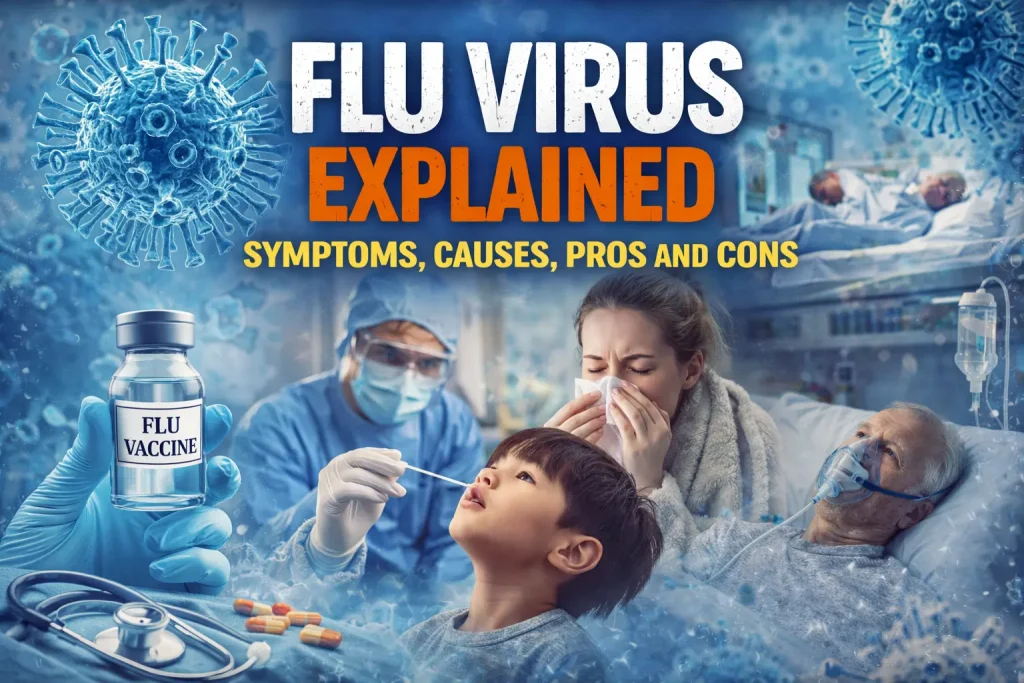
Prevention of the Flu Virus
https://www.bing.com/images/search?q=pictures+of+flu+viruses&id=F99227D832D973F83C8A22662C4E10DFE2B257F8&form=IACFIR&first=1&disoverlay=1
The flu vaccine is the most effective way to prevent flu and its complications. It is updated yearly to match circulating strains.
Hygiene Practices
- Wash hands regularly
- Cover mouth when coughing or sneezing
- Avoid touching the face
Healthy Lifestyle
A strong immune system helps fight infections:
- Balanced diet
- Regular exercise
- Adequate sleep
Flu Virus and Children
Children catch the flu easily due to close contact in schools. Symptoms in children may include:
- Fever
- Vomiting
- Diarrhea
- Irritability
Vaccination and hygiene education are essential for children’s safety.
Flu Virus in the Elderly
Older adults are at higher risk of:
- Severe illness
- Hospitalization
- Death
Regular vaccination and early treatment are critical for elderly care.
Flu Virus and Public Health
Seasonal Outbreaks
Public health agencies monitor flu patterns to:
- Predict outbreaks
- Prepare hospitals
- Inform the public
Awareness Campaigns
Governments promote:
- Vaccination programs
- Hygiene awareness
- Workplace safety policies
Myths and Facts About the Flu
Myth – Flu Is Just a Bad Cold
Fact: Flu can be serious and life-threatening.
Myth – Flu Vaccine Causes Flu
Fact: The vaccine does not cause flu; it helps prevent it.
Long-Term Impact of the Flu Virus
Repeated flu outbreaks have taught societies:
- Importance of disease surveillance
- Need for emergency healthcare planning
- Value of vaccination programs
The flu virus remains a global health challenge.
Future Outlook
Advances in science may lead to:
- Universal flu vaccines
- Faster detection tools
- Better global cooperation
Preparedness will reduce the flu’s impact over time.
Final Thoughts
The flu virus is more than a seasonal illness—it is a serious public health concern. While it has a few indirect upsides such as improving health awareness and medical research, its downsides, including illness, complications, and economic loss, are far greater.
Prevention, vaccination, and awareness remain the best defenses against the flu.