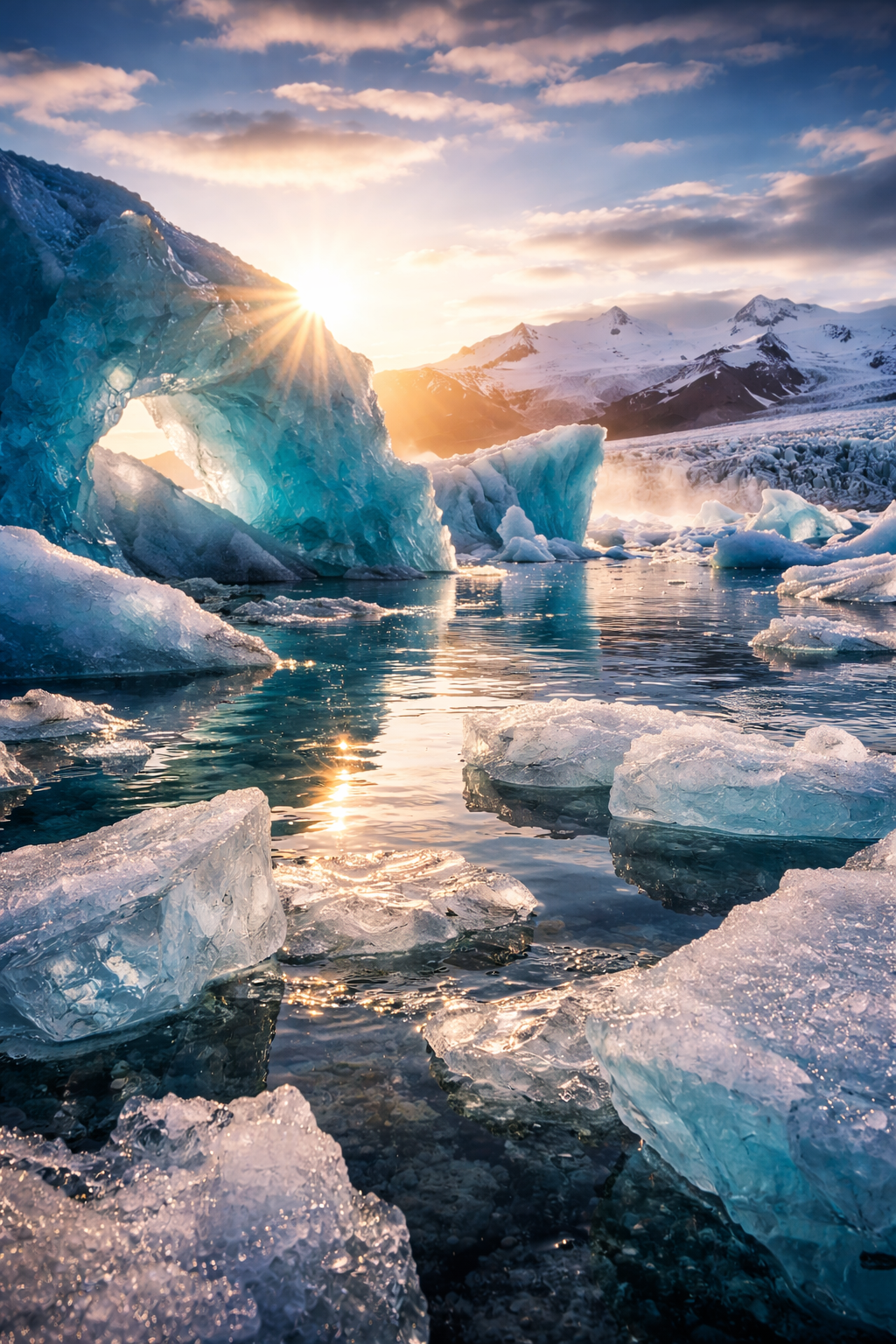
Ice: The Power, Beauty, and Endless Upside of Frozen Life
Ice is more than frozen water. It is memory, strength, survival, and beauty locked in crystal form. It shapes landscapes, controls climate, preserves history, and touches human emotions in ways we often forget. From snowflakes that fall softly on our hands to massive glaciers that carve mountains, ice tells the story of our planet.
This article explores ice not just as a physical substance, but as a symbol of endurance, transformation, and hope. We will dive into its science, emotional meaning, global importance, and most importantly—its upsides for our future.
What Is Ice?
The Ice is simply water in its solid form. But calling it “simple” does not do it justice. When water freezes, it expands, changes structure, and becomes something entirely new.
Ice exists everywhere:
- In glaciers
- The oceans
- In polar caps
- The clouds
- In our homes
It is silent, yet powerful.
The Emotional Meaning of Ice
Ice carries deep emotional weight. It represents calm, stillness, purity, and reflection. When we see falling snow, we feel peace. When we touch ice, we feel cold—but also clarity.
The ice teaches us:
- Patience
- Strength
- Stillness
- Endurance
In a loud world, ice reminds us how powerful silence can be.
The Science Behind Ice
Ice forms when water molecules slow down and lock into a crystal structure. This process is simple, but its impact is enormous.
Ice:
- Regulates Earth’s temperature
- Reflects sunlight
- Preserves ancient history
- Controls ocean currents
Without ice, life on Earth would be very different.
Ice and Climate Balance
Ice acts like Earth’s natural air conditioner. It reflects sunlight back into space, keeping the planet cool. This is known as the albedo effect.
When ice melts:
- Oceans warm
- Weather becomes extreme
- Sea levels rise
- Ecosystems collapse
The Ice is not just frozen water—it is planetary protection.
Ice as a Preserver of History
Ice is a time capsule. Glaciers and ice sheets hold:
- Ancient air bubbles
- Old bacteria
- Climate records
- Trapped particles
Scientists study ice cores to understand Earth’s past. The Ice remembers what humans forget.
Ice in Human Life
It is deeply woven into our daily lives.
We use ice for:
- Cooling food
- Preserving medicine
- Sports
- Art
- Transportation in polar regions
It serves silently, without asking for recognition.
Ice in Culture and Art
Ice appears in myths, poems, songs, and stories. It often symbolizes:
- Emotional distance
- Strength
- Mystery
- Renewal
From fairy tales to modern cinema, ice is used to show both danger and beauty.
The Power of Ice
Ice may look fragile, but it is one of the strongest forces in nature.
Ice can:
- Split mountains
- Shape valleys
- Destroy cities
- Create islands
Slowly, quietly, ice reshapes the world.
The Upside of Ice
Now let’s talk about the most important part—the upside of ice.
1. Climate Stability
Ice keeps the Earth balanced. It controls temperature, ocean circulation, and weather systems.
Without ice, our planet would overheat.
2. Freshwater Storage
Most of the world’s freshwater is stored in glaciers. This water feeds rivers, farms, and cities.
Ice is future water.
3. Scientific Discovery
Ice helps scientists understand:
- Climate change
- Ancient life
- Atmospheric history
- Planetary evolution
Every layer of ice holds knowledge.
4. Natural Beauty
Snow, glaciers, and icebergs inspire wonder. They remind us how beautiful nature can be.
Beauty has value.
5. Human Innovation
Ice has inspired technology:
- Refrigeration
- Cold storage
- Cryogenics
- Space science
Ice pushes innovation.
Ice and Survival
In polar regions, ice is not an enemy—it is home. Animals like polar bears, seals, and penguins depend on it.
Ice is not dead. It is alive with purpose.
Ice and the Human Spirit
Ice teaches us that strength does not always look loud. It can be quiet. And can be still. It can wait.
Ice survives storms. It adapts. It reshapes.
So can we.
Ice and Climate Change
Ice is melting faster than ever. This is not a warning—it is a reality.
Melting ice leads to:
- Rising seas
- Flooding
- Displacement
- Ecosystem collapse
But awareness creates opportunity.
The Upside of Awareness
As people learn about ice, they care more. Awareness leads to:
- Better policies
- Cleaner energy
- Conservation
- Innovation
The Ice is awakening human responsibility.
Ice as a Teacher
It teaches us:
- Change is slow but powerful
- Pressure shapes strength
- Stillness has value
These lessons go beyond science.
Ice in the Future
The future of ice depends on human action.
With care, we can:
- Protect glaciers
- Slow melting
- Preserve ecosystems
- Restore balance
Ice can survive—if we choose wisely.
Why Ice Still Matters
Ice is not distant. It affects:
- Your food
- Their water
- Your weather
- Their future
Ice connects us all.
Emotional Connection to Ice
When people see ice disappear, they feel loss. That means ice matters.
Things only hurt when they mean something.
Final Thoughts
Ice is not just frozen water. It is a force of nature, a keeper of memory, and a symbol of strength.
Its upsides—climate control, freshwater storage, scientific value, beauty, and inspiration—make it one of Earth’s most important elements.
Ice is quiet.
It is strong.
Ice is necessary.