The phrase “revoke US citizenship” can sound simple, but U.S. citizenship is a powerful legal status protected by important constitutional and statutory principles. Losing that status is not something that normally happens merely because a person moves abroad, obtains another nationality, disagrees with the government, or commits an ordinary mistake.
U.S. law recognizes specific circumstances in which a person can lose nationality. The law also distinguishes between government action involving citizenship obtained through naturalization and a person’s voluntary decision to give up U.S. nationality.
Understanding these distinctions provides clarity in an area that can easily become confusing. The most important point is that U.S. citizenship cannot simply be switched off at the government’s convenience. Federal law establishes particular requirements, procedures, and protections surrounding the loss of citizenship.
What “Revoke US Citizenship” Means
In everyday language, people may use “revoke US citizenship” to describe any situation in which someone loses American citizenship. Legally, however, several different concepts can apply.
One major concept is denaturalization, which concerns a person who became a U.S. citizen through naturalization. In certain circumstances, the government may seek to undo that naturalization if the citizenship was obtained unlawfully or through qualifying fraud or misrepresentation.
Another concept is loss or relinquishment of U.S. nationality, which can occur when a U.S. citizen voluntarily performs a legally recognized expatriating act with the required intention to give up U.S. nationality.
The U.S. Department of State explains that loss of nationality generally requires a voluntary act and an intention to relinquish U.S. citizenship.
This distinction matters because simply saying that citizenship has been “revoked” can hide significant legal differences.
Denaturalization and the Loss of Naturalized Citizenship
Naturalized citizenship receives important legal protection, but federal law provides circumstances in which naturalization can be revoked.
Denaturalization generally refers to the legal process through which a person’s naturalization is cancelled because the person was not legally entitled to obtain citizenship or obtained it through qualifying fraud, concealment, or other unlawful circumstances.
This does not mean that every mistake made during an immigration or naturalization process automatically results in the loss of citizenship. Legal standards and procedures apply, and the government’s case must be established through the appropriate legal process.
This framework protects the integrity of the naturalization system while recognizing the serious consequences that follow from taking away citizenship.
Citizenship by Birth Is Different
A person who is a U.S. citizen by birth occupies a different legal position from someone who became a citizen through naturalization.
The Department of State explains that U.S. citizens can lose nationality through certain potentially expatriating acts when those acts are performed voluntarily and with the intention of relinquishing U.S. nationality.
The principle of voluntariness is particularly important.
A person does not ordinarily lose U.S. nationality simply because the government believes the person should no longer be a citizen. The circumstances surrounding the individual’s actions and intentions matter under the law.
This provides an important safeguard for citizens and reinforces the seriousness of citizenship as a legal status.
Voluntarily Giving Up U.S. Citizenship
Sometimes people searching for “revoke US citizenship” are actually looking for information about renouncing U.S. citizenship.
Renunciation is different from the government revoking citizenship.
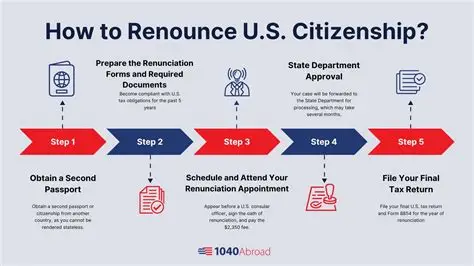
A U.S. citizen may seek to relinquish U.S. nationality by formally renouncing it under the procedures established by U.S. law. For a standard renunciation abroad, the person must appear before a U.S. diplomatic or consular officer and complete the required process.
The Department of State states that a person seeking renunciation abroad must review the relevant information, attend required interviews, complete the necessary forms, and take the oath of renunciation in person.
This process is intentionally serious because citizenship carries major rights and responsibilities.
The Certificate of Loss of Nationality
One of the most important documents in the process of relinquishing U.S. nationality is the Certificate of Loss of Nationality, commonly called a CLN.
Taking an oath of renunciation does not simply mean that a person’s nationality disappears instantly without government review. The Department of State must determine whether the legal requirements for loss of nationality have been satisfied.
According to the Department of State, the issuance of a CLN constitutes the official administrative determination of loss of U.S. nationality. If the Department denies the request, the person remains a U.S. national.
This process creates a formal record and ensures that the legal requirements have been evaluated.
Acts That Can Lead to Loss of U.S. Nationality
Federal law identifies several potentially expatriating acts.
These can include obtaining naturalization in another country after reaching adulthood, taking a formal oath or declaration of allegiance to another country, certain foreign military service, certain employment with a foreign government, and formal renunciation before a U.S. diplomatic or consular officer abroad.
However, the existence of one of these acts does not automatically mean that U.S. citizenship has disappeared.
The Department of State explains that the act generally must have been performed voluntarily and with the intention of relinquishing U.S. nationality.
That requirement is one of the central protections within U.S. nationality law.
Renunciation Is a Serious and Generally Irrevocable Decision
Renouncing U.S. nationality is not comparable to cancelling a subscription or surrendering an ordinary document.
The Department of State warns that an approved loss of nationality is generally irrevocable, subject to limited legal procedures for administrative or judicial review.
A person who renounces U.S. nationality can no longer rely on the rights and privileges associated with U.S. citizenship.
The former citizen may also need a visa or another lawful immigration status to enter or remain in the United States.
For this reason, anyone considering renunciation should carefully understand the immigration, financial, family, travel, and tax consequences before making a final decision.
The Risk of Becoming Stateless
One of the strongest reasons for careful planning is the possibility of becoming stateless.
A person who gives up U.S. nationality without already possessing another nationality may face extremely serious difficulties. The Department of State warns that a person could become stateless and lose the protection normally provided by a country. Travel can also become significantly more difficult without a valid passport.
Having another nationality or a reliable path to another nationality can therefore be an important consideration before voluntarily relinquishing U.S. nationality.
Citizenship decisions should be made with long-term security in mind rather than short-term emotion.
U.S. Tax Obligations Can Continue
Another important part of the discussion involves taxes.
Giving up U.S. nationality does not necessarily erase every tax obligation connected with a person’s past or circumstances. The Department of State specifically notes that certain U.S. tax obligations may continue after loss of nationality.
Tax rules surrounding expatriation can be complicated and may depend on the person’s financial situation, citizenship history, assets, and other factors.
Anyone considering renunciation should therefore obtain appropriate professional tax advice before making the decision.
Renunciation Does Not Erase Past Legal Responsibilities
Losing or relinquishing U.S. nationality does not create a clean legal slate for previous obligations.
The Department of State explains that renunciation does not necessarily eliminate financial obligations, including certain child-support responsibilities, or protect someone from prosecution for violations of U.S. law.
This is an important reminder that citizenship and legal responsibility are separate concepts.
A person cannot generally use renunciation as a mechanism for escaping obligations that already exist.
Legal Review Provides an Important Safeguard
The U.S. system also provides mechanisms for reviewing certain loss-of-nationality decisions.
The Department of State permits individuals to request administrative review of decisions involving a Certificate of Loss of Nationality. Cases are reviewed according to the applicable law and the facts of the individual situation.
In certain circumstances, the Department can vacate a previously issued CLN. If a prior finding of loss of nationality is reversed, the individual may be treated as having never lost U.S. nationality from the relevant time.
This review structure demonstrates the importance of evidence, legal standards, and individual circumstances.
Why Understanding the Difference Matters
The phrase “revoke US citizenship” can cover several very different situations.
A person researching the subject may actually be interested in:
- Denaturalization of a naturalized citizen
- Voluntary renunciation of U.S. nationality
- Loss of nationality following a potentially expatriating act
- A Certificate of Loss of Nationality
- Administrative review of a loss-of-nationality decision
- The consequences of holding another nationality
- Tax and financial consequences of expatriation
Each situation has its own rules.
Using the correct legal terminology is therefore more than a technical issue. It helps people find the right government information and avoid making decisions based on inaccurate online claims.
The Positive Side of Clear Citizenship Rules
Citizenship represents much more than a passport.
It can provide a profound connection between an individual and a country, along with important rights, legal protections, and responsibilities. Because of that importance, rules governing citizenship need to be clear and carefully applied.
The requirement for voluntariness and intent in many loss-of-nationality situations provides an important layer of protection. The formal CLN process also creates a documented legal determination rather than leaving citizenship status to uncertainty.
These safeguards can give people greater confidence that citizenship decisions are being handled through established legal procedures.
Making an Informed Decision
Anyone dealing with a possible citizenship issue should focus on verified information rather than social-media claims or emotionally charged headlines.
Official government resources are the strongest starting point for understanding the applicable rules. The Department of State provides detailed information about loss of nationality, renunciation, Certificates of Loss of Nationality, and administrative review.
Because individual circumstances can be very different, professional legal or tax advice may also be appropriate for complicated cases.
The most constructive approach is careful preparation: understand the law, identify the correct legal category, review the consequences, gather reliable documentation, and use the appropriate government procedure.
Final Thoughts on Revoke US Citizenship
The subject of revoke US citizenship involves serious legal principles, but understanding those principles can bring clarity rather than fear.
U.S. citizenship cannot simply be treated as an ordinary government document that can be switched on or off without legal requirements. Federal law establishes specific pathways involving denaturalization, voluntary relinquishment, potentially expatriating acts, and formal renunciation.
For people considering giving up U.S. nationality, the decision deserves careful thought because the consequences can affect immigration status, travel, taxes, family responsibilities, and future access to the United States.
For people concerned about losing citizenship involuntarily, understanding the distinction between birth citizenship, naturalization, expatriating acts, intent, and formal legal procedures can provide a much clearer picture of their rights and responsibilities.
Ultimately, accurate information is the strongest protection. By relying on official sources and understanding the legal process, individuals can make decisions based on facts, preparation, and long-term security rather than confusion.
Reference: Daily Talks Web — https://dailytalksweb.com/
The article reflects current U.S. Department of State guidance on loss of nationality and renunciation, including the current framework for Certificates of Loss of Nationality and administrative review.