Introduction: The Geopolitical Flashpoint of Asia
The South China Sea dispute has become one of the most volatile geopolitical flashpoints in the 21st century. With rich natural resources, strategic shipping routes, and national pride at stake, multiple countries are locked in a battle over territory and control. As of 2025, the tension has reached new heights, sparking fears of full-scale military conflict.
This article offers a deep dive into the current status of territorial control, key dispute highlights, and growing military build-up in the region, along with a breakdown of who wants war and in which direction things are heading.
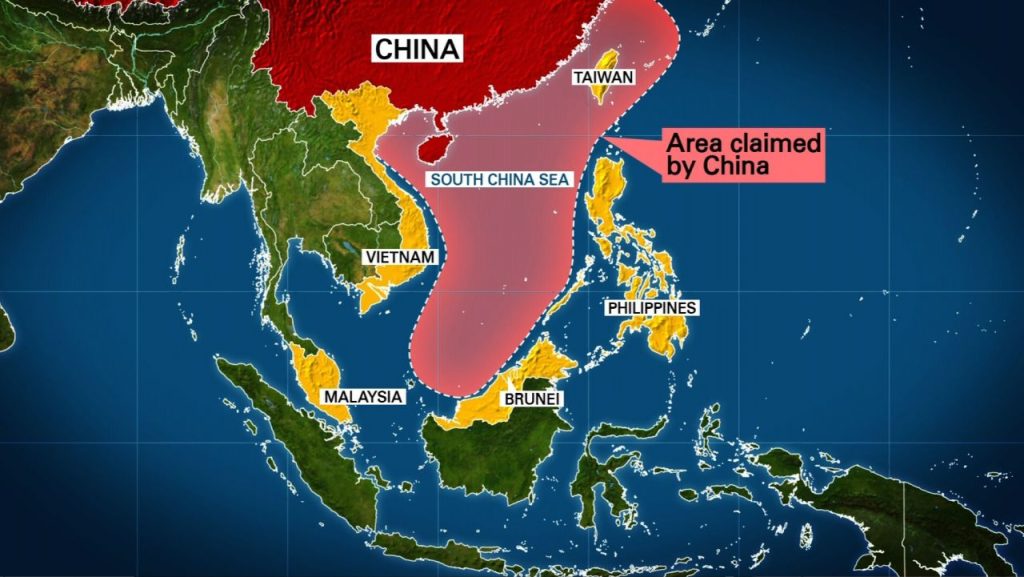
What is the South China Sea Dispute?
The South China Sea is a marginal sea of the Western Pacific Ocean, bordered by China, the Philippines, Vietnam, Malaysia, Brunei, and Taiwan. It contains several island groups, including the Spratly Islands, Paracel Islands, and Scarborough Shoal, which are rich in oil, gas, and fisheries.
Why is the South China Sea Important?
- 30% of global shipping trade passes through it
- Potentially massive untapped oil and gas reserves
- Strategic military value
- National pride and sovereignty
Current Territorial Control (As of 2025)
Here’s a breakdown of who controls what:
China
- Controls the majority of artificial islands in the Spratly and Paracel chains.
- Claims almost 90% of the sea under its controversial “Nine-Dash Line”.
- Militarized islands with runways, missile systems, and radar stations.
Philippines
- Controls a few outposts in the Spratly Islands.
- Claims parts of the sea within its Exclusive Economic Zone (EEZ).
- Strong military alliance with the United States.
Vietnam
- Occupies several Spratly Islands.
- Maintains a military presence and frequently confronts Chinese coast guard ships.
Malaysia
- Controls a few islands and reefs.
- Moreover, in addition to consistently maintaining its claims, it continues to assert its rights through diplomatic means. As a result, rather than escalating tensions further, it strategically adopts a less aggressive approach. Consequently, this deliberate strategy not only allows for ongoing dialogue but, at the same time, reinforces its position without resorting to confrontation. Therefore, it aims to balance both diplomacy and strength, ensuring its interests are upheld.
Brunei
- Claims a small portion of the sea based on its EEZ.
- Minimal military involvement.
Taiwan
- Controls Itu Aba, the largest natural island in the Spratlys.
- Shares similar territorial claims with China.
Key Highlights and Recent Developments of South China Sea (2023–2025)
- China’s Continued Militarization
- Deployed new anti-ship missiles in the Paracel Islands.
- Conducted naval drills near the Philippines’ EEZ.
- Philippines Standoff
- Tensions over the Second Thomas Shoal escalated in late 2024.
- Philippines accused China of water cannon attacks on supply boats.
- U.S. and Allied Patrols
- U.S. Navy and allies like Australia, Japan, and the UK have increased Freedom of Navigation Operations (FONOPs).
- China labels these actions as provocative.
- Vietnam-China Skirmishes
- Naval skirmishes were reported near Vanguard Bank in early 2025.
- Vietnam deployed new radar systems and purchased missile defense tech from India.
- International Rulings Ignored
- The 2016 Permanent Court of Arbitration ruling, which invalidated China’s claims, continues to be ignored by Beijing.
- Artificial Intelligence in Naval Warfare
- Furthermore, both the U.S. and China are now reportedly deploying AI-driven surveillance drones and submarines in the contested waters.
Which Countries Are Preparing for War?
As of early 2025, several countries appear to be on a collision course:
China
- Massively expanded naval capabilities.
- Issued warnings to the U.S. and its allies to stay out of “internal waters.”
- Beijing is ready for a limited conflict if its sovereignty is challenged.
United States
- Strengthening military bases in the Philippines and Guam.
- Regular joint drills with Japan, Australia, and India.
- Publicly stated its commitment to defending the Philippines under the Mutual Defense Treaty.
Philippines
- Reached new defense agreements with the U.S. and Japan.
- Continues to resist China’s maritime blockade tactics.
- The president has warned of a possible “regional war” if aggression continues.
Vietnam
- Boosting coastal defense and regional partnerships.
- Entered into a military tech-sharing pact with India.
- Actively patrolling disputed zones.
The Direction of the Conflict: War or Diplomacy?
The region is heading toward two possible outcomes:
1. Escalation Toward Military Conflict
Consequently, if China were to impose a full blockade or, in addition, forcefully occupy another reef or shoal, then, as a result, a military response from the Philippines or the U.S. would become highly likely. Furthermore, such actions could, in turn, escalate tensions and, ultimately, lead to a broader regional conflict. Key flashpoints include:
- Second Thomas Shoal
- Scarborough Shoal
- Vanguard Bank
2. Renewed Diplomatic Pressure
Meanwhile, ASEAN, the U.S., and the UN are actively advocating for a legally binding Code of Conduct; however, China, on the other hand, continues to resist external arbitration. Despite this, diplomatic channels remain open, although, as a result, they are increasingly strained. Furthermore, while dialogue continues, the ongoing tensions make it clear that finding common ground may be increasingly difficult in the near future.
Impact on Global Trade and Security
Any war in the South China Sea could:
- Disrupt global supply chains
- Spike in oil and gas prices
- Trigger a regional arms race
- Led to a U.S.-China confrontation
Conclusion: A Crisis on the Edge
The South China Sea dispute has, over time, evolved beyond a mere regional issue; Instead, it has, over time, increasingly become a significant global security concern. With strategic control, vital energy resources, and national sovereignty all at stake, the likelihood of a military confrontation in 2025 is, therefore, higher than ever before. Consequently, unless diplomatic efforts are substantially intensified and, moreover, sustained over the long term, the world could, in the near future, inevitably witness a major geopolitical conflict unfold in the contested waters of the South China Sea. In light of this, the urgency of diplomatic resolution becomes even more critical.