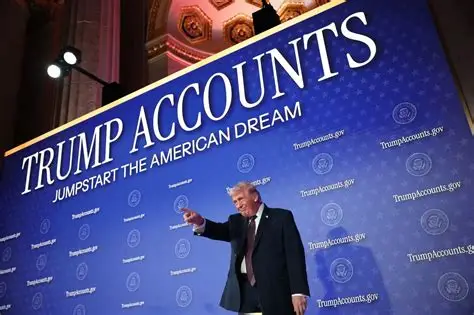
Trump Accounts have become one of the most closely watched financial initiatives affecting American families in 2026. The program is designed to give children an early connection to saving, investing, financial education, and long-term wealth building.
The idea behind the program is simple but powerful: starting early can give money more time to grow.
The U.S. Department of the Treasury officially launched the Trump Accounts program and its full app in 2026, describing the initiative as a way to give children a stake in America’s economic future. The program allows families to establish investment accounts for eligible children and make contributions that can potentially grow over many years.
The development represents a significant shift in how families can think about preparing children financially. Instead of waiting until adulthood to introduce young people to investing, Trump Accounts are designed to make long-term financial participation part of childhood.
What Are Trump Accounts
Trump Accounts are child-focused investment accounts created under federal legislation and administered through a framework involving the U.S. Treasury and Internal Revenue Service.
The program is intended to help children develop financial assets over time. Parents and other eligible contributors can add money to qualifying accounts, subject to the applicable rules and contribution limits.
The Treasury launched the Trump Accounts app in 2026 to make it easier for families to interact with the program. The official launch included tools for viewing and managing accounts as well as financial education resources.
The broader goal is long-term financial development.
A child who begins learning about saving and investing early can enter adulthood with both financial assets and a stronger understanding of how money can work over time.
The $1,000 Government Contribution
One of the most notable features of Trump Accounts is the federal contribution for eligible children.
Children born between January 1, 2025, and December 31, 2028, can qualify for a one-time $1,000 contribution from the U.S. Treasury under the program’s pilot contribution rules.
This initial contribution can give eligible children a meaningful financial starting point.
For many families, putting aside even a modest amount of money for a newborn can be difficult while dealing with housing, food, healthcare, childcare, education, and other expenses. A government-funded starting contribution can therefore provide an early foundation that might otherwise take years for a family to establish.
The real potential comes from time.
Money invested during childhood can have decades to grow before the child reaches adulthood.
The Power of Starting Early
The strongest feature of Trump Accounts may not be the initial deposit itself. It is the opportunity to introduce children to long-term investing at an unusually early age.
Compounding allows investment returns to potentially generate additional returns over time. This means that a contribution made during childhood may have considerably more time to grow than the same contribution made when someone is already an adult.
This long-term perspective encourages families to think beyond immediate spending.
Instead of viewing money only as something used today, children can learn that money can also become a resource for future education, housing, entrepreneurship, retirement preparation, or other long-term goals.
That shift in financial thinking can be extremely valuable.
Trump Accounts and Financial Education
Financial education is another important part of the initiative.
The Treasury’s Trump Accounts app includes financial education resources, giving families an opportunity to discuss money and investing with their children.
This can help make financial conversations easier at home.
Parents can use an account as a practical teaching tool. Children can learn basic ideas such as saving, investing, risk, compound growth, patience, and long-term planning.
These lessons can become more meaningful when connected to a real financial account.
A child who understands that small amounts can grow over time may develop healthier financial habits before reaching adulthood.
A Broader Opportunity for American Families
The expansion of Trump Accounts in 2026 has dramatically increased the potential reach of the program.
Recent reporting indicates that automatic enrollment has expanded the number of accounts to tens of millions of children, giving the program a much broader footprint than its original structure.
This expansion is particularly significant because access to financial opportunities is not always equal.
Families with higher incomes may already have investment accounts, financial advisers, college savings plans, or other wealth-building tools.
A nationwide child investment program can introduce families who have traditionally had less exposure to investing to the basic concept of building assets over time.
That possibility is one of the strongest positive aspects of the initiative.
The Program Can Encourage a Culture of Saving
One of the biggest challenges in personal finance is developing a habit of thinking long term.
Many financial decisions are focused on immediate needs. Rent, groceries, transportation, education, and household expenses naturally take priority.
Trump Accounts introduce another idea: future wealth deserves attention too.
A dedicated child account can encourage families to think about the financial life they want their children to have decades from now.
Even when contributions are relatively small, the habit of setting money aside can become valuable.
The account can serve as a visible reminder that financial security is something that can be built gradually.
Parents Can Become Part of the Investment Journey
Trump Accounts are also an opportunity for parents to become more involved in their children’s financial education.
Rather than simply giving a child money, parents can explain why the money is being invested and what long-term growth means.
Parents can discuss concepts such as:
- Saving versus spending
- Investing for the long term
- Compound growth
- Market fluctuations
- Diversification
- Financial responsibility
- Patience with investments
- Planning for adulthood
These lessons can become important building blocks for future financial independence.
Private and Family Contributions Expand the Opportunity
The program also allows contributions beyond the initial government contribution under its applicable rules.
The Treasury announced that beginning in July 2026, Trump Accounts could accept contributions from parents, family members, employers, and other eligible contributors, subject to annual limits.
This opens the door to a broader family approach.
Grandparents, relatives, and other eligible contributors may be able to participate in building a child’s financial foundation.
Instead of giving only traditional gifts for birthdays or holidays, families can consider contributions toward long-term financial growth.
This can transform the meaning of a financial gift.
A contribution made during childhood may continue working toward the child’s future long after the original celebration has ended.
Corporate and Philanthropic Support
The expansion of Trump Accounts has also attracted major private and philanthropic interest.
Recent reporting has highlighted large-scale commitments intended to place additional money into children’s accounts, including a reported multibillion-dollar commitment from Michael and Susan Dell aimed at providing contributions for millions of children.
These contributions demonstrate how the program could potentially combine government support with private investment in America’s next generation.
If such initiatives continue expanding, children from families with different economic backgrounds could gain greater access to long-term financial resources.
A Stronger Connection Between Children and the Economy
The idea behind Trump Accounts extends beyond personal savings.
It creates a direct connection between young Americans and the broader investment economy.
When children eventually become adults with investment assets, they may have a stronger understanding of businesses, markets, economic growth, and personal finance.
This can contribute to a culture in which more people understand how investment and ownership work.
Financial participation can also encourage young adults to think more seriously about entrepreneurship, retirement planning, homeownership, education, and other major financial goals.
The Importance of Understanding Investment Risk
Trump Accounts offer an opportunity, but investment always involves risk.
The value of investments can rise and fall, and past market performance does not guarantee future results.
Recent changes have also expanded the types of assets that may be contributed under certain circumstances. Reporting indicates that individual stocks can now be donated in some situations, introducing both additional opportunities and additional investment considerations.
For families, this makes financial education especially important.
The goal should not simply be to invest money.
The goal should be to understand why money is being invested, how markets work, and why long-term financial planning requires patience.
Trump Accounts Could Help Build Generational Wealth
One of the most powerful ideas behind the program is the possibility of creating a financial foundation that follows a child into adulthood.
Generational wealth is often built gradually.
A family may begin with a small investment, continue contributing over many years, and eventually create an asset that can help the next generation.
Trump Accounts introduce that concept much earlier in life.
A child who reaches adulthood with an established investment account may have more financial flexibility than someone who begins saving only after entering the workforce.
The difference can become meaningful over decades.
A New Way to Think About Children’s Financial Future
Traditional childhood financial planning often focuses on education savings or simply putting money aside for future expenses.
Trump Accounts add another dimension by emphasizing investment and ownership.
The concept encourages families to think about what financial independence could look like for their children.
A future young adult could potentially use accumulated assets according to the rules governing the account for important life goals.
The larger message is powerful: financial preparation can begin long before adulthood.
Why Trump Accounts Matter in 2026
The importance of Trump Accounts goes beyond one government program.
The initiative reflects a broader conversation about how Americans can increase household wealth and improve financial literacy.
The Treasury has presented the program as an opportunity to give children a stake in the nation’s economic future, while the 2026 expansion has significantly increased the number of children covered by the initiative.
For families, the biggest potential advantage is time.
Children have something adults cannot buy: decades.
When financial assets are introduced early and managed responsibly, time can become one of the most powerful forces in wealth building.
A Positive Financial Foundation for the Next Generation
Trump Accounts are ultimately about more than an account number.
They represent an opportunity to teach children that their financial future can be built intentionally.
The program can encourage saving, introduce investment concepts, support financial education, and potentially provide children with assets that grow alongside them.
For families who have never had meaningful access to investing, this can be an especially important opportunity.
For families already familiar with investing, the accounts can provide another structured way to think about a child’s financial future.
The long-term results will depend on participation, investment performance, regulations, contributions, and how families use the opportunity.
Still, the central idea remains powerful: starting early can create possibilities that become much harder to achieve later.
Final Thoughts on Trump Accounts
Trump Accounts have emerged as a major new development in American family finance in 2026.
With government contributions for eligible children, opportunities for additional contributions, financial education resources, and a structure designed around long-term investing, the program has the potential to introduce millions of young Americans to wealth building at an early stage of life.
The most meaningful benefit may ultimately be the financial mindset it encourages.
Children can learn that money is not only something to spend today. It can also be saved, invested, managed, and patiently grown for tomorrow.
That lesson can last far longer than any single contribution.
Trump Accounts therefore represent an opportunity to place financial education and long-term wealth building closer to the beginning of a child’s financial journey.
For families, the opportunity is not simply about having an investment account. It is about giving the next generation a stronger starting point, a deeper understanding of money, and potentially a greater ability to build financial independence over time.
Reference: Daily Talks Web — https://dailytalksweb.com/